



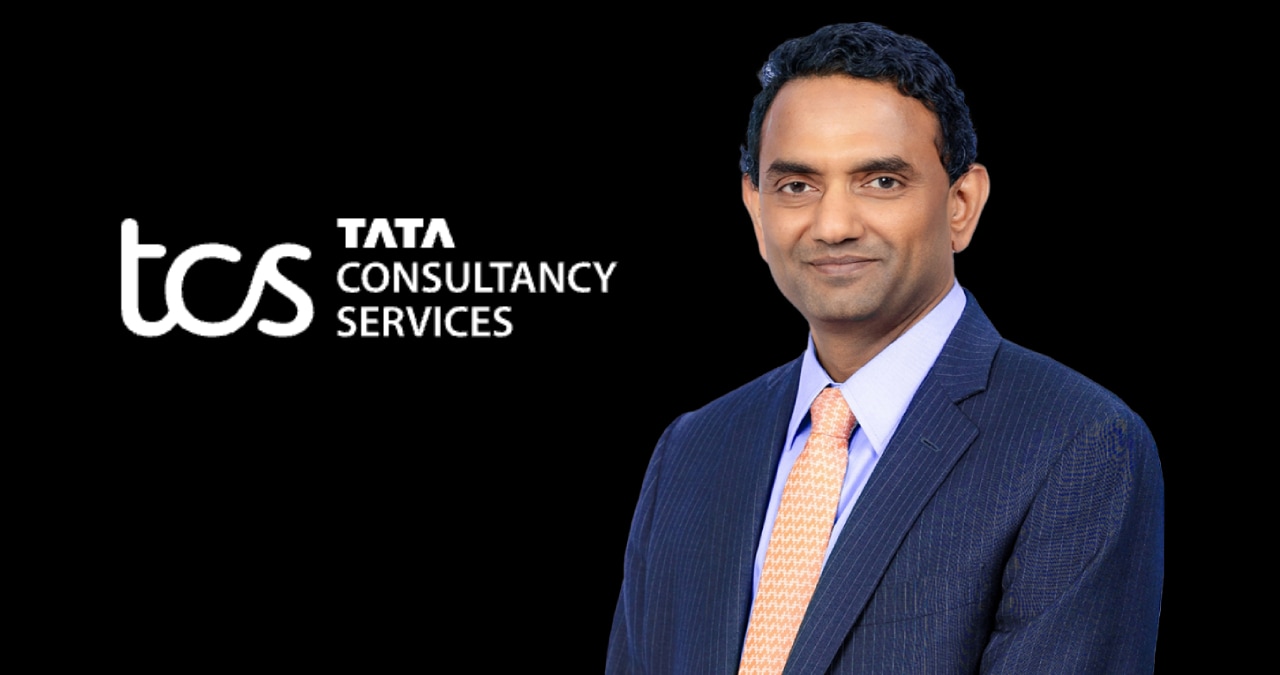
If the ‘reorganisation’ of its workforce last year wasn’t indicative enough, Tata Consultancy Services (TCS) is going all in on AI, with the company aggressively pushing its workforce to prioritise AI-first solutions in client engagements. TCS CEO K Krithivasan stands by the AI-first approach to such an extent that he is ready to ‘cannibalise’ the traditional manpower-intensive delivery models.
In recent internal communication and public statements, Krithivasan encouraged TCS associates to adopt an AI-first culture proactively. “I am encouraging you to ensure that the solution you provide to your customer is AI-first, even if it means that we are cannibalising the delivery,” he reportedly stated. Krithivasan highlighted that failing to embrace AI-driven efficiencies could pose a greater long-term risk than short-term revenue hits.
The CEO’s directive reflects TCS’s bigger strategy to position itself as the world’s largest AI-led technology services company. By giving AI the “first right of refusal,” teams are urged to ask, “Can it do something better than us, even if it means cannibalising our own revenue?”
TCS going for a major AI-led strategic shift
Krithivasan has consistently argued that AI efficiencies will not shrink overall business but instead free up client budgets for new initiatives. “If it cannibalises our revenue, we believe customers will use the extra savings to start new projects,” he said in earlier interviews, adding that avoiding AI adoption would be more damaging in the long run.
“We are actually telling our associates that if you find that you can do something faster, better, safer with AI, you should probably go and tell your customer if you can do it, if you are willing to. Because we are not afraid this technology will take away our livelihood, we believe it’s going to open up more,” he added.
TCS has already demonstrated strong traction in AI, reporting annual AI revenue reaching $1.8 billion in recent quarters (up from $1.5 billion disclosed at its Analyst Day in December 2025), with quarter-on-quarter growth around 16-17%. The company has completed over 5,500 AI projects, with major contributions from sectors like banking, financial services and insurance (BFSI), life sciences, healthcare, and technology.
TCS is en route to implementing a five-pillar AI strategy that includes internal transformation, building AI solutions, scaling connected intelligence, partnerships, and targeted acquisitions to accelerate capabilities.
No mass layoffs due to AI, says TCS CEO
Krithivasan has also downplayed fears of mass layoffs due to AI, stating in prior discussions that the technology will reshape roles rather than dismantle the $300 billion global outsourcing industry. He had stated that enterprise customers will continue relying on large vendors like TCS to manage complex systems even as AI automation adoption accelerates.
On the contrary, however, the company announced a mega restructuring of its global workforce last year that included laying off thousands of employees due to AI adoption. The company has so far let go of 30,000 employees in the last six months, with more reportedly planned in the coming months. TCS has ensured that the layoffs are structured and a process-driven approach, but they are all made to happen due to AI tools and services replacing the human workforce.