



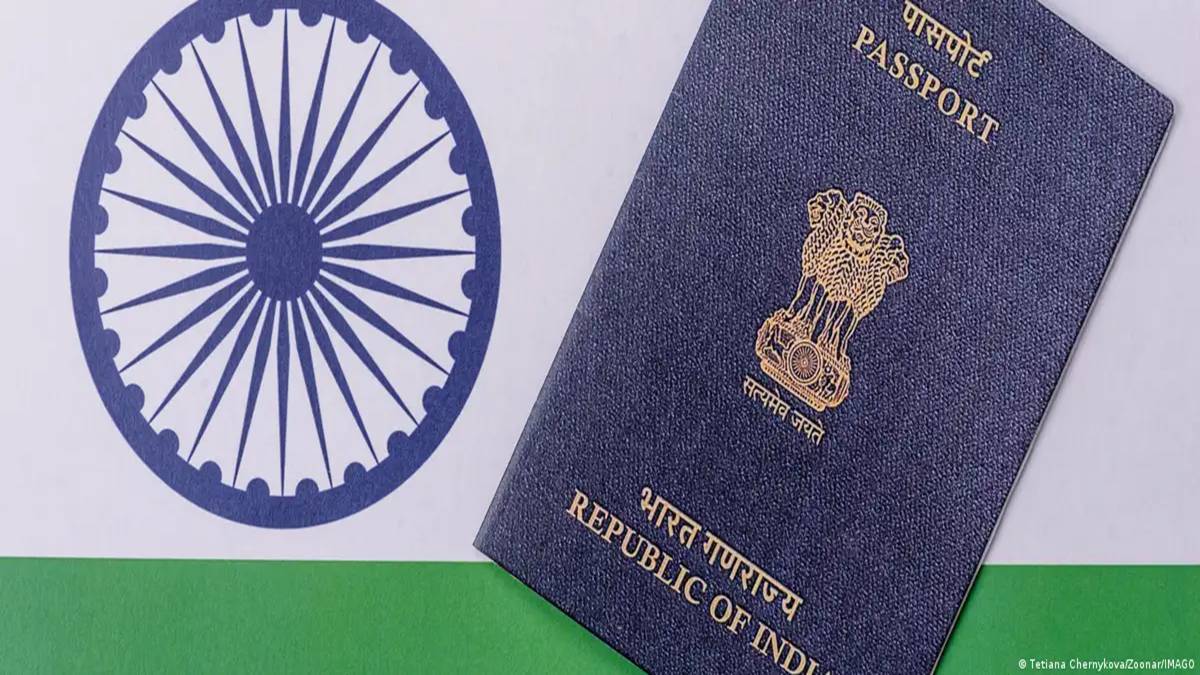
To stay on the right side of the law, Indians who renounce their passports to obtain citizenship in another country must complete specific processes. Currently, India does not have a dual citizenship policy. This means Dual Citizenship is not permitted, as per the provisions of Article 9 of the Constitution of India, read with Section 9 of the Citizenship Act, 1955.
As a result, when an Indian national acquires citizenship and gets a passport of a foreign country, their Indian citizenship is automatically terminated, as per the Citizenship Act.
In such cases, according to the Bureau of Immigration, India, the individual must surrender Indian identity documents such as the Indian Passport, Indian Ration Card, and the Indian Voter ID Card.
After surrendering these documents, the individual must apply for the ‘Issue of New Visa’ service through the e-FRRO online portal. Importantly, the visa application must be submitted within 30 days of acquiring a foreign nationality.
Number of Indians Surrendering Passports
Here’s a look at the numbers involved. According to the Ministry of External Affairs (MEA), 10.75 lakh (1.75 million) Indians voluntarily surrendered their passports between 2011 and June 2023. As per the information available with the Ministry, the number of Indians who renounced their Indian citizenship was 1,63,370 (in 2021); 2,25,620 (in 2022); and 2,16,219 (in 2023), with 87,026 (till June 2023). In 2024, another 2,06,378 Indians surrendered their passport.
And it’s not just the big nations — Indians have renounced their citizenship to immigrate to approximately 135 countries, including Antigua & Barbuda, Brazil, Iceland, the Vatican, the US, UK, France, and Germany.
Some estimates put nearly 17 million, or 1.7 crore, Indian nationals, including workers and professionals, as currently living abroad. Bringing the picture up to date, as of January 2026, the total number of overseas Indians, including OCIs and NRIs, stands at 3,72,80,845 (3.72 crore), spread across 207 nations. Of these, NRIs still hold an Indian passport, while OCIs are foreign citizens.
On why so many are leaving, the MEA shared with parliament, “The reasons for renouncing Indian citizenship or taking foreign citizenship are personal and known only to the individual.”
Disclaimer: This article is for general informational purposes only and does not constitute legal advice. Citizenship and immigration rules and statistics cited (including MEA and Bureau of Immigration figures) are subject to change. Readers planning to renounce Indian citizenship or surrender travel documents should verify current requirements directly with the Ministry of External Affairs, the Bureau of Immigration, or the nearest Indian mission/FRRO, and consult a qualified immigration professional for guidance specific to their situation.