



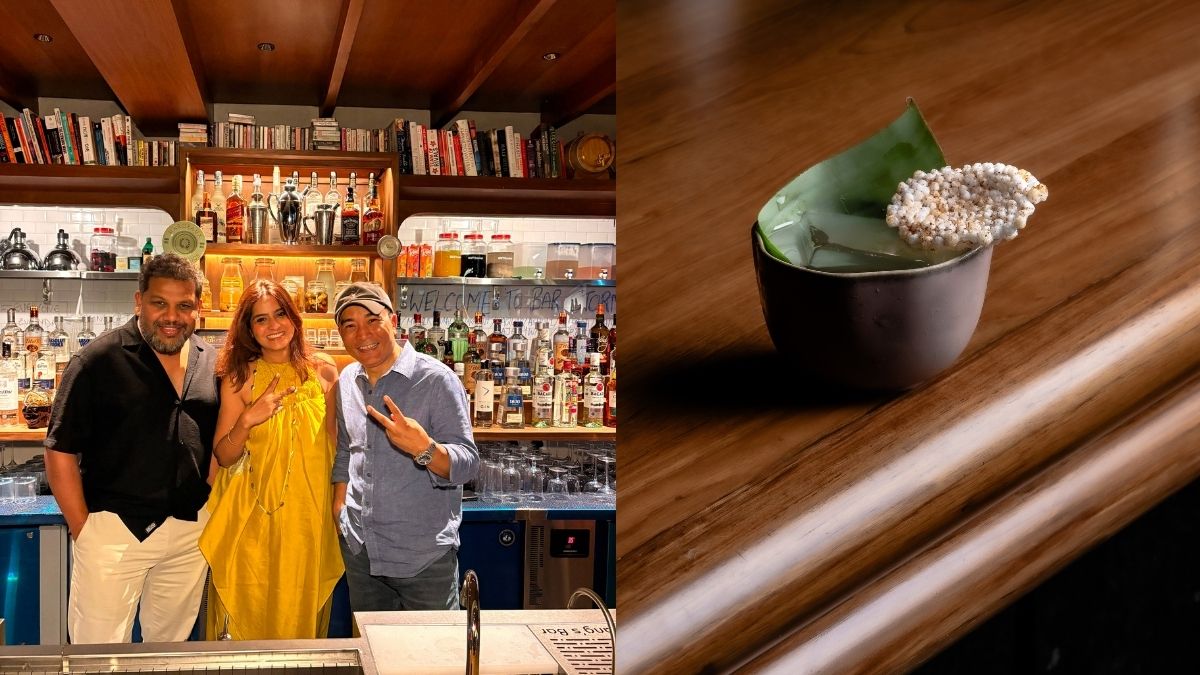
Created in partnership with Kishore Pallamreddy, tech entrepreneur and founder of Red Rhino Brewing Co, Bar Stormy brings their signature approach to hospitality to one of India’s fastest-growing cities. In an interview with FE, Lama and Singh speak about their entrepreneurial journey, choosing Hyderabad as their first outpost in south India, and the highlights of their latest project, among others. Edited excerpts:
You are now behind some of the most iconic bars in India, from Sidecar in New Delhi to Cocktails & Dreams Speakeasy and The Brook in Gurugram to, more recently, The Old House in Nepal. So, how has your entrepreneurial journey been so far?
Some things become easier with experience, but there is still so much learning every single time we venture into something new. Every city, every space, and every project comes with its own set of obstacles. Hyderabad is not our home base, so we had to understand the market (the size of spaces here, how consumers like to go out, etc), product availability, and much more.
What has remained consistent for us is the kind of bars we want to build. We like creating easy-going, welcoming spaces where the drinks are taken seriously, but the experience itself never feels intimidating. Over the years, the scale and ambition of what we do may have changed, but that philosophy hasn’t.
For your first outpost in south India, you chose Hyderabad over other traditional hubs such as Bengaluru. What was the idea behind it?
We’ve both been coming to Hyderabad quite a lot individually over the past three years, and we’ve really seen the way the city is evolving. There is a discerning crowd here and a genuine appetite for new experiences, which made the opportunity very interesting for us. But these decisions are also never based on just one factor. We had the right partner in Kishore (Pallamreddy), the right location came along, and many of the smaller things that need to fall into place for a project like this did as well. So, in many ways, it was simply the right place at the right time.
What are the highlights of this new bar?
At Bar Stormy, we have a large prep room behind the bar. Normally, that is something you would hide away, but we decided to put it behind clear glass so guests can actually see some of the work and preparation that goes into the drinks.
The bar counter itself is also a first for us. I designed it from scratch based on almost three decades of working behind bars. We customised everything, from the height and dimensions to the ergonomics and the way each station functions. The 19-foot counter has three identical workstations, so every bartender has access to everything they need without unnecessary movement. It is also visible from every corner of the room because, for us, the bar should be at the centre of the experience. There are many smaller details throughout the space that come from years of observing what works and what doesn’t. Bar Stormy allowed us to bring all of those learnings together.
Generally, when we talk about bars or nightlife in south India, Hyderabad doesn’t really feature on one’s lists. So how is the landscape changing? Can we then safely say that Hyderabad is the new Bengaluru?
I don’t think Hyderabad needs to become the new Bengaluru. What is more interesting is that cities across India are beginning to develop their own bar cultures. Four or five years ago, even Bengaluru, Kolkata and several other markets did not have the number or variety of bars they have today. Now you have growing communities in these cities, with some great bars setting an example and, in turn, encouraging the entire market to level up. We think Hyderabad is a very cosmopolitan city and is at an interesting point in that journey.
How did you get associated with Kishore for this new project? How is this synergy going to benefit?
Kishore first approached us almost three years ago. He wanted to build a world-class cocktail programme in Hyderabad and was very clear that he wanted to do it with us. But with projects like these, there is always a right time and a right place, and both need to come together.
What Kishore brings is a very strong understanding of Hyderabad and the consumer here. He has spent the last decade building and operating Red Rhino in Bengaluru and Hyderabad, and he also has his technology businesses in the city. So he understands the market, the opportunity and how the city is evolving. We bring our experience of building bars and beverage programmes, and he brings that deep understanding of the local market. That combination has been very valuable because, while we know the kind of experience we want to create, having a partner who understands the city and shares the same long-term vision makes a significant difference.
You also launched the India Bartender Show (in association with Vikram Achanta) last year.
We’ve had two wonderful editions of the India Bartender Show so far. When we started, the idea was quite simple: to create a dedicated platform for the bar community, by the bar community. India has a growing hospitality industry, but there wasn’t really a two-day platform where bartenders and the broader bar fraternity could come together specifically to learn, exchange ideas, and access people and conversations they might not otherwise encounter.
In the first year, we focused on getting the fundamentals right because the format itself was new. What was really encouraging was the response from the community. So many people came forward to volunteer their time, knowledge and experience.
In the second year, we were able to go deeper. We expanded the conversations, brought in more speakers, and introduced more hands-on and educational sessions. The idea is not to make the show bigger just for the sake of being bigger, but to keep making it more useful and more inclusive for the industry.