



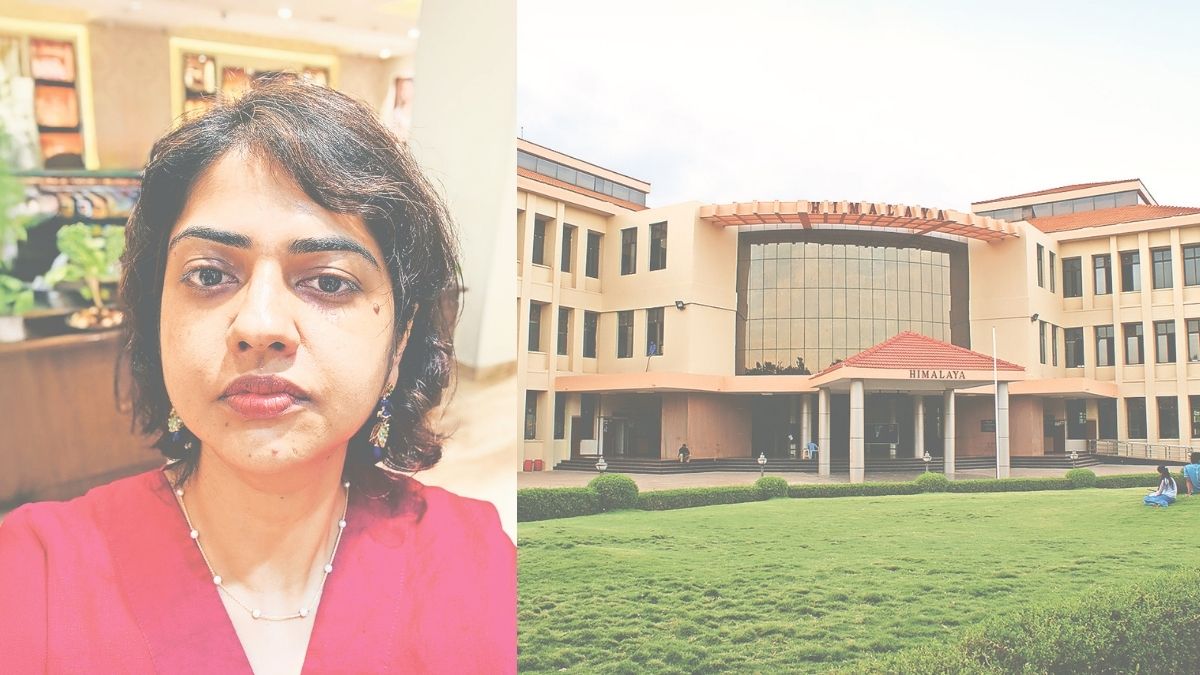
On a humid afternoon in Chennai, inside the sprawling campus of Indian Institute of Technology Madras, a small team of engineers huddles over a prototype that could one day power a satellite launch. A few buildings away, another group is training AI models to automate enterprise workflows, while elsewhere, researchers are testing underwater drones designed to inspect offshore infrastructure.
This convergence of ideas is no accident. It is the outcome of a carefully built ecosystem that is steadily transforming IIT Madras into one of India’s most influential hubs for deeptech entrepreneurship. At the centre of this transformation is IIT Madras Incubation Cell (IITMIC). What began in 2013 as a modest initiative to support student entrepreneurs has evolved into a full-fledged venture-building platform that nurtures startups across manufacturing, robotics, automotive, defence, aerospace, AI, machine learning, quantum technologies, fintech, healthtech, agritech, climate tech, IoT, and cyber-physical systems.
Unlike many traditional incubators that prioritise rapid scale and quick exits, IIT Madras has focused on deeptech ventures tackling complex, high-impact problems. “These are not businesses that can be built overnight. They demand years of research, access to sophisticated labs, and sustained funding,” said Tamaswati Ghosh, CEO, IITMIC.
The incubation cell supports startups with infrastructure, mentorship, industry access, and patient capital, staying with founders through the journey from concept to commercialisation. “This long-term approach has enabled founders to tackle ambitious challenges without the pressure of immediate returns,” Ghosh added.
Beyond Quick Exits
The results are becoming visible. As of May 2026, IITMIC’s portfolio includes 567 startups. In FY26 alone, the incubation cell added 112 new deeptech ventures. Together, these startups have raised over ₹17,000 crore in venture capital funding and are collectively valued at more than ₹74,100 crore. More than 60% of the founders come from outside the IIT Madras ecosystem, reflecting its growing national reach.
Among the most prominent success stories is Agnikul Cosmos, the startup developing small satellite launch vehicles powered by 3D-printed engines. Emerging from the IIT Madras ecosystem, the company reflects India’s growing ambitions in private space exploration. “In the early years, the incubation cell gave us everything – support, ecosystem awareness, a place to be and most importantly, credibility,” said Srinath Ravichandran, co-founder & CEO, Agnikul Cosmos. “In those early years where everything is uncertain for a startup, IITMIC was the guiding light that showed us that there is a path ahead.”
The ecosystem has also produced companies that have become industry leaders. Ather Energy has emerged as one of India’s best-known electric mobility brands, building not just vehicles but also charging infrastructure. In enterprise AI, Uniphore has established a global presence with AI-driven automation solutions, while HyperVerge develops facial recognition and identity verification technologies used across fintech and governance.
The diversity extends beyond software. Planys Technologies deploys underwater drones for industrial inspections, while GalaxEye is building next-generation satellite imaging systems capable of capturing data in all weather conditions. In agriculture, Stellapps Technologies is digitising dairy supply chains using IoT and analytics. “When we began about 15 years ago, dairy tech was barely a category, let alone one that investors or industry took seriously,” said Ranjith Mukundan, co-founder & CEO, Stellapps Technologies. “IITM Incubation Cell gave us the bootstrap fund, space, mentorship, connection to its immense network and most importantly the credibility to dream big and build with rigour.”
Research Park Multiplier
A key differentiator for the ecosystem is the IIT Madras Research Park, where startups work alongside multinational corporations and research teams. This proximity accelerates collaboration, shortens development cycles, and helps innovations move faster from lab to market.
Equally important is the close integration between academia and entrepreneurship. Many startups are founded by students, alumni, and faculty members, creating a steady pipeline of ideas rooted in rigorous research. This allows founders to tap into one of IIT Madras’s greatest strengths – its intellectual capital.
Over time, the model has also begun attracting significant investor attention. Venture capital firms and global partners are increasingly viewing Chennai – long overshadowed by Bengaluru and Delhi in India’s startup narrative – as a serious destination for deeptech innovation, feels Ghosh.
Yet the significance of IIT Madras’s rise extends beyond funding numbers and valuations. At a time when much of India’s startup boom has been driven by consumer internet businesses, IIT Madras is helping shift the focus toward strategic technologies with long-term implications for economic competitiveness and national capability.
Back on campus, as prototypes are tested and ideas refined, the momentum is unmistakable. The road from lab to market remains uncertain for many startups. But with an ecosystem deliberately designed to support that journey, IIT Madras is quietly demonstrating that India can build not just startups, but globally competitive deeptech companies.