



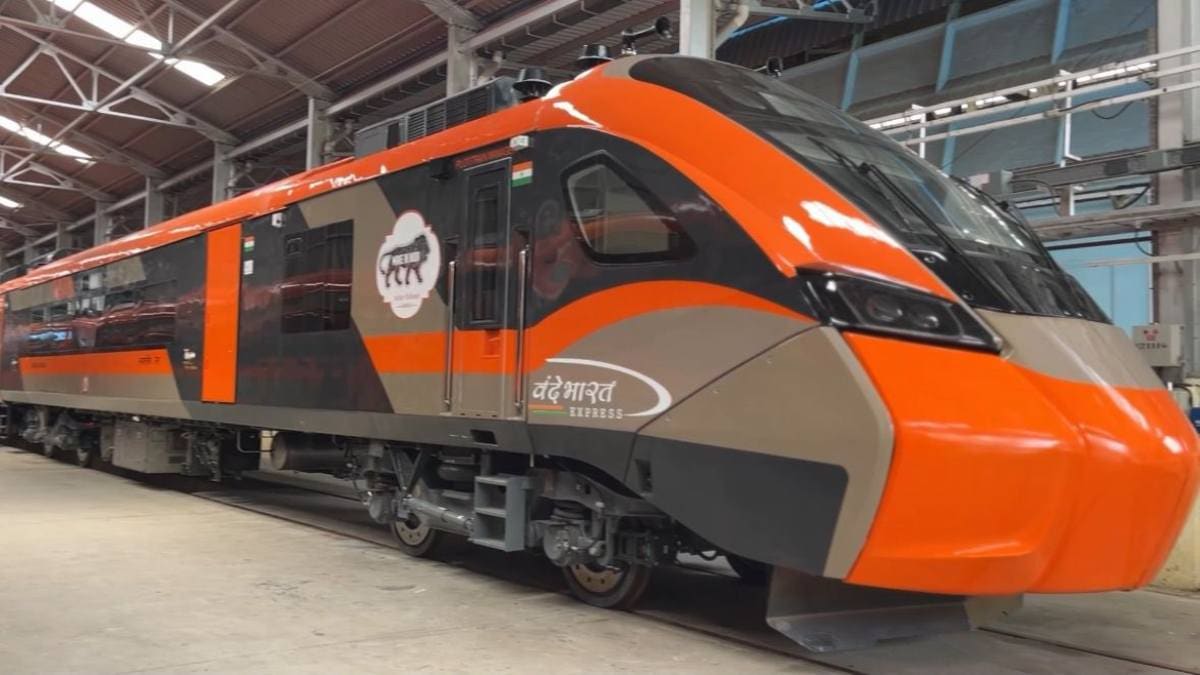
Rail Vikas Nigam‘s special purpose vehicle for the Vande Bharat Sleeper project has pushed back the delivery of its first prototype trainset to December 2026, six months later than the company had previously indicated.
The revision was disclosed by RVNL Chairman and Managing Director Saleem Ahmad during the company’s Q4 FY26 earnings conference call on May 26.
“We are hopeful that the first prototype trainset is targeted for launch in December 2026,” Ahmad reiterated at the Q4 conference call, referring to Kinet Railway Solutions, the joint venture between RVNL and Russian rolling stock manufacturer TMH that is executing a Rs 14,400 crore contract to build 120 Vande Bharat Sleeper trainsets over five years.
As recently as February this year, Ahmad had pegged the milestone at June 2026, telling analysts during the Q3 earnings call that delivery of the prototype to Indian Railways was on track “as per the programme of the railway.”
What changed
In the Q4 earnings transcript, RVNL’s Director (Operations) Mritunjay Pratap Singh laid out the delivery schedule that follows prototype submission. After the prototype is handed over, Indian Railways typically requires three to four months for trials, testing, and statutory certification before series production can begin. In the first full production year, five trainsets are to be supplied, with numbers scaling up each subsequent year until all 120 sets are delivered within the five-year contract window.
The train already running
While Kinet’s prototype remains on the drawing board, a different version of the Vande Bharat Sleeper has already entered service. The first commercial run took place on January 17, 2026, on the Howrah-Kamakhya route in eastern India, operated by a trainset developed by BEML using technology from the Integral Coach Factory in Chennai. That prototype had been rolled out in September 2024.
The Howrah-Kamakhya service covers approximately 968 kilometres, with a scheduled travel time of around 14 hours, roughly three hours faster than the existing Saraighat Express on the same corridor. According to data from the Ministry of Railways, it operates at a maximum speed of 110 kmph and carries up to 823 passengers across 16 coaches, offering three classes: First AC, Second AC, and Third AC.
The Ministry of Railways has said it plans to roll out 12 Vande Bharat Sleeper services by March 2027.
Three manufacturers, one contract
The Ministry of Railways split the Vande Bharat Sleeper manufacturing contract among three parties: BEML, Kinet Railway Solutions, and a consortium of Titagarh Rail Systems and Bharat Heavy Electricals Limited, as per Indian Express. BEML’s early delivery and launch gave it the first-mover position, while Kinet and the Titagarh-BHEL combine are still in the prototype phase.
RVNL’s broader position
The Vande Bharat Sleeper contract is one of several large projects RVNL is tracking. Ahmad told analysts that the company’s total order book stood at Rs 99,262 crore as of March 31, 2026, with railways accounting for approximately Rs 57,000 crore of that figure.
Revenue grew 4.78% year-on-year in Q4 FY26 on a standalone basis, but profitability came under pressure.