



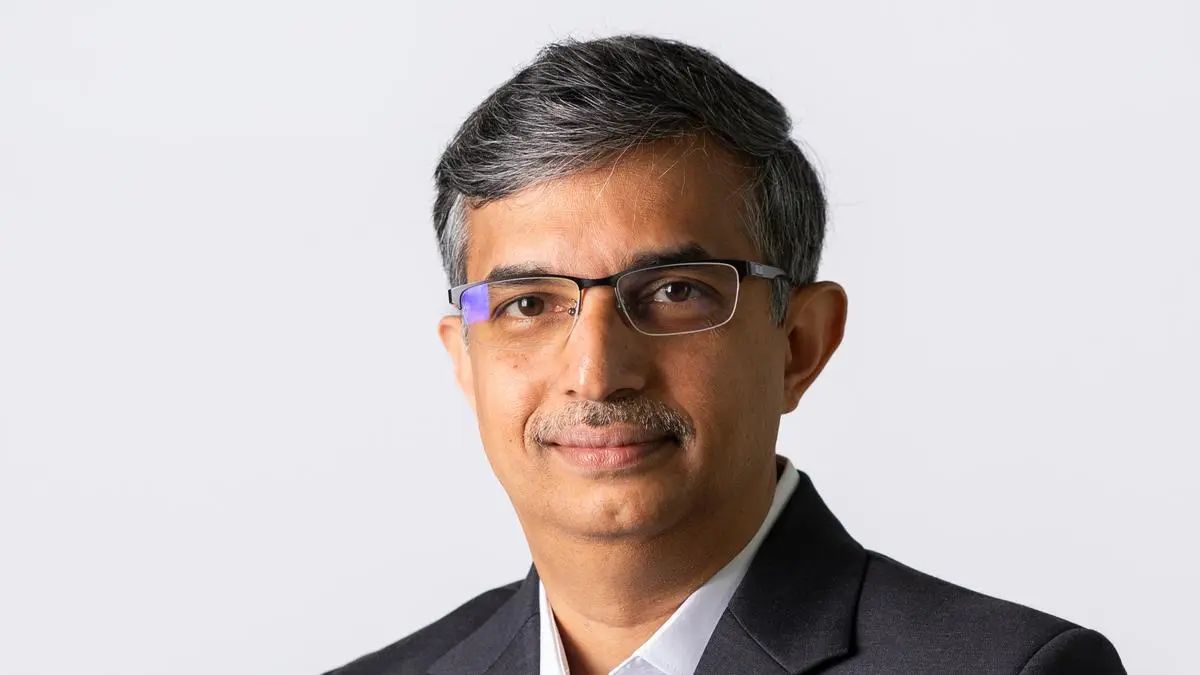
As banks accelerate the adoption of agentic AI across processes, they are also stepping up the fortification of cyber defences and stress-test systems against potential security risks posed by increasingly sophisticated AI models such as Anthropic’s Mythos and Fable. Sajit Vijayakumar, CEO of digital banking solutions provider, Infosys Finacle, tells Poulomi Chatterjee about deploying agentic AI responsibly and enhancing preparedness against cybersecurity risks. Excerpts:
How is Infosys Finacle ensuring the structured deployment of agentic AI in the BFSI segment?
Agentic AI represents a fundamental shift in banking automation – from systems that respond to systems that reason, decide and act. However, deploying agents alone doesn’t deliver enterprise value. It requires the right architecture, governance and operational foundations, including open, composable and cloud-native core systems, well-governed data, clearly defined business policies, and secure orchestration layers that keep AI agents within deterministic guardrails.
Finacle’s Agentic AI platform is purpose-built for agentic AI-powered banking — managing the full agent lifecycle from creation and testing through deployment, evolution, and retirement. A low-code, no-code environment accelerates experimentation without deep technical overheads, while native support for MCP and A2A protocols enables structured, multi-agent collaboration across systems and functions. Governance is embedded by design, ensuring every agentic operation remains secure, compliant and auditable.
Critically, by exposing every core banking capability as an MCP tool, Finacle empowers banks to orchestrate agents independently, allowing flexible agentic workflows across internal systems, partners, and customer interactions.
Leading institutions are adopting agentic AI incrementally. They begin with focused, high-impact use cases in customer service, operations and employee productivity before expanding into more complex, decision-intensive workflows. This disciplined approach enables a structured rollout and allows banks to capture early value while maintaining control and trust that the BFSI sector demands.
How can India’s BFSI segment better defend itself against AI-enabled cyberattacks?
As AI grows more powerful, it also becomes more accessible to threat actors, which makes cybersecurity a boardroom priority. Banks need a multi-layered strategy that combines advanced technology, strong governance and continuous vigilance. This starts with modernised security architectures, zero-trust principles, stronger identity and access management, and comprehensive monitoring across digital channels and enterprise systems.
AI itself is central to the defence. Institutions can use it to spot anomalies, detect emerging threats, speed up incident response and improve fraud prevention. At the same time, they must implement robust governance around AI models, data usage and third-party ecosystems to manage new categories of risk. Resilience matters just as much. Banks should regularly test their defenses, strengthen resilience, raise employee awareness, and build security into every stage of technology development and deployment. In the age of AI, cybersecurity can no longer be a standalone function – it has to be an integral part of every digital transformation initiative.
As agentic AI adoption increases in the sector, is there scope for restructuring?
Agentic AI will reshape how work gets done within financial institutions, but we see this primarily as a workforce transformation opportunity rather than a workforce reduction story. Historically, technology has automated repetitive tasks and freed people to focus on higher-value work. We expect the same pattern to continue. Routine processes, manual reviews and repetitive workflows will increasingly be automated allowing employees to concentrate on customer engagement, innovation, risk management, strategic decisions, and relationship-building.
This transition will require deliberate investment in reskilling and upskilling so teams can work effectively alongside AI. We also expect new roles to emerge around AI governance, model oversight, agent orchestration, data stewardship and AI-driven customer experience design. Banks that proactively redesign roles, invest in capability building and use AI to augment human capabilities will gain a competitive advantage in both operational performance and talent acquisition.
Has there been a ramp-up in modernisation projects across the banking sector?
Yes, and the pace of acceleration is unmistakable. Accumulated technology debt is a key driver. Many institutions continue to operate on decades-old core systems built for batch processing, siloed operations and monolithic architectures. Such environments limit agility, inflate operating costs, and struggle to support modern requirements such as real-time processing, cloud adoption, and embedded finance. The rise of AI is intensifying this pressure. AI-powered banking requires high-quality data, real-time processing and flexible integration—areas where legacy technology falls short. In effect, banks are increasingly moving away from disruptive “rip-and-replace” strategies towards progressive modernisation. They are adopting composable, cloud-native platforms, API-first architectures and event-driven systems that reduce technical debt incrementally while allowing innovation to continue.
At Finacle, we are seeing first-hand demand from institutions seeking platforms that support continuous modernisation, reduce dependence on legacy systems and keep core banking operations stable while enabling uninterrupted innovation.