



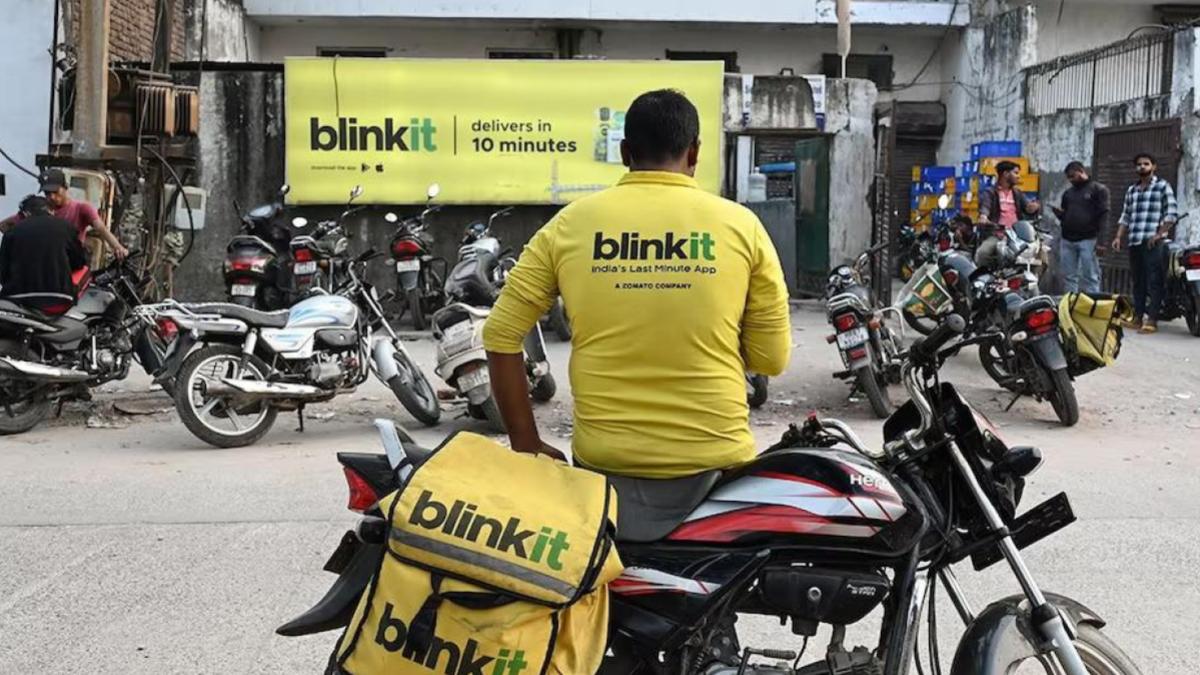
The Khasi Hills Autonomous District Council (KHADC) has halted Blinkit’s operations in Shillong earlier this month, denying the quick-commerce firm the trading licence it needed for its Jingkieng Nongthymmai premises. Blinkit had cleared every central and state requirement on paper but that didn’t matter. The council still said no.
Its authority comes from Paragraph 10 of the Sixth Schedule to the Constitution, which lets the KHADC bar any non-tribal individual or firm from running a wholesale or retail business in the district without its explicit clearance. It is a colonial-era safeguard for indigenous livelihoods that predates e-commerce by decades.
To understand why the council moved against Blinkit specifically, it helps to understand what Blinkit actually is now.
What is Blinkit’s business model?
Until September 2025, Blinkit ran a marketplace model. Under this, it was a neutral platform connecting sellers and buyers, similar to how Amazon or Flipkart largely operate in India. Since then, it has shifted to an inventory-led structure in which Blinkit itself owns and stocks the goods sitting in its dark stores, rather than merely listing third-party sellers.
That single change reclassified Blinkit, in the eyes of regulators, from a digital signboard into something closer to a retailer with a very fast delivery van.
That distinction is precisely what’s under challenge in Shillong.
Blinkit vs local shops
Chief Executive Member Winston Tony Lyngdoh said the council would not license any platform whose model threatens indigenous traders, citing more than 4,000 grocery stores already operating in the city.
Blinkit secured a No Objection Certificate from the Nongrim Hills traditional bodies and briefly ran preliminary operations with hundreds of delivery partners. However, the council didn’t treat the NOC as a substitute for its own licence and Blinkit suspended deliveries once that became clear.
How far does this licensing power reach?
The Trading by Non-Tribals Regulation, 1954, covers the whole Khasi Hills district. Paragraph 20 of the Sixth Schedule appears to carve out an exemption for Shillong’s municipal area but the Supreme Court closed that loophole in 2002, ruling that non-tribal traders within municipal Shillong still need the council’s licence. What’s genuinely unresolved is a June 20 amendment that would require a separate licence for every non-tribal employee a firm hires; a provision cabinet minister Sanbor Shullai has asked the Governor to block, arguing that Paragraph 10 licenses trade, not individual employment.
Inventory-led under scrutiny
The inventory-led model is drawing scrutiny well beyond Meghalaya, just through different regulatory doors. The Competition Commission of India received a complaint from the All India Consumer Products Distributors Federation in 2024 alleging predatory pricing that undercuts kirana stores.
Separately, the Department for Promotion of Industry and Internal Trade questioned Blinkit, Zepto and Swiggy Instamart in 2024 over possible breaches of FDI rules, which permit full foreign ownership in marketplace models but forbid it where a platform holds inventory.
What happens now?
The KHADC’s refusal stopped Blinkit cold immediately. Autonomous district councils across Assam, Meghalaya, Tripura and Mizoram hold similar independent licensing powers, meaning a clearance in Delhi or Mumbai guarantees nothing in Shillong, Aizawl or Agartala.
And because the 1954 Regulation was written for shopfront traders, not warehouse-based delivery networks, no council or court has yet settled whether Blinkit’s model even falls within its scope. Until one does, the council’s word is final no matter what national regulators eventually decide.