



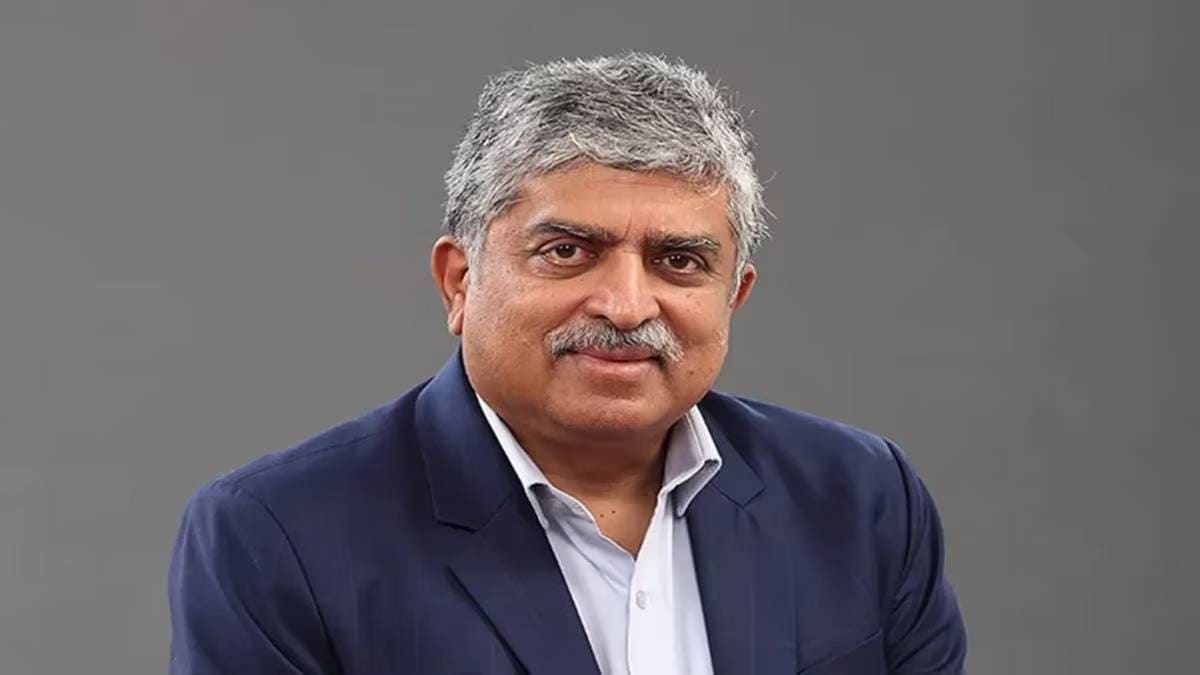
Infosys co-founder and non-executive chairman Nandan Nilekani on Friday dismissed existential questions around the IT firm’s legitimacy, saying that the company is now “more relevant than ever.” Despite automation in tasks like coding and productivity efficiencies, there’s still a lot that remains to be done at deploying AI at the enterprise level, he said in the firm’s FY26 annual report.
“While we will embrace the best coding tools and improve our productivity, there is much more to do in the software development life cycle. Solutions need to be tested and validated, and architectures designed for speed, scale and resilience. Cybersecurity must be prioritised, and data protected per company rules and other governance policies. There is plenty to be done as we address the deployment gap in our large enterprise customers,” he noted.
The role of transaction systems
Even as new capabilities from AI inject intelligence, improve user experience and increase the speed of tasks through automation, the age-old “highly scalable and reliable transaction systems of yore” are still very much relevant in current times, he said.
The struggles with moving projects from pilot to scale is a deployment gap that involves, what Nilekani called, a “root-and-branch surgery,” which would redesign business processes and customer journeys and operating models. Nilekani called “technical debt” a massive liability that was a roadblock for the pace that AI demands.
“What still matters is first-principles thinking: learning the underlying concept before reaching for the tool. The demand for human capability grows, not shrinks,” he added. “The World Economic Forum projects that by 2030, 92 million jobs will be displaced and 170 million created, a net gain of 78 million. Capturing that gain requires empathy for the people affected, clarity about the outcomes sought, and the intellectual honesty to course correct when technology and human judgment diverge,” he noted.
Inside Parekh’s pay package
Additionally, company CEO Salil Parekh’s annual remuneration stood at Rs 82.6 crore for FY26, which is 2.5% higher than his compensation of Rs 80.6 crore in FY25, the annual report showed. Parekh’s salary notably comprised of 361,575 in restricted stock units (RSUs).
In comparison, Tata Consultancy Services (TCS) CEO K Krithivasan earned a total annual remuneration of Rs 28.1 crore in FY26. Meanwhile, Wipro and HCLTech are yet to release their annual reports for the fiscal year.
“Our disciplined execution delivered over $20 billion in revenue, a strong adjusted operating margin of 21%, and $3.7 billion in free cash flow — enabling us to return over $4 billion to shareholders through dividends ($2.1 billion) and share buybacks ($2 billion). We announced a total dividend of ₹48 per share. Last year we recruited over 20,000 college graduates,” Parekh noted in his message to company shareholders in the report.