



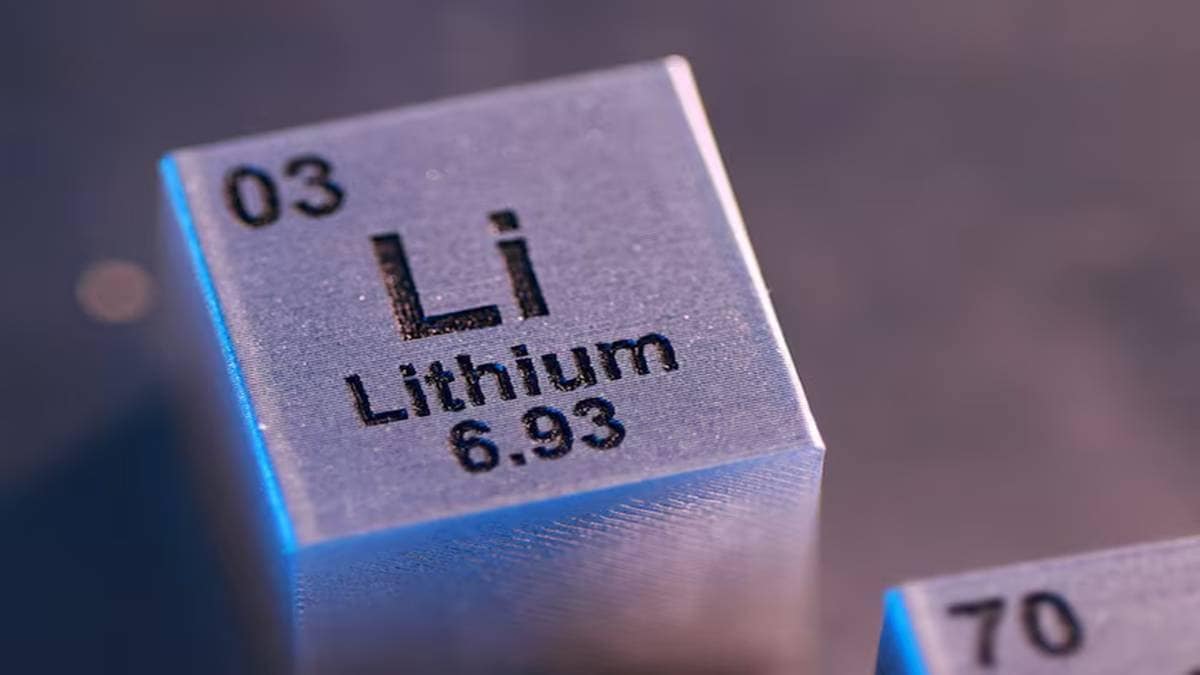
India is expected to soon unveil a policy to encourage domestic processing of lithium and nickel, two minerals that are crucial for electric vehicle (EV) batteries, news agency Reuters reported quoting sources.
The proposed scheme, being prepared by the Ministry of Mines, is expected to have an outlay of around Rs 30 billion (about Rs 3,000 crore). The move is aimed at strengthening India’s supply chain for critical minerals as the country pushes to expand EV adoption and reduce dependence on imports.
Reuters had first reported in January that the government was working on an incentive programme covering lithium and nickel processing. In April, the mines secretary said the government had shortlisted two critical minerals linked to securing India’s EV value chain for a processing policy, though he did not identify them.
Why lithium and nickel matter
Lithium and nickel are key materials used in batteries that power electric cars, scooters and other clean-energy technologies. India currently has limited capacity to process these minerals domestically, even as demand is expected to rise in the coming years.
The government is targeting 30% electric car penetration and 80% electric two-wheeler penetration by 2030. At present, the figures stand at around 6% and 9%, respectively, according to Reuters.
Industry experts say greater domestic processing capacity could help improve supply security and support the growth of India’s battery manufacturing ecosystem.
What the proposed scheme could offer
According to a government presentation reviewed by Reuters in January, the proposed policy may provide a 15% capital subsidy for eligible investments in lithium and nickel processing projects.
The incentives could be available for five years and would be linked to the performance of the plant and utilisation targets. Reuters had earlier reported that the government was considering support for two lithium-processing projects and two nickel-processing projects in the initial phase to help meet domestic demand by 2030.
To qualify for incentives, lithium processing plants would need a minimum capacity of 30,000 metric tonnes, while nickel processing facilities would require at least 50,000 metric tonnes.
The subsidy is expected to be released in stages, subject to companies meeting operational benchmarks set by the government.
India identified more than 20 minerals, including lithium, as critical for its energy transition efforts in 2023. It is also exploring technical collaborations with other nations to develop expertise in lithium processing.
India has been increasing its focus on securing supplies of critical minerals needed for clean energy technologies and advanced manufacturing.