



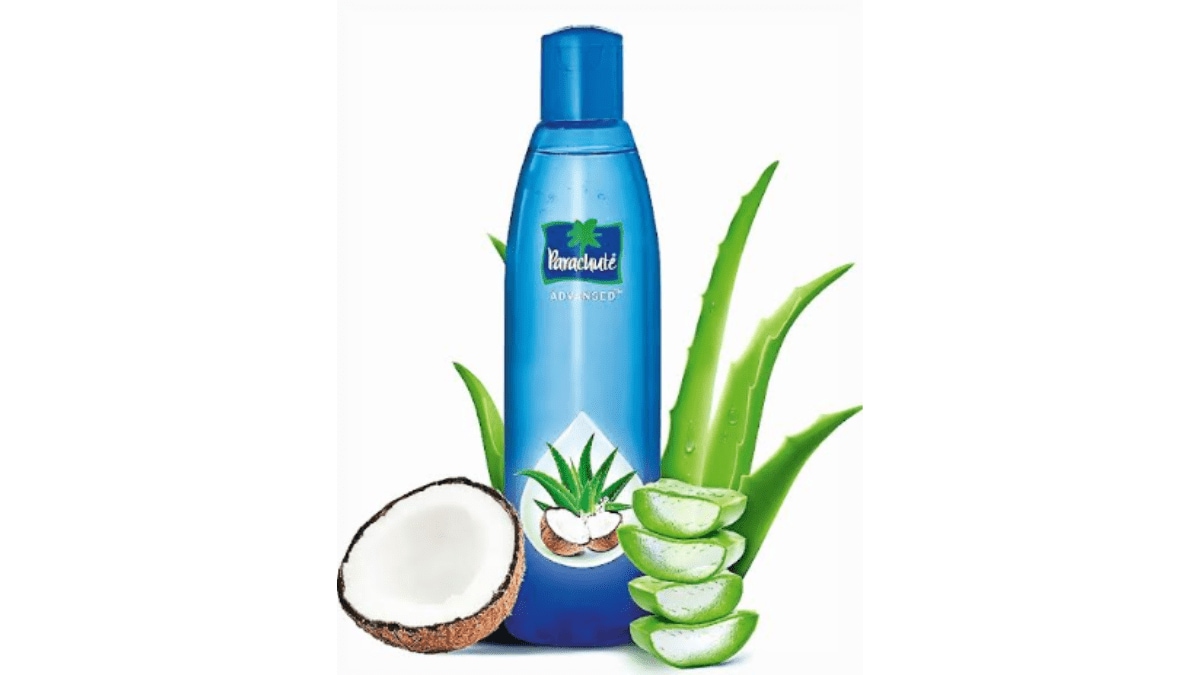
Around the second quarter of the financial year ending March 31, 2025 (Q2 FY25), the prices of copra, the main ingredient used to make coconut oil, started to rise. As a result, the input cost for coconut oil makers shot up 40-60%. Marico, like some competitors, was forced to increase the price of its coconut oil brand Parachute.
As of Q3 FY26, Marico had increased the prices of its Parachute brand by 60%. Needless to say sales volume of Parachute declined.Despite the price hike and the volume decline, Parachute’s market share in the coconut hair oil segment remained steady. In fact, it increased marginally — from 53% by end of FY25 to 54% by Q3 FY26. Add Nihar Naturals and Oil of Malabar, the other two brands in Marico’s coconut hair oil portfolio, and the company continues to rule over 64% of the segment. To be sure, coconut oil makes up almost 47% of India’s `10,000-crore hair oil market.
Parachute and growth
On the revenue side as well, Parachute has delivered growth. In the three quarters of FY26, the revenue grew 31%, 59% and 50% respectively, on a quarter on quarter basis contributing about 35% of the company’s topline, remaining the highest revenue generator as usual.
For the entire FY25 period, Parachute’s revenue grew almost 13% making 38% of Marico’s `8,110 crore India business.
So how did the brand manage to keep the momentum up despite the price hike?
“Competing on price is not a challenge in India anymore because people will pay for value,” says Rajendra Srivastava, executive director, ISB Centre for Business Innovation. What worked in Parachute’s favour is the brand’s strong legacy, he says. “Parachute is almost synonymous with the coconut hair oil category,” adds Srivastava.
Daily habit and family memory
That apart, in categories that are deeply embedded in daily habit and family memory, consumers don’t switch brands easily, say experts. “They might buy a smaller pack, oil their hair less frequently, but they don’t abandon the brand,” says Rutu Mody Kamdar, founder, Jigsaw Brand Consultants. “The price elasticity of a legacy brand in a daily-use category is far lower than marketers often assume, especially when the brand has never given consumers a reason to question its integrity,” she adds.
In Q3 FY26, copra prices showed a correction of 30%; Marico expects the situation to normalise over the next couple of quarters. But the brand should not take its sway over the coconut hair oil space for granted, cautions Ankur Bisen, senior partner, The Knowledge Company (previously known as Technopak). He cites Santoor, a brand owned by Wipro Consumer Care & Lighting, that overtook HUL’s Lifebuoy recently to become the market leader in the Indian soap market. “In the FMCG sector, a brand is always passed on to the next generation. Parachute will have to find ways to stay relevant to the Gen Zs,” says Bisen