



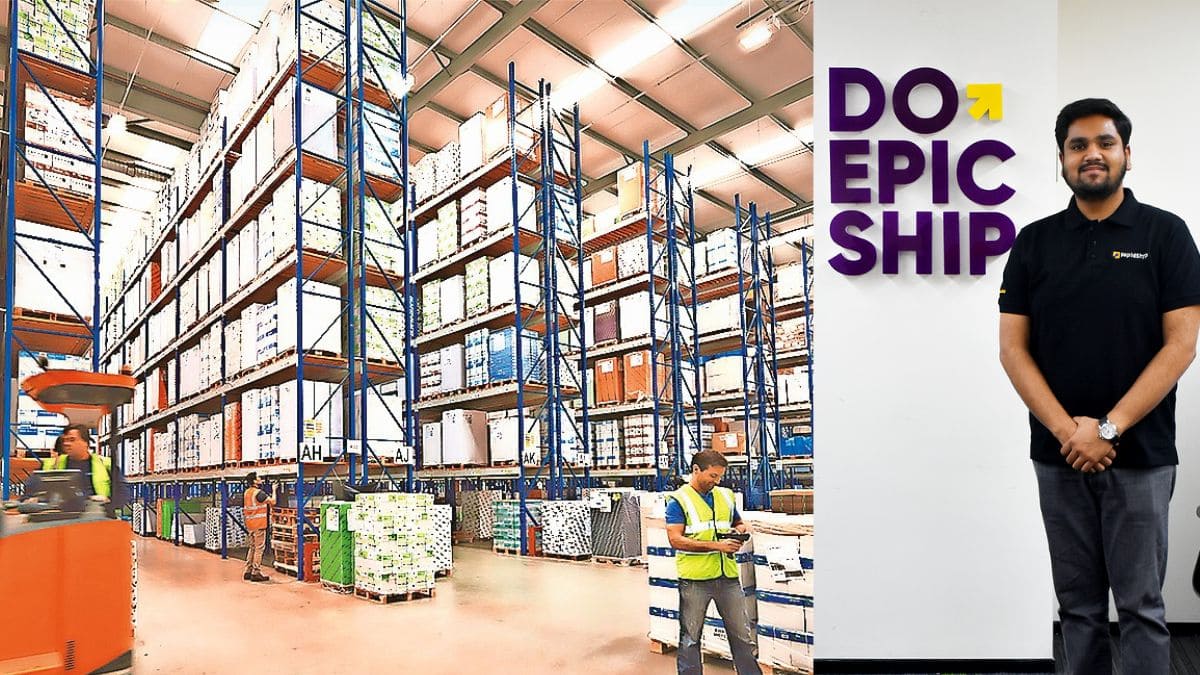
By Raghav Singhal
Every time a customer places an order online, there is a small moment of satisfaction for the brand. It means the campaign worked, the product stood out, and the customer chose to buy. Yet that moment no longer ends at checkout. It is now followed by a different question. Will the order reach on time, and will the experience match the promise that was made?
Today, that question matters more than ever. The gap between what a brand promises and what a customer actually experiences is where loyalty is built or quietly buried.
What happens after a customer clicks “buy”? For most brands, the honest answer is that control is handed over and fingers are crossed. Speed, real-time communication, and delivery reliability have become the true benchmarks of brand quality. That feeling is not just frustration. It is a relationship breaking in real time.
Not about selling faster
Real-time commerce is not about selling faster. It is about fulfilling with precision, every single time. Is a late delivery just a logistical inconvenience? Ask any brand that has experienced negative reviews following a festive season sale. One poor delivery can quietly cancel out an entire month of acquisition spend.
Hence, brands that treat shipping as a retention tool, rather than a cost line to minimise, are the ones that build relationships worth keeping.
Gone are the days when “3-5 day delivery” used to pass without question. Today, a customer who ordered a birthday gift on Wednesday does not want a range. They want a date, a time, and a message the moment their package is on its way. This is where intelligent courier selection and automated routing are now making that level of precision possible at scale for brands.
Think about a customer buying a skincare product for the first time. But three days later, there is no tracking update, no communication, and no clarity. Will they order again? Probably not. Today, a branded tracking page, a timely delivery notification, or a smooth return process are the final chapters of a marketing story a brand has spent money to tell.
Same-day and next-day delivery are goals that brands announce, but few are structurally prepared to deliver on. Reaching that standard requires distributed warehousing, intelligent order routing, and a technology layer that connects every part of the fulfillment stack. Real-time commerce cannot be built on quick fixes.
It depends on connected systems, smart routing, strong fulfilment networks, and technology that works quietly in the background. Hence, the next chapter of Indian e-commerce will not be written by brands with the largest advertising budget but by those who can master the full customer experience, from the moment of purchase to the moment of delivery.
The author is founder & ED, RapidShyp
Disclaimer: The views expressed are the author’s own and do not reflect the official policy or position of Financial Express.