



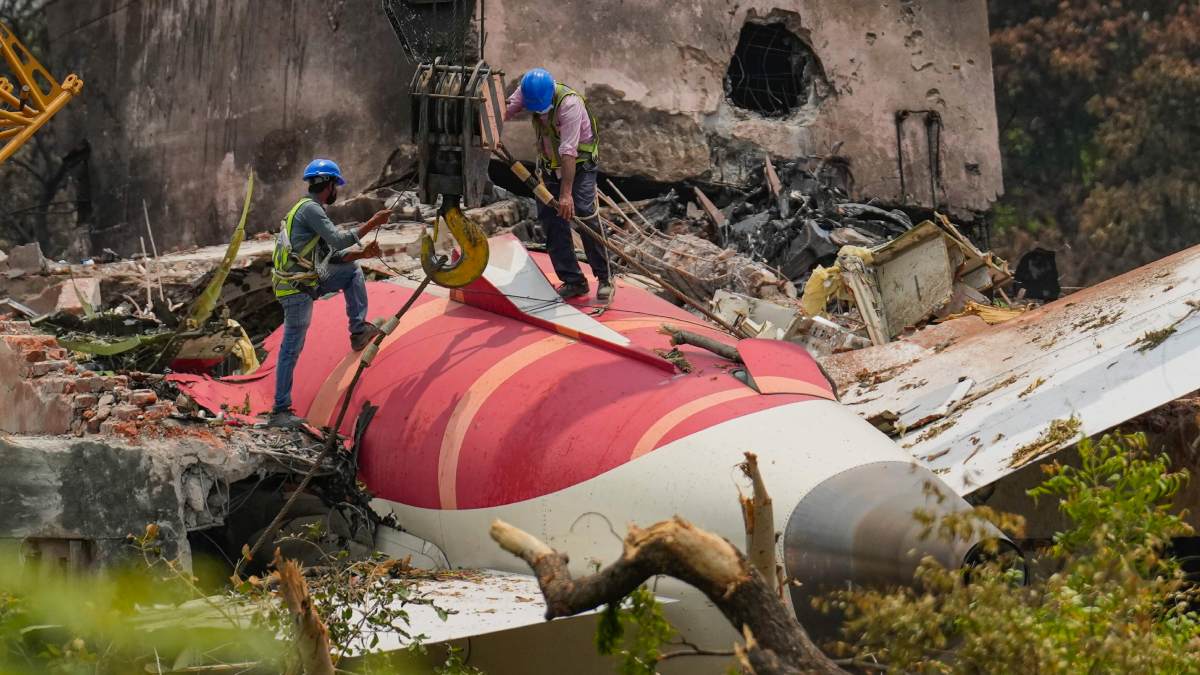
More than a year after the Air India Boeing 787 crash that claimed 260 lives near Ahmedabad, investigators are in the final stages of finding out what went wrong. A new court filing reviewed by Reuters shows that India’s Aircraft Accident Investigation Bureau (AAIB) has completed the cockpit voice recorder transcript, conducted a psychological autopsy, and expects to complete the remaining investigation in the coming weeks.
The filing, however, did not say whose psychological autopsy was conducted. It also did not reveal any findings about the crash, which killed 260 people shortly after the aircraft took off from Ahmedabad.
Investigation still waiting for some key data
The AAIB said one important part of the investigation is still pending. Investigators are waiting for the analysis of data taken from the aircraft’s engine monitoring unit. This data was recovered in late May.
The agency also said that its review of some organisational factors linked to the crash is still ongoing. It did not provide further details about what those factors involve.
Final report likely by October
The AAIB expects to complete the remaining investigation work within about six weeks, although it said the timeline depends on some pending “external dependencies.”
After that, the bureau plans to prepare a draft final report around October. The draft will then be shared with countries that took part in the investigation so they can review it and send their comments before the report is finalised and released publicly.
The US National Transportation Safety Board (NTSB) is among the agencies that will receive the draft report, according to Reuters.
Investigators spoke to pilots, crew and technical staff
As part of the investigation, the AAIB said it interviewed several people connected to the flight and the aircraft. These included Air India Boeing 787 pilots, crew members who had earlier flown with the pilots involved in the crash, technical staff who helped prepare the aircraft, air traffic controllers, weather officials and experts in human factors.
The bureau also said investigators visited the homes of the flight crew’s families during the early stages of the probe.
Captain’s father filed case after investigators visited him
The latest details came to light after a lawsuit filed by Pushkar Raj Sabharwal, the father of the aircraft’s captain. Sabharwal said that when investigators visited his home last year, they suggested that his son had shut off the fuel supply to the aircraft’s engines soon after takeoff. Upset by what he believed was an accusation against his son, he approached the court.
The court case led to the AAIB filing documents that revealed the current status of the investigation.
Last year, Reuters reported that early assessments by US officials suggested the cockpit voice recording supported the view that the captain had cut off the flow of fuel to the aircraft’s engines.
At the time, however, the AAIB said it was “too early to reach any definite conclusions” about what caused the crash.
Media reports affected the investigation, says AAIB
The AAIB said that media reports and public discussions blaming the pilots had made its work more difficult. According to the bureau, such speculation caused some witnesses to become “restrictive and non-responsive” while investigators were trying to gather information.
The agency said the investigation has now entered the analysis phase, where experts are drawing findings and conclusions by examining operational, technical, human, and organisational aspects of the crash.