



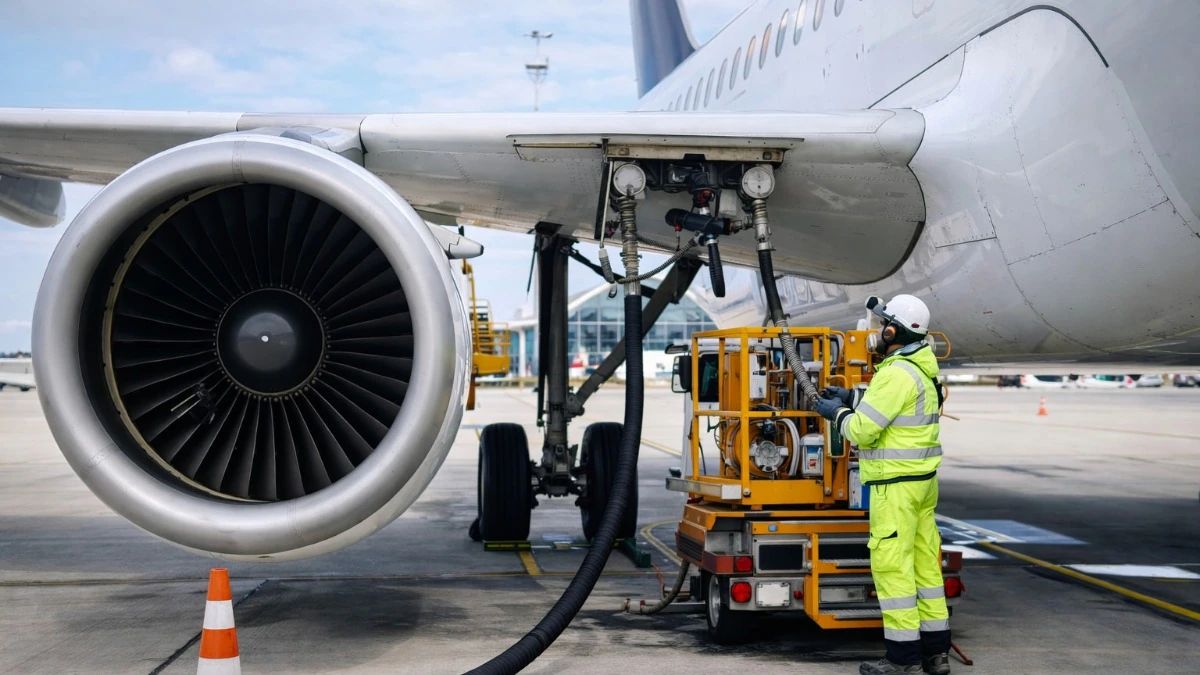
The Union Cabinet on Wednesday approved a Rs 10,000-crore aviation turbine fuel (ATF) price stabilisation fund, expanding the Centre’s support package for the aviation sector as airlines and state-run fuel retailers grapple with the fallout of the West Asia conflict and a sharp rise in jet fuel prices.
The latest intervention comes weeks after the government announced Rs 5,000 crore of credit support for airlines under the Emergency Credit Line Guarantee Scheme (ECLGS) 5.0. Together, the two measures seek to address liquidity pressures on carriers as well as mounting fuel under-recoveries faced by oil marketing companies (OMC).
The one-time budgetary support, approved by the Cabinet, will be provided as an interest-free advance to OMCs to enable them to supply ATF to scheduled Indian airlines at a pre-determined benchmark price for both domestic and international operations.
Announcing the decision, the government said the measure is aimed at shielding airlines from extreme fuel price volatility, ensuring continuity of air services and preserving connectivity to regional and smaller cities.
The intervention follows an unprecedented surge in aviation fuel prices. International ATF prices have risen from Rs 60.50 per litre in March 2026 to Rs 142 per litre in May 2026, significantly increasing operating costs for airlines. The impact has been compounded by the closure of Pakistan’s airspace, forcing Indian carriers to take longer routes to Europe, North America and Central Asia.
“ATF accounts for nearly 40% of airline operating costs and during periods of extreme fuel volatility can constitute up to 60% of total operating expenditure,” the ministry of civil aviation said.
Under the approved framework, the Rs 10,000-crore corpus will compensate OMCs whenever prevailing import parity prices exceed the benchmark price fixed under the stabilisation mechanism. The support will be available to all willing scheduled Indian airlines through a tripartite arrangement involving the ministry of civil aviation, the ministry of petroleum and natural gas and participating fuel retailers.
The scheme also provides relief to OMCs, which have been absorbing losses on aviation fuel sales as domestic prices remained below international parity levels.
“OMCs are estimated to be losing around Rs 30 per litre on aviation fuel sales. At current consumption levels, this translates into an under-recovery of nearly Rs 93 crore per day,” Prashant Vasisht, senior vice-president and co-group head, corporate ratings, Icra said.
According to the government, the arrangement will remain operational for 36 months, subject to annual review or until the entire support amount is recovered. A clawback mechanism has also been built into the scheme, under which gains arising from any moderation in international fuel prices will be recovered from OMCs and returned to the Consolidated Fund of India.
The government said the measure is expected to moderate fare volatility, support domestic and international air connectivity and sustain employment across airlines, airports, maintenance and repair organisations, tourism, hospitality and logistics sectors.