The passenger vehicle (PV) industry closed FY26 on a strong note, clocking robust growth in March and capping a year marked by a sharp second-half recovery driven by policy support, rising SUV demand, and growing adoption of electric vehicles.
Domestic PV wholesales rose 16.2% year-on-year in March 2026 to 451,394 units, compared with 388,466 units in the same month last year, according to data released by companies. The surge was led by double-digit gains at key automakers, particularly Tata Motors and Mahindra & Mahindra, as demand momentum strengthened across segments.
For the full financial year 2025-26, the industry registered sales of around 4.7 million units, an 8.39% increase over 4.4 million units in the previous year, marking a new peak for the domestic car market.
H2 Demand Unlock
Industry leaders said the year unfolded in two distinct phases, with a sluggish first half—impacted by muted demand and macroeconomic pressures—followed by a strong rebound in the latter half after the implementation of GST 2.0 in September 2025. The tax rationalisation acted as a demand trigger, boosting consumer sentiment and showroom footfalls, particularly during the festive season.
“The FY26 was a year of two halves with a challenging first half followed by a boost in the second half with GST rate reduction in September 2025 acting as a demand unlock, ultimately helping the industry clock sales of around 47 lakh units,” Maruti Suzuki India Senior Executive Officer, Marketing & Sales, Partho Banerjee said.
This helped the industry outperform the Society of Indian Automobile Manufacturers’ (SIAM) projection of low single-digit growth of around 1–4% for FY26, which had factored in a high base and continued weakness in entry-level segments.
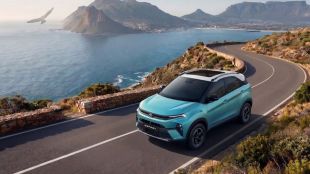
Automakers said structural shifts in consumer preferences also played a key role in sustaining growth. Sport utility vehicles (SUVs) continued to dominate the market, driving volume expansion across manufacturers’ portfolios and increasing their share in overall PV sales.
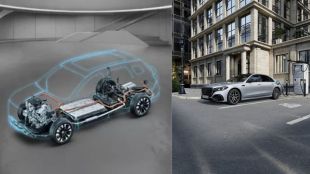
At the same time, interest in cleaner mobility options gathered pace, supported by improving infrastructure, policy push, and wider product availability.
Powertrain Pivot
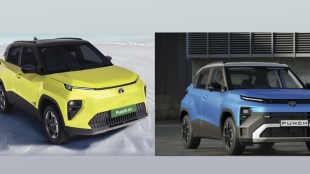
Shailesh Chandra, MD and CEO, Tata Motors Passenger Vehicles, said compressed natural gas (CNG) vehicle volumes grew by about 20% year-on-year, while electric vehicle (EV) sales crossed the 200,000-unit milestone during the fiscal. Wider model availability and improving consumer confidence contributed to EV adoption.
“Looking ahead, industry momentum is expected to sustain, led by growth in SUVs, CNG and EV,” Chandra said.
He cautioned that the industry will need to closely monitor geopolitical developments to mitigate potential supply-side risks. “For Tata Motors Passenger Vehicles, we expect to build on the strong momentum of H2 and continue to deliver industry-beating growth in FY27, supported by recent launches, a strong pipeline of new products, and established multi-powertrain strategy,” he said.
For FY27, however, the outlook is turning more cautious, with Nomura projecting growth to moderate to around 8%, while Crisil estimates a more conservative 3–5% expansion amid easing pent-up demand and rising price pressures.
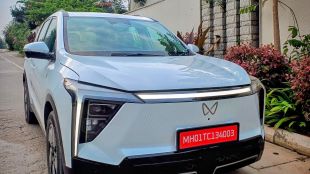
Among manufacturers, Maruti Suzuki retained its leadership position, posting a 10.3% increase in March sales to 166,219 units. Tata Motors reported a 28% rise to 66,192 units, while Mahindra & Mahindra recorded a 25% increase to 60,272 units, reflecting strong traction in their SUV portfolios.
Hyundai Motor India grew 6.3% to 55,064 units, while Toyota Kirloskar Motor and Kia India reported gains of 24% and 14.1%, respectively, indicating broad-based demand recovery.
Despite the SUV boom, Maruti Suzuki highlighted the continued relevance of sedans, noting that its Dzire model emerged as the best-selling car in FY26 with over 229,000 units sold.
Looking ahead, automakers remain cautiously optimistic about sustaining momentum into FY27, though geopolitical tensions and rising input costs could weigh on demand and margins.