


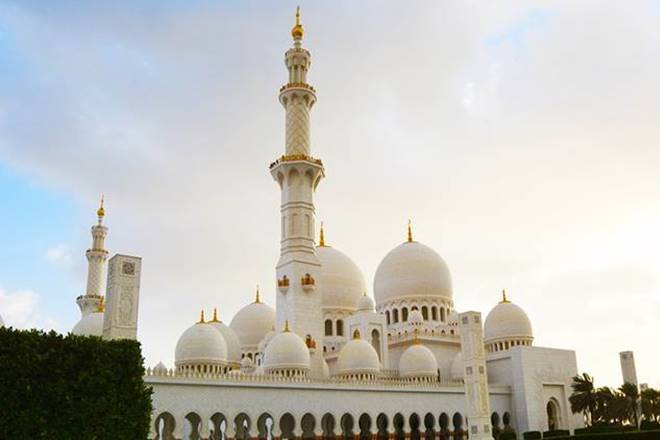

The ongoing Ram Mandir dispute is currently subjudice but various rights organisations are making efforts to come out with a solution. On Monday, Uttar Pradesh Shia Waqf Board proposed to end its right over the disputed land in Ayodhya, and build a ‘Masjid-E-Aman” in state capital Lucknow to resolve the controversy. Shia Waqf Board, which serves as the ‘mutawalli’ (caretaker) of the Babri Mosque, proposed giving up its right over the land in Ayodhya. The board made public a proposal submitted to the Supreme Court for resolving the issue. The board termed its formula as the best solution to resolve the issue and said it is of the view that instead of Ayodhya, a ‘Masjid-E-Aman’ (the mosque of peace) be constructed in Lucknow’s Hussainabad area.
However, the proposal was outrightly rejected by the All India Muslim Personal Law Board (AIMPLB). “On whose behalf has he brought this draft proposal? He (Rizvi) does not enjoy the confidence or recognition of either the Sunni sect or the Shia sect,” AIMPLB counsel in the case and its senior member Zafaryab Jilani said. Jilani, who is also the convenor of Babri Masjid Action committee, pointed out some of the legal shortcomings in the draft proposal.
“The Shia Board has no authority over the disputed land as the Allahabad High Court, in 2010, had ruled a three-way division of the disputed 2.77-acre area at Ayodhya among Sunni Waqf Board, Nirmohi Akhara and Lord Ram Lalla…the Shia board has no right over any part of the land,” he said.
He further pointed out that Shia Waqf Board did not appeal against the high court’s decision which means that the ruling, which was binding on all till the Supreme Court announced its judgement, was acceptable to them.
The Shia Waqf Board, however, rejected the claim of UP Sunni Central Waqf Board over the disputed site, saying that the Allahabad High court had given the land to Muslims and not to Sunni Waqf Board.