


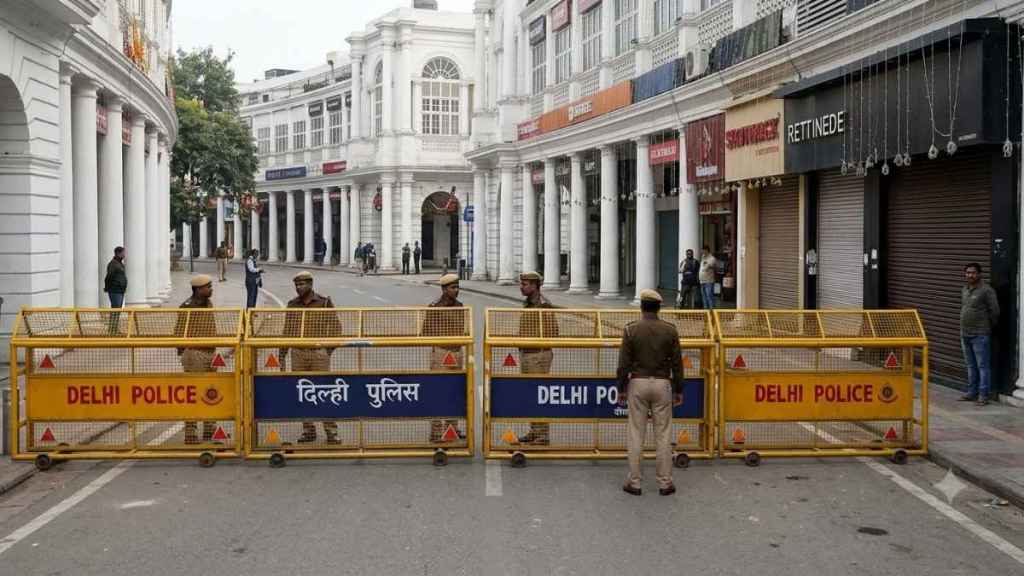

Trade bodies and commercial associations across India have voiced serious concerns over severe disruptions to business activities during the peak festive season, according to an ANI report. The associations appealed directly to Prime Minister Narendra Modi, Leader of the Opposition Rahul Gandhi, and Chief Justice of India Surya Kant, seeking measures to safeguard commercial activity and workers’ livelihoods. The representations come amid ongoing political agitations over the Special Intensive Revision (SIR) of electoral rolls and demands for the resignation of Chief Election Commissioner (CEC) Gyanesh Kumar.
Although the anti-SIR agitations have been centred in Delhi, offshoots and political demonstrations in states such as Maharashtra, Andhra Pradesh, Karnataka, and Uttar Pradesh have also led to localised detentions and commercial disruptions during key shopping periods.
Business drops 80–90% in Delhi markets
In Delhi’s major markets, traders report that commercial activity has dropped precipitously due to heavy police barricading and traffic diversions. While speaking to ANI, Sanjeev Mehra, President of the Khan Market Traders Association, stated that police perimeters established nearly a kilometre away from the market have severely restricted customer access.
Mehra told ANI that shops are operating at only 10 to 20 per cent of their normal capacity, as prospective buyers stay away out of fear that demonstrations might turn violent. While clarifying that traders respect the democratic right to peaceful protest, Mehra emphasised that small shopkeepers must not be denied the right to conduct business during their most critical trading season.
Impact on festive commerce and market footfall
The disturbance to trade intensified following rapid developments in central Delhi. On October 10, police detained demonstrators trying to reach Jantar Mantar. A day earlier, the New Delhi Traders Association issued an advisory recommending shop closures in Connaught Place, dealing a heavy blow to retail turnover on a high-traffic Saturday.
The situation grew more complex on October 11, when the Delhi Police de-notified Jantar Mantar as an authorised protest site and designated Ramlila Maidan, Burari Ground, and CBD Ground in East Delhi instead. The shift sparked further agitations across Central Delhi on October 12 and 13, creating heavy security perimeters that drastically reduced footfall in prime shopping hubs.
Trade associations petition opposition, centre, and Supreme Court
The ANI report mentioned that in representations submitted between October 12 and 13, trade organisations from Delhi, Uttar Pradesh, Rajasthan, Karnataka, and Kerala expressed concern that road blockades and access restrictions could severely damage commercial performance during Navratri, Dussehra, Diwali, and Chhath Puja. While several trade bodies urged Rahul Gandhi to reconsider the timing and street-level intensity of the agitations, others petitioned the central government and the judiciary to safeguard commercial rights.
In a letter to Gandhi, Naveen Garg, President of the Delhi Pradesh unit of the Bhartiya Udyog Vyapar Mandal, cautioned that an atmosphere of fear and precautionary closures jeopardises the livelihoods of crores of traders and daily-wage employees, reported ANI. Echoing this sentiment, the Federation of Trade and Industry of India (FTII) and the Indian Recovered Paper Traders Association (IRPTA) urged political leaders to pursue disputes through legal channels rather than street blockades.
State-level organisations raise alarm
The report also mentioned regional associations. Uttar Pradesh Udyog Vyapar Mandal warned that the business community might initiate peaceful democratic protests of its own if forced to bear the financial costs of political friction. In Rajasthan, Subhash Goyal, President of the Jaipur Vyapar Mahasangh, accused political organisers of harming small shopkeepers before writing to PM Modi and the Chief Justice of India to request legal protection for market corridors.
Delhi trade associations
Similarly, a coalition of Delhi market bodies including the New Delhi Traders Association, Mayapuri Industrial Welfare Association, Nai Sarak Traders Association, and Chawri Bazar Hardware Association petitioned PM Modi on October 13 to demand administrative protections against forced closures. Taking the legal route, the Federation of All India Distributors Associations (FAIDA), led by Ch. Krishna, and the Bangalore Wholesale Cloth Merchants Association, led by Prakash Pirgal, filed representations with the Supreme Court requesting binding directions to keep commercial transit zones open.
Appeals by women-led enterprises
The ANI report highlighted the specific challenges faced by self-employed women and small entrepreneurs; the Mahila Vyapar Mahasangh Sansthan submitted a representation to the Chief Justice of India on October 13. The organisation emphasised that female business owners, artisans, and small traders rely heavily on seasonal retail traffic to sustain their operations throughout the year. It sought judicial intervention to balance constitutional rights to demonstrate with the economic rights of small-business operators.