



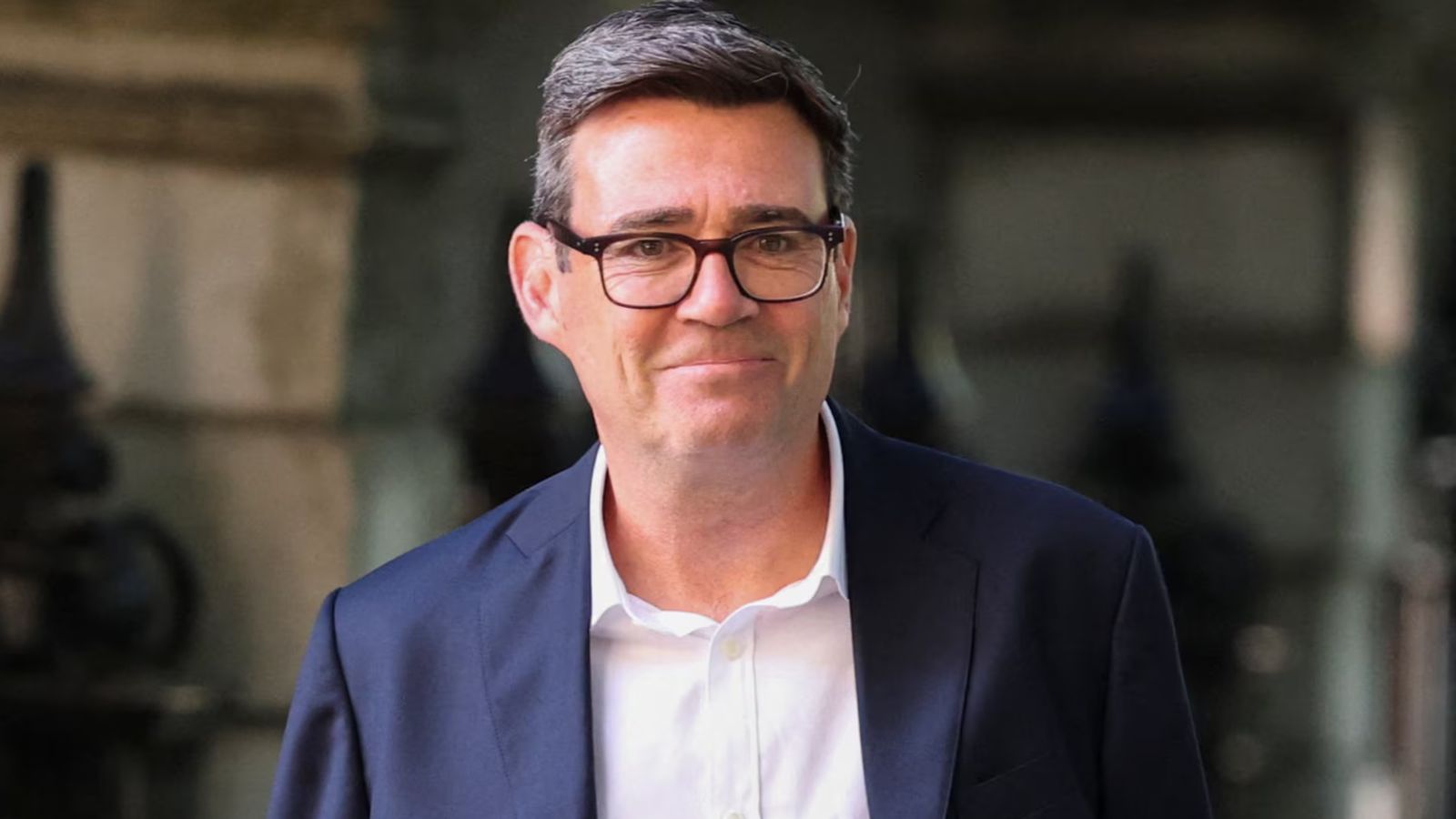
Andy Burnham is likely to become the United Kingdom’s next Prime Minister after winning overwhelming support from Labour Party MPs, leaving him as the only candidate in the leadership race.
The former Mayor of Greater Manchester secured the backing of 349 Labour MPs out of around 403, including every eligible member of outgoing Prime Minister Keir Starmer’s cabinet. After receiving another 27 nominations, Burnham crossed the number needed to block any possible challenger.
Because no other candidate entered the race, there is a strong chance that no party-wide leadership contest will take place. Burnham is expected to be officially confirmed as Labour leader at a special party conference on July 17, before taking over as Prime Minister around July 20, if things go well.
His rise comes after Keir Starmer stepped down last month following a difficult period in office. Burnham also returned to Parliament in June 2026 after winning the Makerfield by-election by a comfortable margin, finishing around 20 points ahead of Reform UK.
Who is Andy Burnham?
Andrew Murray Burnham was born on January 7, 1970, and is now 56 years old. He is one of Labour’s most experienced politicians. Over the years, Burnham has built his politics around giving more power to local governments instead of keeping everything controlled from Westminster. His approach is sometimes called “Manchesterism,” a model that supports local decision-making, encourages business growth, and aims to ensure that economic success benefits local communities instead of only a few people.
Burnham was born in Aintree, Lancashire, near Liverpool and Manchester, and grew up in Culcheth, Greater Manchester. He studied at St Aelred’s High School before studying English at Fitzwilliam College, Cambridge.
He joined the Labour Party as a teenager and began his political career working as a researcher for Tessa Jowell before becoming a special adviser to Culture Secretary Chris Smith.
Burnham is married to Marie-France van Heel, a Dutch management consultant, and they have three children. He became popular across Britain during the COVID-19 pandemic, when he strongly defended the interests of Northern England. His outspoken stand earned him the nickname “King of the North.”
A long political career
Burnham entered Parliament in 2001 as the Labour MP for Leigh. During the governments of Tony Blair and Gordon Brown, he climbed the ranks and held several senior positions.
He served as Chief Secretary to the Treasury, Secretary of State for Culture, Media and Sport, where he launched the Hillsborough Independent Panel, and later became Health Secretary between 2009 and 2010.
During that time, he oversaw Britain’s response to the swine flu outbreak and handled the Stafford Hospital inquiry.
After Labour lost power in 2010, Burnham remained one of the party’s senior figures. He served in shadow cabinet roles under both Ed Miliband and Jeremy Corbyn, including Shadow Education Secretary, Shadow Health Secretary and Shadow Home Secretary.
He also tried twice to become Labour leader. In 2010, he finished fourth, and in 2015, he finished second behind Jeremy Corbyn.
The years that changed his career
In 2017, Burnham left Parliament to contest the newly created post of Mayor of Greater Manchester. He won the election that year and was re-elected in both 2021 and 2024 with strong support.
His time as mayor helped build his national reputation. One of his biggest achievements was the Bee Network, which brought buses back under public control. It became the first area outside London in decades to take such a step.
The network introduced capped bus fares, offered free travel for young people aged 16 to 18, enhanced transport services, and connected buses with Manchester’s Metrolink tram system.
During his time as mayor, Greater Manchester also saw major economic growth, with new high-rise buildings, infrastructure projects and strong investment in the city centre. In 2026, he returned to Parliament by winning the Makerfield by-election, putting him in a strong position to seek the Labour leadership.
What does Burnham stand for
Burnham has consistently argued that Britain should move more power away from Westminster and give cities and regions greater control over spending and decision-making.
He supports investment in public transport, housing and infrastructure, while also pushing for policies that reduce regional inequality.
Although he has criticised some aspects of neoliberal economic policies, he also believes businesses should play an important role in creating jobs and driving economic growth.
As Britain’s next Prime Minister, he is expected to continue several policies introduced under Keir Starmer but with a much stronger focus on northern England and greater decentralisation.
Burnham’s rapid rise to Labour leader has received mixed reactions. Supporters say his popularity in northern England, his record as Mayor of Greater Manchester and his experience in government make him the right person to lead Britain.
Critics, however, have questioned the way he became leader without a full leadership contest or a vote by Labour Party members, describing it as more of a “coronation” than a competitive election. Since Labour already holds a majority in Parliament, Burnham can become Prime Minister without holding a fresh general election.