



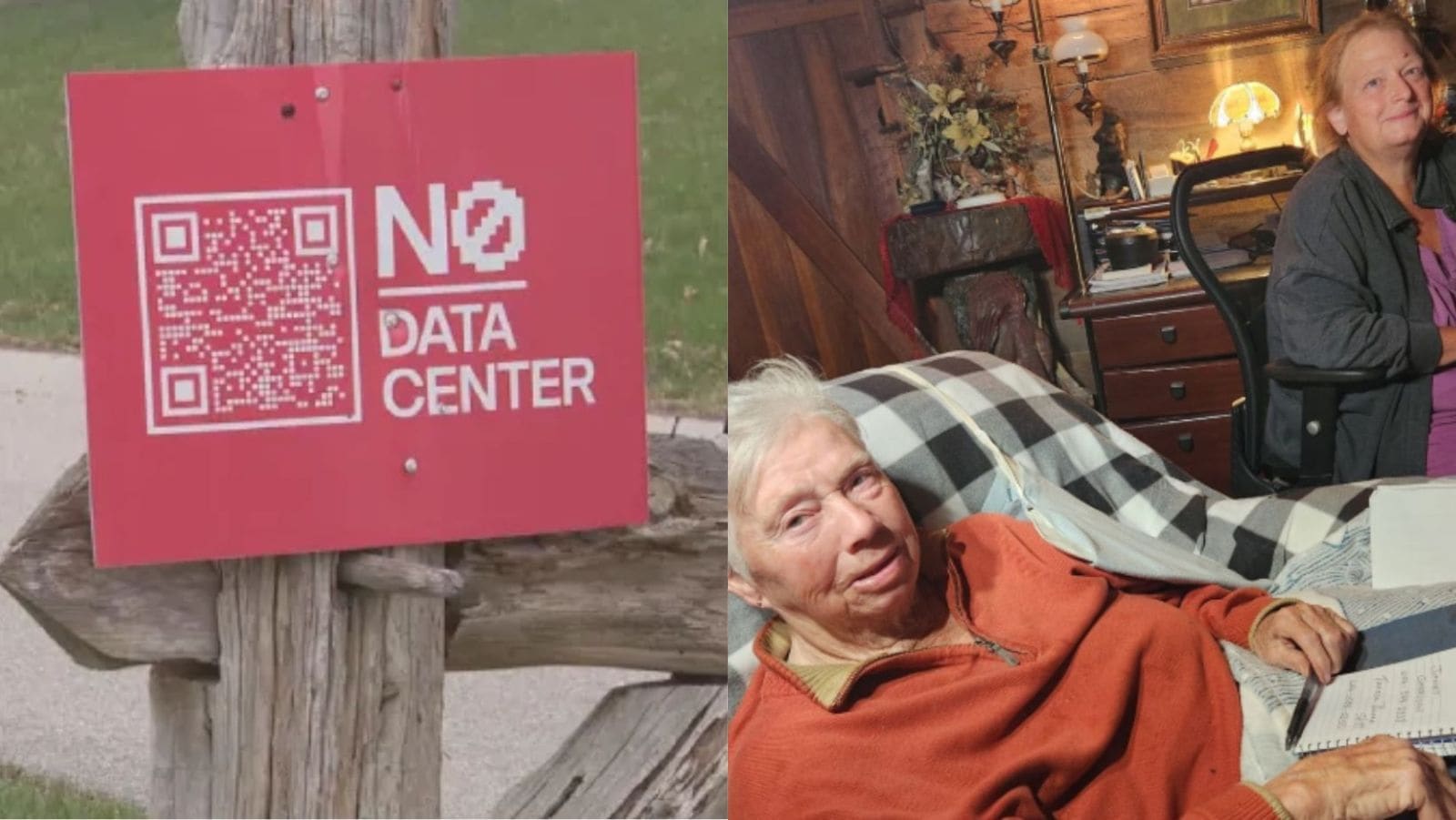
On a stretch of farmland near Maysville, Kentucky, the soil carries stories older than any contract or corporate offer. For families like Delsia Bare’s, the land is not just property. It is history, survival, and identity passed down through generations.
Her grandfather and great-grandfather once grew wheat here during the Great Depression, helping keep bread on tables when little else was available. That legacy still shapes how she sees the fields today.
So when representatives from a major technology company arrived last April with a huge offer, Bare did not take long to respond. “Stay and hold and feed a nation,” she told them. “$26 million doesn’t mean anything.”
A firm refusal
They offered a proposal that was too hard to ignore. The company offered to buy nearly half of her family’s 1,200 acres at around ten times the usual price for farmland in Mason County. But for Bare and her family, the decision was never just about money. Her mother, Ida Huddleston, 82, reacted even more strongly to the company’s promises about jobs and development.
“I say they’re a liar, and the truth isn’t in them,” she told Local 12 WKRC TV. “That’s what I say. It’s a scam.” They are not alone. Across the region, several farming families have turned down similar deals, even when the numbers seemed life changing. Dr. Tim Grosser, who runs a cattle farm with his son, refused offers that went as high as $35,000 per acre. At one point, the company even told him to set his own price. He still said no. “That money can’t buy happiness,” Grosser said.
Scope of the project
The company behind these offers has not been officially named. Local officials only describe it as a large global technology firm with massive data center operations. What is known is the scale of the plan. A power application tied to the project suggests a facility that would require enormous energy, placing it among the largest AI data center developments in the country.
Many residents only learned about the full scope of the project through public records. Local leaders had signed non disclosure agreements, leaving the community with more questions than answers. Environmental groups and community organizers have raised concerns about this lack of transparency, arguing that people deserve to know what is being built around them.
Farmers’ pushback
The resistance is not limited to Kentucky. Similar stories are emerging in other parts of the United States. In Pennsylvania, 86 year old farmer Mervin Raudabaugh rejected a $15.7 million offer for his 261 acre farm. Instead, he chose to protect the land permanently by selling its development rights for a much smaller amount.
“It breaks my heart to think of what’s going to take place here, because only the land that’s preserved here is going to be here,” Raudabaugh said Local 12 WKRC TV. “The American farm family is definitely in trouble.”
In Virginia, local communities successfully opposed a large AI facility. In Indiana, farmers say rising land prices are making it harder for them to expand, even if they do not want to sell. Concerns are also growing about the lack of regulation around these projects, especially as demand for land continues to rise.
Why tech companies want rural land
Unlike older data centers, AI facilities do not need to be close to big cities. Instead, companies look for large, uninterrupted pieces of land with strong access to electricity and water. That makes rural farmland especially attractive.
These facilities can use up to 5 million gallons of water every day, much of which is lost during cooling. At the same time, farmland across the country is shrinking rapidly, with millions of acres disappearing each year. For many farmers, the fear is not just losing land today, but losing the future of farming altogether.
Jobs versus heritage
Supporters of these projects say they bring opportunity. The proposed development near Maysville could create hundreds of permanent jobs and many more during construction. In places like Loudoun County, Virginia, data centers have generated large amounts of tax revenue, helping reduce property taxes for residents.
But for some farmers, those benefits do not outweigh what is at stake. For Bare, the land is something far deeper than an economic asset. It is security, belonging, and purpose.
“As long as I’m on this land — as long as it’s feeding me — as long as it’s taking care of me — there’s nothing that can destroy me if I’ve got this land,” she told Local 12 WKRC TV