



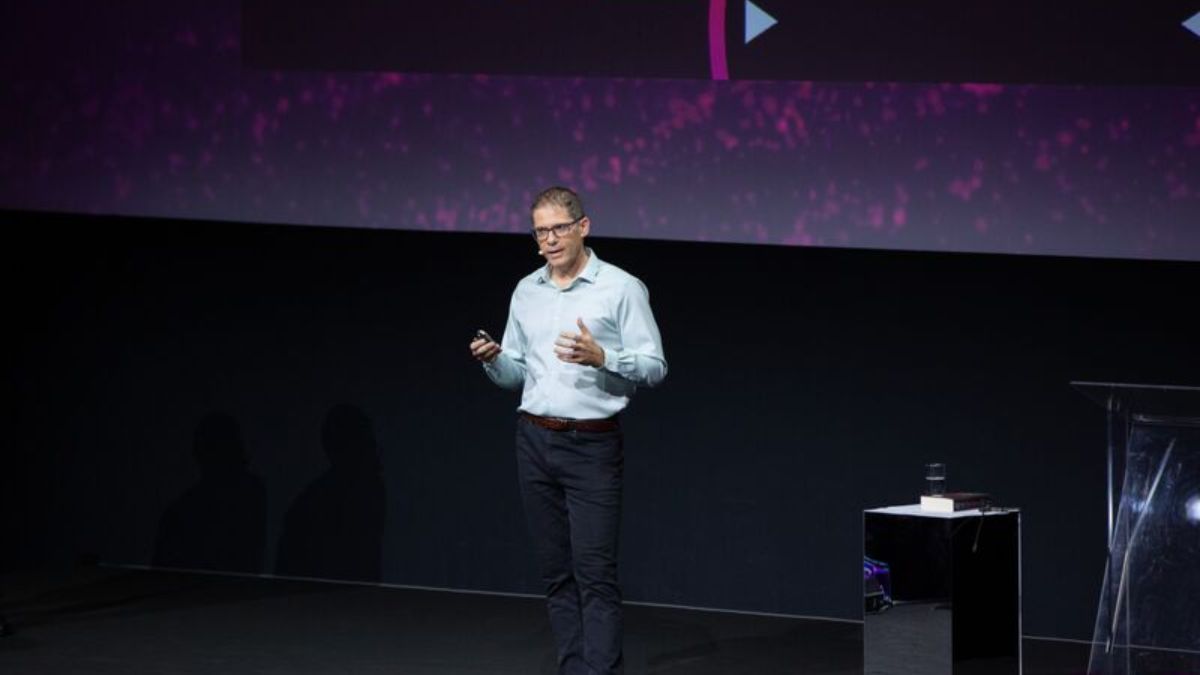
The emergence of Anthropic‘s advanced artificial intelligence (AI) model, Claude Mythos, has intensified discussions over AI-driven cyberattacks. Roi Karo, chief strategy officer at Check Point Software Technologies, says the cybersecurity industry is ill-equipped for this new phase of threats. In an interview with Christina Titus, he explains how AI-based cyberattacks are deeply concerning, and why organisations need to build new security models. Excerpts:
How has the cybersecurity landscape evolved over the past year?
Cyberattacks have been evolving every year. While the threat has consistently been rising, this time something has changed dramatically. To launch a cyberattack, hackers need three things. First, they need to identify a vulnerability.
Second, they need to develop tools to exploit these vulnerabilities, and third, they need operational capabilities to execute attacks. AI is now really good at all three stages. Hackers can use AI to launch more sophisticated attacks, that too on a large scale. As a result, AI-based attacks are rising. This is only the beginning, and I think it will become more alarming.
How are businesses preparing for the next generation of cyber threats?
Organisations need to reassess their existing security frameworks and adapt them to defend against AI-based attacks. As organisations are increasingly adopting AI, the existing security coverage is no longer enough. Therefore, they need a new type of security designed specifically to protect against AI-based attacks.
Most importantly, organisations must also use AI for defence. It is a case of fighting AI with AI. Without AI-enabled defences, it is like fighting tanks with horses—they have no chance of winning.
In what ways is AI improving cyber defence?
AI is making security management more efficient, making it easier to identify and control threats. We are building AI-based intelligence that can analyse activity and identify threats even before humans can. AI-powered threat intelligence is becoming increasingly important. Going forward, innovation will be crucial as we cannot just keep following previous approaches and expect them to work against new threats. Therefore, we need to keep investing in innovative technology.
There is a lot of buzz around Claude Mythos. Is it overhyped, and what impact will it have?
I don’t think it’s a hype. What Mythos proved is that AI is really good at identifying vulnerabilities. Reports show this capability is not unique to Mythos; several other AI models do it too.
AI is now discovering vulnerabilities in code that people have searched for over many years without success. It is uncovering dozens of new vulnerabilities, fundamentally changing the cybersecurity landscape. The industry is not prepared for this as the security ecosystem was built around existing vulnerabilities. This requires an entirely a new type of security.
How do you see AI and cybersecurity shaping India’s rapidly growing digital payments system?
India’s digital payments ecosystem is a prime target for attackers due to its size and vulnerability. It needs to be treated as high risk and organisations need to be prepared. As attackers become more sophisticated and move faster, organisations will also need to respond faster.
How should banks prepare for AI-based fraud? How can they protect customer trust while accelerating AI adoption?
Banks must ensure they implement the strongest possible security measures as cyber risks are evolving rapidly. Banks remain a prime target for hackers seeking to steal money, making them among the highest-risk institutions globally. At the same time, banks are also accelerating AI adoption to enhance customer services and stay competitive, but they must give equal priority to strengthening cybersecurity to protect customer trust.
(The writer was in Singapore at the invitation of Check Point Software Technologies)