



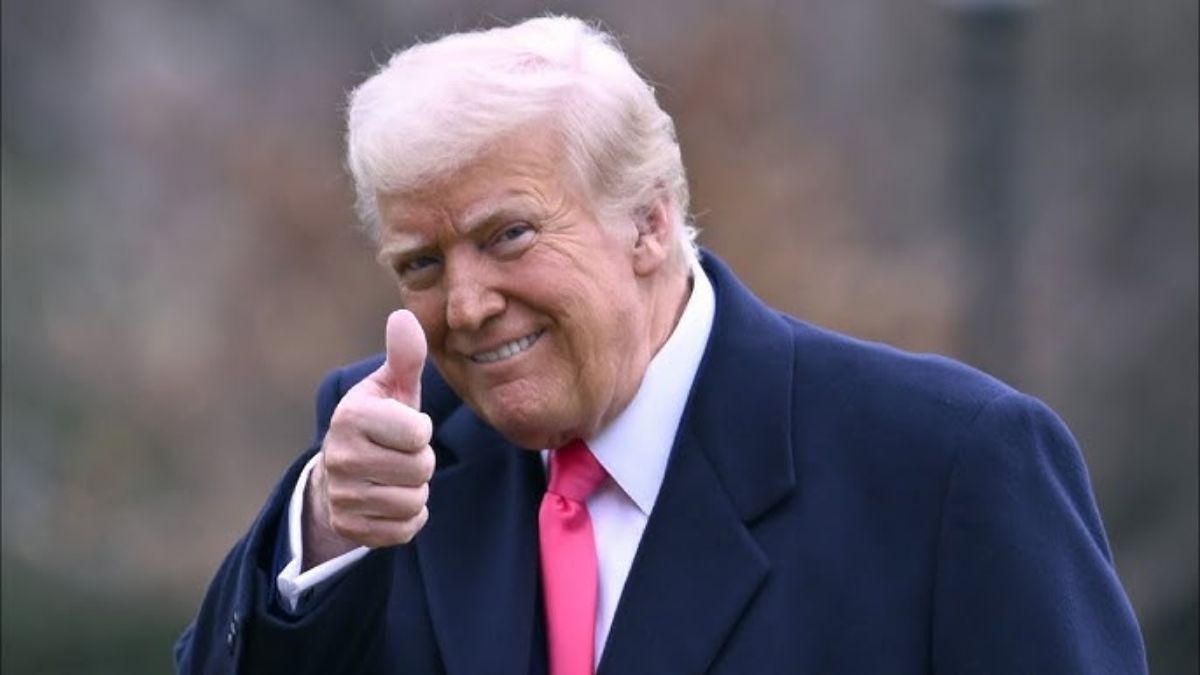
If the Supreme Court strikes down President Donald Trump’s tariffs, the administration is ready to act immediately. Speaking to The New York Times, Jamieson Greer, the US Trade Representative and Trump’s top trade negotiator, said the White House would begin replacing the tariffs almost right away.
Speaking in an interview on January 15, Greer said that if the court rules against the administration, officials would “start the next day” to put new tariffs in place. The goal, he said, would be to respond to the same trade problems the president has repeatedly pointed to.
India is among the countries facing the steepest tariffs, at 50 per cent. Half of this comes from Trump’s Liberation Day reciprocal tariffs, which apply to most US trading partners. The remaining 25 per cent is linked specifically to India’s purchase of Russian oil, a move the Trump administration has repeatedly criticised.
Trump team says tariffs will return fast if court blocks them
Speaking to the NYT, Greer said he believes the Supreme Court is likely to side with the administration. The court is currently reviewing Trump’s use of an emergency law that forms the backbone of many of his tariffs.
Still, Greer made it clear that the administration has prepared for all outcomes. He said advisers gave Trump “a lot of different options” early on, meaning the president could rely on other laws to keep tariffs in place if needed. “The reality is the president is going to have tariffs as part of his trade policy going forward,” Greer said.
Trump has argued that he has the power to impose tariffs under the International Emergency Economic Powers Act, or IEEPA. Using this law, he has placed tariffs on countries across the world, framing them as necessary for national security.
Supreme Court reviewing emergency tariff powers
The centre of the debate is the 1977 law known as the International Emergency Economic Powers Act, or IEEPA. Trump has relied on this law over the past year to impose and remove tariffs on countries around the world. The Supreme Court could rule in the coming weeks, possibly as soon as Tuesday. It could either strike down some or all of the president’s authority under the law or allow his approach to continue.
Over the past year, Trump has declared multiple international emergencies to justify tariffs. He has used them to try to shrink trade deficits, stop the flow of illegal drugs, and deal with other global issues.
Greenland threat sparks backlash in Europe
The tariff debate intensified over the weekend when Trump threatened to impose new tariffs on seven European countries unless Denmark agrees to sell Greenland to the United States. The move has angered European leaders and triggered protests in Greenland itself. Legal experts questioned whether the emergency law could be used in such a case.
Meanwhile, Treasury Secretary Scott Bessent defended Trump’s approach during an appearance on NBC’s Meet the Press on Sunday. He argued that economic pressure was better than military action. “The national emergency is avoiding a national emergency,” Bessent said. He added that the president was using “the economic might of the U.S. to avoid a hot war.”
Even if the Supreme Court rules against Trump, experts, according to the NYT, say it may not stop him from using tariffs aggressively.
Trump still has access to other tariff laws, though they are more limited. Many require formal investigations, reports, or clear national security or economic reasons. Greer said the president could turn to Section 301, which Trump used in his first term to impose tariffs on China and which survived multiple legal challenges.