



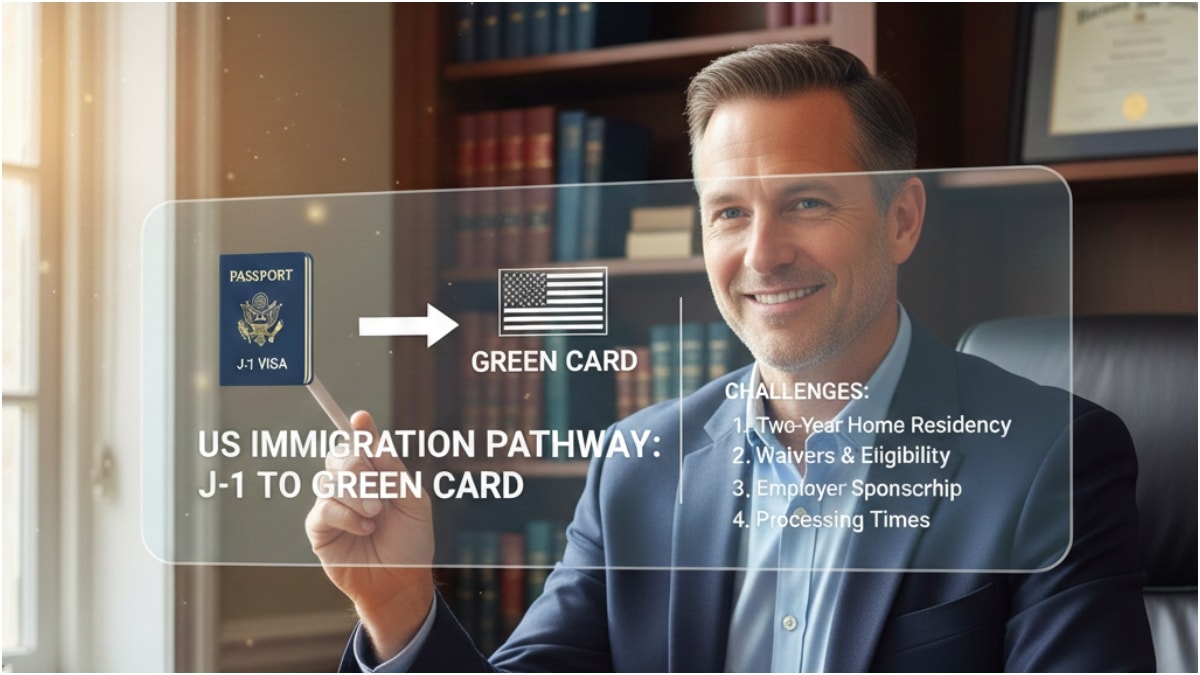
Scholars, researchers, and physicians who enter the United States on a J-1 visa may face significant obstacles if they hope to transition to obtaining a Green Card, an immigration attorney has warned.
The key challenge, Andrew Matias, Managing Attorney at Altius Immigration Law, Washington, said is the two-year home residency requirement under INA 212(e), which applies to many J-1 visa holders and their spouses.
What is the J-1 visa?
The J-1 visa is a non-immigrant visa issued by the United States for individuals participating in approved exchange visitor programs. It is designed to promote cultural and educational exchange between the US and other countries. The visa is commonly used by students, scholars, researchers, physicians, interns, trainees, and teachers.
Why is the transition challenging?
Under 212(e), certain J-1 participants are required to return to their home country for two years after completing their program before they can apply for a green card or change status in the US, except under very limited circumstances.
“Once 212(e) applies, adjusting to permanent residency is generally not possible without a waiver,” Matias said. He added that many visa holders only realise the impact of the rule after living and working in the US for several years.
Which other options do people have?
While the rule is restrictive, Matias noted that some non-immigrant options can still be viable with the right facts and planning.
Non-immigrant options such as O-1 and E-2 visas can allow individuals to continue working or returning to the country.
These visas do not require maintaining a foreign domicile, making them viable alternatives for those navigating the 212(e) requirement.
However, the process can become complicated at the consular stage. Individuals who have lived in the US for years, raised children who are American citizens, or established strong ties in the country may face additional scrutiny from officers, even when applying under a different visa category.
“Officers could push back, and approvals are never guaranteed,” Matias said.
Waivers may also be available. A US citizen spouse can support a hardship waiver, while other options, such as no-objection statements or interested government agency waivers, may apply depending on the case.
Matias cautioned, however, that the approval process for waivers can take a considerable amount of time, and without an approved waiver, the two-year home residency must be completed.
Matias said that early planning and legal guidance are critical to avoid delays or disruptions in career and immigration plans.
“212(e) is not something to discover late,” he said.