



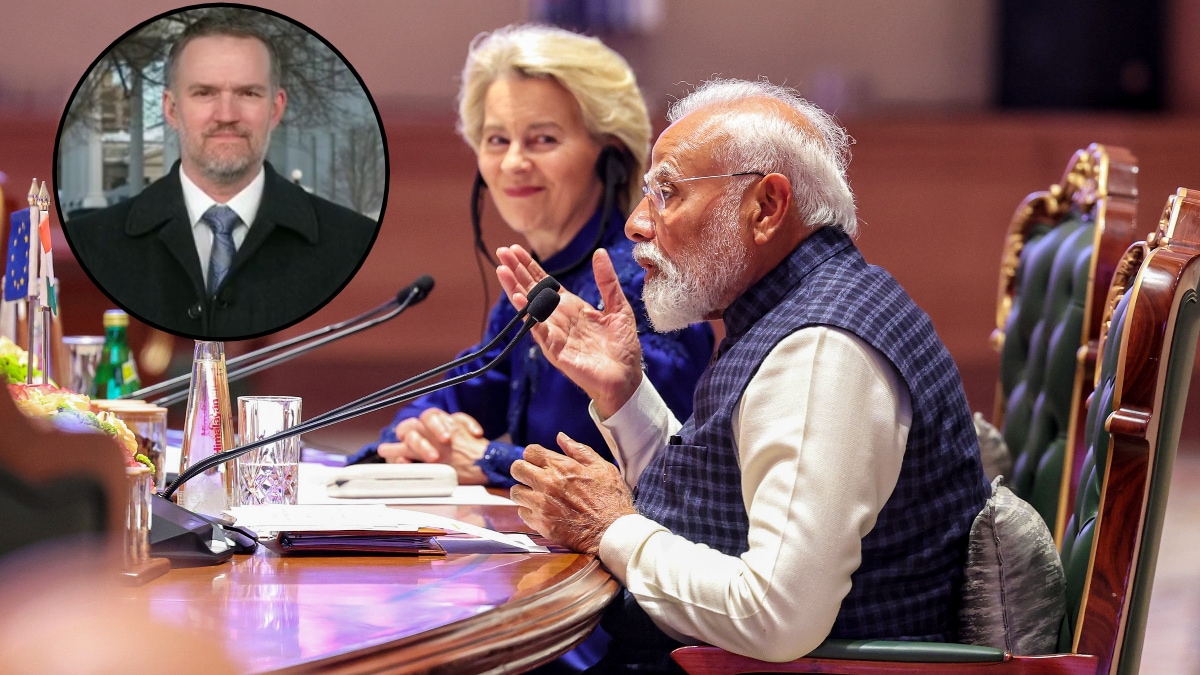
After nearly two decades of on-and-off talks, India and the European Union have finally concluded their free trade agreement, marking a strategic breakthrough in India’s global trade engagement. With India, the 4th largest economy, and the EU, the 2nd largest economy, coming together to forge a trusted partnership for the “mother of all deals,” a reaction from the US was inevitable.
In what was possibly the first response from the American response on the matter, US Trade Representative Jamieson Greer broke his silence during a recent interview with Fox Business.
US Trade Rep on India-EU FTA
As US President Donald Trump continues to ramp up his tariff threats worldwide, his trade representative listed the POTUS’ stern trade policy as the reason why other countries are looking for “other outlets” on the global trade scene.
When asked for his understanding on where India and the European Union stood with the landmark deal, Jamieson Greer said that it was important to understand the ‘America First’ context fuelling these international ties.
“Strategically, it’s important to understand that because President Trump has prioritised domestic production and essentially started charging a fee for other countries to access our market, countries are trying to find other outlets for their over-production,” Greer said on the ‘Kudlow’ show Tuesday (US time).
Noting that this was why the EU was turning to India, he continued, “The EU is so trade-dependent, they need other outlets if they can’t keep sending their stuff to the United States.”
Trump’s trade rep claimed that he had looked into some of the details of the India-EU deal, and said, “I think India comes out on top of this, frankly. It sounds like they have additional immigration rights… The President of the EU talked about mobility for Indian workers into Europe.”
He added, “India will have a heyday with this and they have low cost labour. It looks like the EU is doubling down on globalisation when we’re trying to fix some of the problems here in the US.”
Greer’s remarks about the US “fixing” problems related to globalisation emerge as the Donald Trump administration has ramped up its immigration crackdown in the country. Minneapolis in Minnesota is particularly seeing some of the most intense operations at the moment, with thousands of people protesting with slogans like ‘ICE Out’ as reports of shooting at the hands of federal agents in the city surge.
About the India-EU FTA
Indian Prime Minister Narendra Modi and European Commission President Ursula von der Leyen jointly announced the conclusion of the India-European Union Free Trade Agreement at the 16th India-EU Summit on Jan 27, 2026.
The historic milestone in economic relations between the two sides seeks to “create jobs, spur innovation, unlock opportunities across sectors, and enhance its competitiveness on the global stage,” as per the official Indian press release.
As India and the EU account for nearly 1/5th of global trade and about 25% of the world’s population, the biggest headline out of the deal pertains to the auto sector. India will gradually lower tariffs on European cars to 10%, marking a significant drop from the duties that often touch 70%.
Additionally, tariffs on more than 90% of EU goods coming to India will either be eliminated or reduced. Brussels is already expecting that the deal will double EU exports to India by 2032. Among other revisions, tariffs on medical and surgical equipment, wine and beer, and vegetable oils from the EU are also headed to lower figures.