



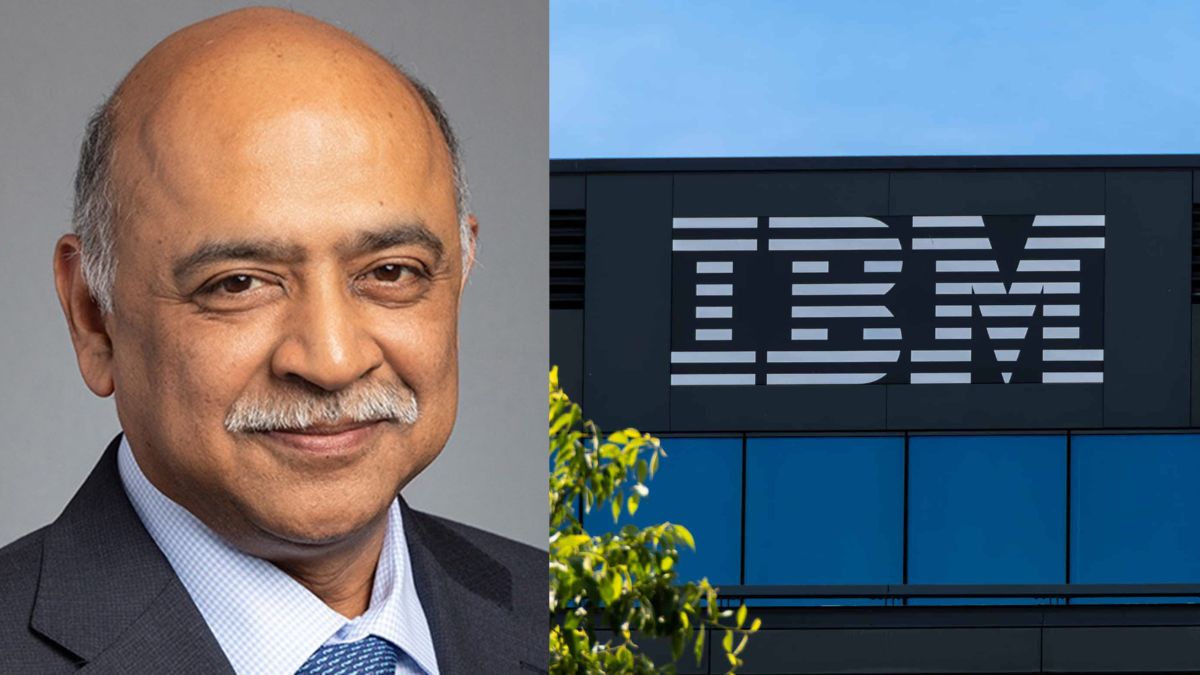
IBM shares tanked on Tuesday after the tech giant’s preliminary second-quarter results missed Wall Street expectations, prompting CEO Arvind Krishna to acknowledge that the company had failed to respond quickly enough to changing customer spending patterns. The company reported revenue of $17.2 billion, up just 1% and below analyst forecasts, while infrastructure revenue declined 7%.
In a letter to investors explaining the shortfall, Krishna said IBM had underestimated a sharp change in client spending and struggled to close several major deals within the expected timeframe. “These conditions require our teams to execute perfectly, and this quarter we faltered,” Krishna wrote
IBM underestimated shift in customer spending
Krishna said IBM had expected some weakness in its infrastructure business as it moved beyond the initial launch of its z17 mainframe. The company had previously projected infrastructure revenue to decline by low single digits for the year.
What unfolded during the quarter, however, was worse than IBM had anticipated.
“What played out was worse than our expectations,” Krishna said, pointing to a shortfall in the company’s Z performance and the associated software stack, particularly Transaction Processing.
The company saw a significant change in customer spending during the final weeks of June. Clients redirected quarterly capital expenditure toward servers, storage and memory as they sought to secure supply-constrained equipment ahead of expected price increases.
“While we anticipated some supply chain related impact in our expectations, we did not anticipate the magnitude of the capex reprioritization,” Krishna said.
The CEO added that rapidly evolving cybersecurity concerns across the industry had also distracted clients during the quarter.
‘This quarter we faltered’
Krishna acknowledged that IBM failed to adjust quickly enough as those conditions developed.
“We did not adapt and move quickly enough, and numerous large deals failed to close on the timelines we expected,” he said, adding that the delayed transactions accounted for the majority of IBM’s shortfall. Krishna stopped short of presenting the external pressures as justification for the company’s performance.
“These are not excuses, but they are realities,” he said. “Our job is to help our clients through uncertainty, to find paths forward to grow their businesses no matter what is happening in the external environment,” Krishna added.
Regardless of the weaker-than-expected quarter, the CEO said IBM continued to see strength in several parts of its business.
“While our second-quarter results are disappointing, our performance in many areas showed strength, reinforcing the conviction we have in our portfolio and strategy,” he said.
Red Hat growth accelerates, infrastructure business hits record
IBM said Red Hat revenue growth accelerated sequentially to 11%, while recent acquisitions HashiCorp and Confluent delivered strong performances.
The change in customer spending that hurt parts of IBM’s business also benefited its distributed infrastructure operations. The segment recorded its best performance on record, growing 37% on strong demand for Power and Storage. IBM exited the quarter with a backlog of approximately $500 million in the business.
The company’s z17 programme also remained nearly 130% ahead on a programme-to-programme basis, according to Krishna. IBM said clients representing 85% of installed MIPs were maintaining or increasing capacity.
Consulting signings continued to grow, helped by a strong contribution from generative AI, while productivity initiatives supported further expansion in IBM’s non-GAAP pre-tax income margin.
IBM bets $5 billion on Lightwell
Krishna also used the investor letter to focus IBM’s continued investment in new technologies, saying the company continues to “innovate at speed and scale.”
Following the introduction of Mythos, IBM and Red Hat launched Lightwell, a $5 billion initiative backed by new frontier AI capabilities and a global workforce of more than 20,000 engineers.
IBM describes the initiative as a trusted enterprise clearinghouse aimed at addressing vulnerabilities in open-source software.
Early adopters include Bank of America, BNY, Citi, Goldman Sachs, JPMorganChase, Mastercard, Morgan Stanley, Royal Bank of Canada, State Street, Visa and Wells Fargo, among others. General availability of Lightwell was announced on July 8.
‘Quantum computing is no longer decades away’
IBM is also accelerating its investment in quantum computing, with Krishna arguing that the technology is moving rapidly closer to large-scale use.
“Quantum computing is no longer decades away, it is upon us, and we are investing aggressively,” he said.
IBM recently announced a letter of intent with the US Department of Commerce to build Anderon, which the company described as the world’s first pure-play quantum wafer foundry.
The project is expected to receive $1 billion in CHIPS incentives from the Department of Commerce, alongside a $1 billion cash contribution from IBM.
The company has also disclosed plans to invest more than $10 billion in quantum computing over the next five years. The investment will span research and development, capital expenditure, manufacturing expansion, mergers and acquisitions and ecosystem growth.
IBM said it remains on track to deliver the first large-scale fault-tolerant quantum computer by 2029.
IBM promises action after disappointing quarter
Krishna acknowledged that IBM’s second-quarter performance fell below its own expectations but maintained that the company remains confident in its broader strategy.
“While performance in the quarter was below our expectations, we have conviction in the strength of our portfolio and the strategic transformation of our business,” he said.
IBM is now undertaking new initiatives and accelerating existing measures in an effort to address the problems that emerged during the quarter and improve future results.
The company is scheduled to hold its investor conference call on July 22 at 5 pm ET, when executives are expected to provide further details on the second-quarter performance and discuss IBM’s full-year expectations.