



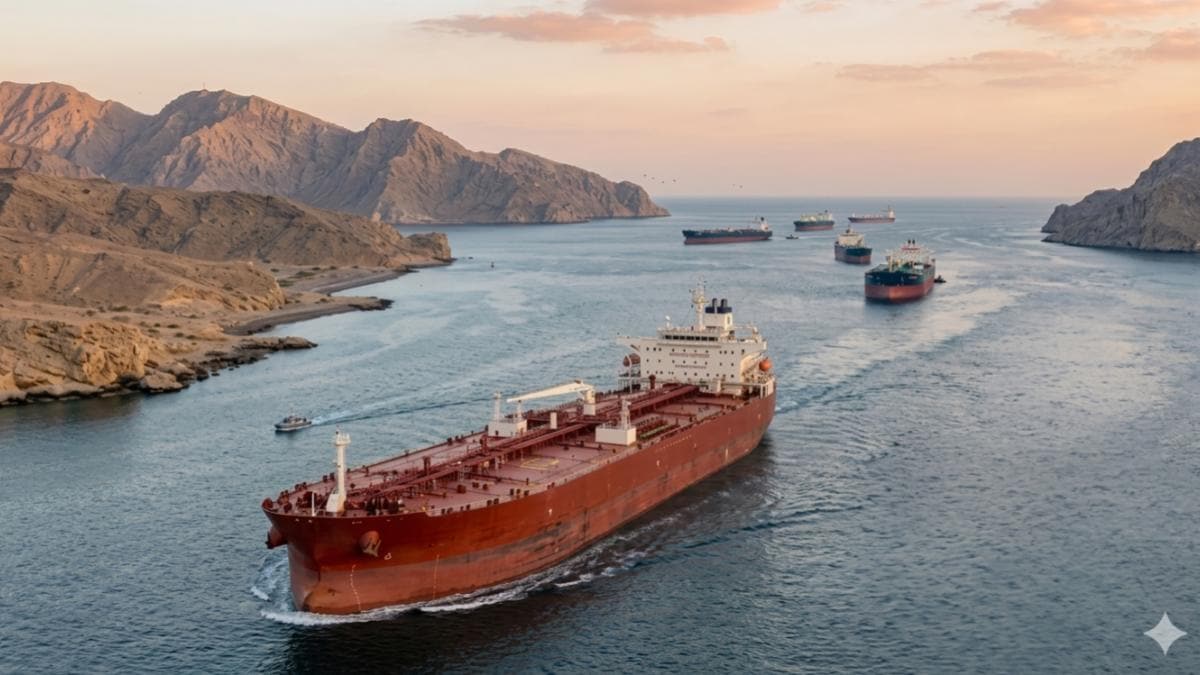
Gulf producers are racing to build pipelines and ports that let oil leave the region without passing through the Strait of Hormuz.
Goldman Sachs analysts, led by Alexandra Paulus, tracked seven such pipeline and export-infrastructure projects across the Gulf that are under construction, planned or considered feasible. If they are completed on time, they could protect more than 45% of the Gulf’s oil exports from Hormuz-related risks by the end of 2027. That figure could rise to over 60% by the end of 2028.
UAE’s West-East pipeline expansion at Fujairah
The Abu Dhabi National Oil Company is expanding its pipeline that carries crude oil to the port of Fujairah on the Gulf of Oman, completely outside the Strait of Hormuz. The project is about halfway complete and is expected to be finished in 2027.
Once completed, it will double the amount of oil that can be exported from Fujairah. The port already allows oil tankers to sail directly into the Arabian Sea without entering the Strait of Hormuz.
India’s Petroleum Ministry has already identified Fujairah as one of the routes that helped reduce the country’s dependence on Hormuz during this year’s disruptions.
For India and other Asian buyers, this is considered the most useful project because oil from Fujairah can reach the Indian Ocean directly, making it the shortest and most practical alternative to the Strait of Hormuz.
Saudi Arabia’s East-West pipeline (Petroline)
Saudi Arabia’s East-West Pipeline, also known as Petroline, is already operating. The 1,200-kilometre pipeline was built in the 1980s specifically to avoid the Strait of Hormuz.
It carries crude oil from the Abqaiq oil field to the Red Sea port of Yanbu and is currently operating close to its capacity of around 7 million barrels per day. Saudi officials have also spoken about the possibility of building a second pipeline.
During this year’s disruptions in Hormuz, Saudi Aramco increased the amount of oil flowing through Petroline.
Normally, about 75% of Saudi Arabia’s oil exports to Asia leave from Gulf coast ports because that is the shorter route to India. However, when Hormuz faces disruptions, Petroline could become an important backup.
Oil loaded at Yanbu can travel through the Red Sea, pass the Bab-el-Mandeb Strait and continue to Indian ports. The route is longer and costs more, but it has already been used successfully during this year’s disruptions.
In March 2026, Saudi Arabia rerouted about 5-6 million barrels of crude oil to Indian ports through its East-West Pipeline (Petroline).
According to Kpler analyst Nikhil Dubey, four tankers carrying nearly 6 million barrels were on their way to India, with another 9-10 million barrels expected later in the month. Dubey said, “Due to the disruption around the Strait of Hormuz, Saudi Arabia has been loading more cargoes from its west coast ports, rerouting crude through the east-west pipeline across the Saudi kingdom.”
He added that Saudi crude for India is usually shipped from the kingdom’s east coast through the Strait of Hormuz, making the March shipments a clear example that the Red Sea route can serve as a practical alternative when Hormuz is disrupted.
DP World’s new port near Fujairah
The United Arab Emirates (UAE) is planning to build a new deepwater port on its east coast that will allow cargo ships to avoid passing through the Strait of Hormuz, according to a report by the Financial Times.
Dubai-based DP World plans to develop the new project in Fujairah. Along with the new deepwater port, the company also wants to build a new terminal at the existing Fujairah harbour.
DP World was established in 2005 and is one of the world’s biggest logistics companies. It manages cargo logistics, port terminals, maritime services and free trade zones. Every year, the company handles around 70 million containers.
Its biggest and most important facility is Jebel Ali Port, also known as the Jebel Ali Free Zone.
The new port is expected to be completed in about 18 months. DP World has not officially announced all the details of the Fujairah project. However, the company has said it is looking at ways to expand and diversify its operations because of growing geopolitical risks.
Iraq’s Basra-Haditha pipeline
Iraq is building the 685-kilometre Basra-Haditha pipeline, which is expected to cost between $4.6 billion and $5 billion. It is designed to carry up to 2.25 million barrels of oil per day.
The pipeline will give Iraqi oil access to several export points, including Ceyhan in Turkey, Baniyas in Syria and Aqaba in Jordan.
The Iraqi government has allocated around $1.5 billion for the pipeline. However, the Oil Ministry said the speed of construction will depend on whether more funding is approved in future government budgets.
Apart from exports, the pipeline will also supply oil to refineries located along its route. Having multiple export options will help Iraq continue selling oil even if one route becomes unavailable.
Iraq-Jordan pipeline to Aqaba
Another project, often called the Iraq-Jordan Export Pipeline (IJEP), has been under discussion since 2013 but has faced repeated delays. Iraq’s Oil Ministry says it is still being considered along with the Basra-Haditha project.
If built, this dedicated pipeline would carry up to 2.25 million barrels of oil per day from Basra directly to Aqaba on Jordan’s Red Sea coast.
The pipeline is designed to carry crude oil from Basra, in southern Iraq, to the Jordanian port of Aqaba on the Red Sea. From Aqaba, Iraqi oil can be exported without passing through the Persian Gulf, giving Iraq another route to international markets.
The main goal of the project is to give Iraq more oil export options and reduce its dependence on Gulf ports. For Jordan, the pipeline would bring its own benefits. The country is expected to receive Iraqi crude oil at discounted prices while also earning revenue from oil passing through its territory.
According to the latest update, Iraq and Jordan have now agreed to move the project forward more quickly as both countries look to strengthen energy cooperation and improve regional trade.
All five projects can help supply oil to international markets, but they do not offer the same advantages. The UAE’s Fujairah route is the most direct option for Asian buyers as it opens straight into the Arabian Sea. The Iraqi and Saudi routes through the Red Sea also provide a workable alternative, but ships must travel a longer distance through the Bab-el-Mandeb Strait before reaching their destinations.
That means higher shipping costs, longer delivery times and dependence on another important maritime chokepoint. Even so, as recent Saudi crude shipments to India have shown, these routes can keep oil flowing when the Strait of Hormuz faces disruptions.
The world still cannot completely move away from Hormuz
Even with all these new pipelines and export routes, the Strait of Hormuz will remain extremely important. Bloomberg Intelligence estimates that 7 million to 9 million barrels of crude oil and refined products every day will still depend on the waterway even after new projects are completed.
Some countries have very few alternatives. Qatar’s liquefied natural gas (LNG) exports have no realistic replacement route, while Kuwait and Iraq also continue to rely heavily on the strait.