



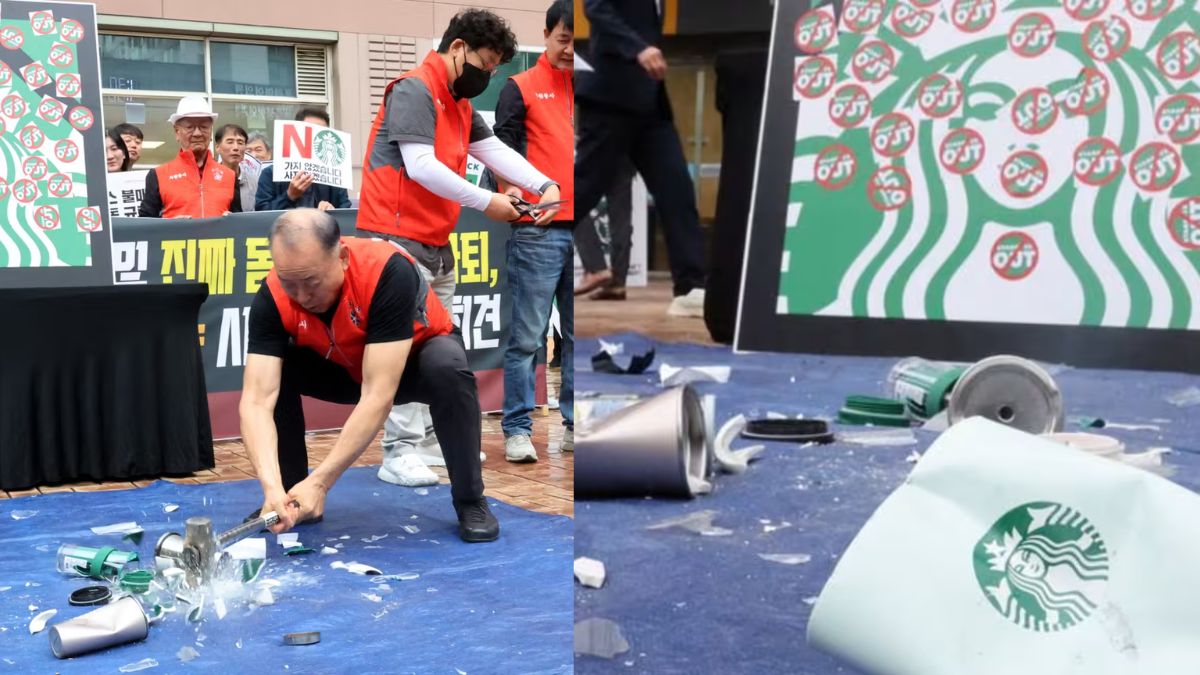
In South Korea, there are days that carry grief, political memory and the weight of lives lost. That is why a recent Starbucks Korea campaign exploded into a national controversy. Many people believe the company touched a wound the country has never fully healed from.
A promotional sales campaign turned into accusations of insensitivity, public outrage and falling sales, forcing senior executives to apologise repeatedly as anger spread across the country. The controversy began after Starbucks Korea promoted a large tumbler as a “tank” and declared May 18 as “Tank Day” — the anniversary of the 1980 Gwangju Uprising, when military forces brutally suppressed pro-democracy protesters using tanks, troops and helicopters. For many South Koreans, the campaign felt impossible to separate from the painful history attached to that date.
When marketing collides with historical trauma
The Gwangju Uprising remains one of the defining moments in South Korea’s democracy movement. In 1980, citizens protesting military rule were met with violent force after former dictator Chun Doo-hwan seized power through a coup. Official records say around 200 people died during the crackdown, though many activists and historians believe the death toll was far higher. Over time, Gwangju became more than a historical event — it became a symbol of resistance, sacrifice and the country’s struggle for democracy. That is why references connected to May 18 are treated with enormous sensitivity in South Korea even decades later.
Public anger increased further because the campaign reportedly included the phrase “Thwack it on the table,” a line associated with another painful chapter from South Korea’s authoritarian era. The phrase became infamous after the 1987 torture death of student activist Park Jong-chol. At the time, authorities falsely claimed he died after investigators merely “hit the desk with a thwack.” The statement later became symbolic of government lies, cover-ups and state violence during military rule. For critics, the combination of “Tank Day,” May 18 and the slogan crossed a line that should never have been crossed.
Sales hit as public backlash continue
The controversy soon moved beyond social media criticism and began affecting business itself. A Shinsegae Group official later admitted that Starbucks Korea had suffered a “very significant” decline in sales following the backlash. The anger also placed enormous pressure on Shinsegae Group, which owns a majority stake in Starbucks Korea through its subsidiary E-Mart.
Facing mounting criticism, Shinsegae Group chairman Chung Yong-jin publicly apologised for the second time in less than two weeks, repeatedly bowing during a televised statement while asking forgiveness from victims’ families and the wider public.
“I take it very seriously that Starbucks Korea’s inappropriate marketing hurt and angered many people,” Chung said. “I will take all responsibility for the incident.” He also appealed to the public not to direct anger toward frontline Starbucks employees.
Company officials later revealed that the campaign had been organised by Starbucks Korea’s e-commerce team and approved internally by senior staff. While investigators said they had not yet found definitive proof that employees intentionally mocked the democracy movement, the company admitted the controversy exposed serious failures in internal oversight and risk management. According to Shinsegae officials, employees handling frequent promotional events had become overly focused on sales and approved the campaign without proper historical or legal review.