



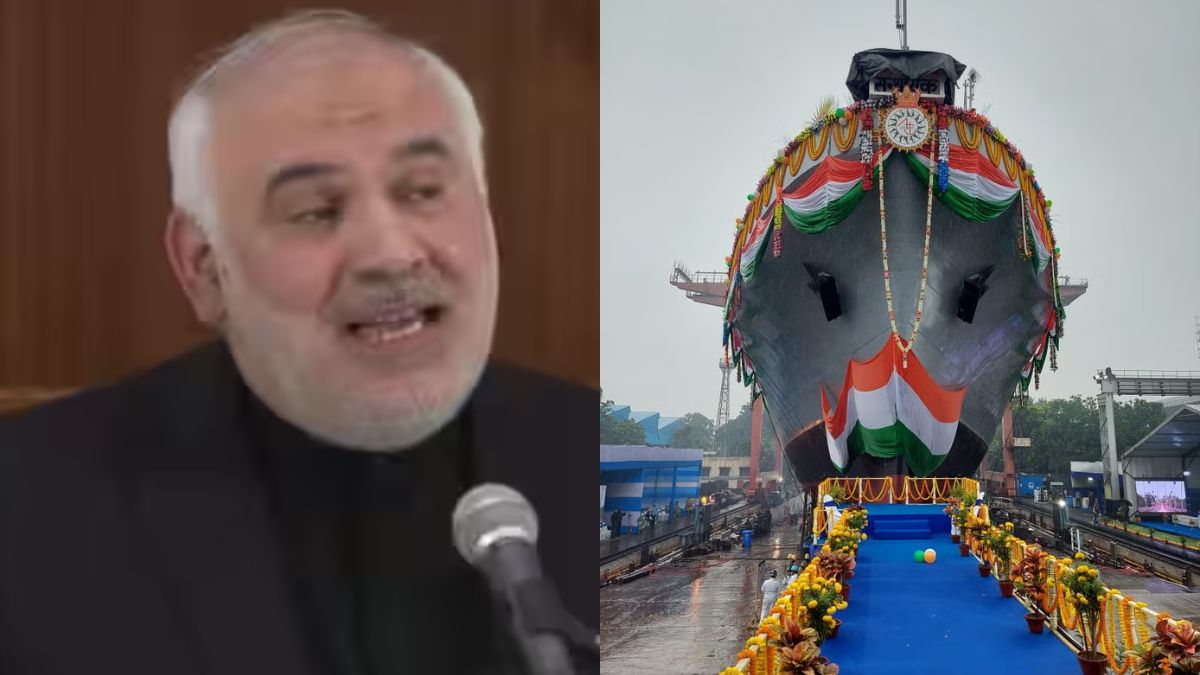
Iran’s Ambassador to India, Mohammad Fathali, on Monday made it clear that Tehran is taking steps to help Indian ships move safely through the Strait of Hormuz. He said India and Iran share strong ties and that special arrangements are being made to ensure Indian vessels face no trouble in the sensitive region.
Speaking in Delhi, Fathali said, “For Indian ships, you know that we have a good relation with the Indian government… We want good preparation for Indian ships.”
Iran says it is helping Indian ships amid Hormuz tensions
The envoy also highlighted the ongoing high-level engagement between the two countries. He said discussions have taken place between Prime Minister Narendra Modi and Iran’s President Masoud Pezeshkian. He added that Iran’s foreign minister has placed India among five key countries that Tehran wants to stay closely engaged with.
Fathali didn’t hold back in appreciating India’s support during the ongoing crisis. He thanked both the government and the people, saying they have shown themselves to be “reliable and compassionate partners in times of hardship.”
He also acknowledged that India has helped with necessary arrangements during this difficult period.
#WATCH | Delhi: On Indian Ships passing through the Straits of Hormuz, Dr Mohammad Fathali, Ambassador of the Islamic Republic of Iran to India, says, "For Indian ships, you know that we have a good relation with the Indian government…We want good preparation for Indian… https://t.co/ErGCNEjXK9 pic.twitter.com/owDObXVpCe
— ANI (@ANI) April 13, 2026
‘No toll charged’ on Indian tankers
Addressing speculation around transit charges, Fathali said Iran has not taken any money from Indian ships passing through the Strait of Hormuz. “You can ask the Indian government if we have charged anything up to now,” he said.
He added, “In this difficult time, we have good relations. We believe Iran and India share common interests and a common fate.” India, too, has repeatedly denied paying any toll to secure the exit of nine LPG-carrying ships that passed through the route after Iran effectively restricted movement following the outbreak of the conflict.
Indian tanker crosses the Strait amid tensions
An Indian-flagged LPG tanker, Jag Vikram, has successfully passed through the Strait of Hormuz, becoming the ninth Indian vessel to do so during the ongoing crisis. The ship is currently being escorted toward India and is expected to reach an Indian port on Tuesday. This marks the first successful passage by an Indian ship since the temporary ceasefire between the US and Iran. The tanker crossed the strait between Friday night and Saturday morning and reached the Gulf of Oman by Saturday afternoon. Union Shipping Minister Sarbananda Sonowal confirmed the development on April 13.
‘The Strait is our territorial waters’
On the issue of control over the Strait of Hormuz, Fathali said the waterway falls under Iran’s jurisdiction. He said the strait was open before the conflict, but claimed Iran came under attack even while talks were ongoing.
“Before the war, the Strait of Hormuz was open… They attacked us for 12 days, and after that, they accepted a ceasefire. And they announced that we were on the negotiation table. And after that, they attack us. They attacked schools and hospitals. This Strait is our territorial waters…,” he said.
Fathali also accused the United States and Israel of breaking commitments and pushing the situation from talks to conflict. He said Iran still sees diplomacy as part of its broader struggle but has not forgotten what it called past “breaches of commitments and ill intentions” by the US.
Iran on talks, conditions and warning of war
Speaking about recent negotiations in Islamabad, Fathali said the discussions covered several key issues, including Iran’s nuclear programme, sanctions relief, war reparations and other conditions. However, he claimed that some of the demands made during the talks were “unlawful.”
He also made Iran’s position clear going forward. “Our high-ranking officials and delegations said that we are ready for peace. We are ready for negotiation. But you should know that, and you should be aware that Iran is also ready for war…,” he said.
When asked if Iran would return for another round of talks, he said it depends on the United States. “We have formally and officially announced that if they (US) accept our conditions, it is predictable that we will have another negotiation.”
Trump announces blockade after talks collapse
Earlier, US President Donald Trump announced a full naval blockade of the Strait of Hormuz after talks between US and Iranian officials broke down following 21 hours of negotiations. “Effective immediately, the United States Navy, the finest in the world, will begin the process of BLOCKADING any and all ships trying to enter or leave the Strait of Hormuz,” Trump said.
He warned that any ship found to have paid a transit toll to Iran would be stopped. “No one who pays an illegal toll will have safe passage on the high seas,” he added. The United States Central Command (CENTCOM) later said the blockade would target ships heading to or leaving Iranian ports.
India, China, and Russia seen as balancing forces
On the other hand, Iran’s Consul General in Mumbai, Saeid Reza Mosayeb Motlagh, said countries like India are playing a positive and constructive role at a time when the situation could easily spiral out of control.
Speaking in Mumbai, the envoy said India has stayed firm on diplomacy and dialogue, even as things around it have become more tense.
Motlagh pointed out that India is not alone in this effort. He said countries like China and Russia are also working in a similar direction, trying to bring stability and avoid further conflict.