



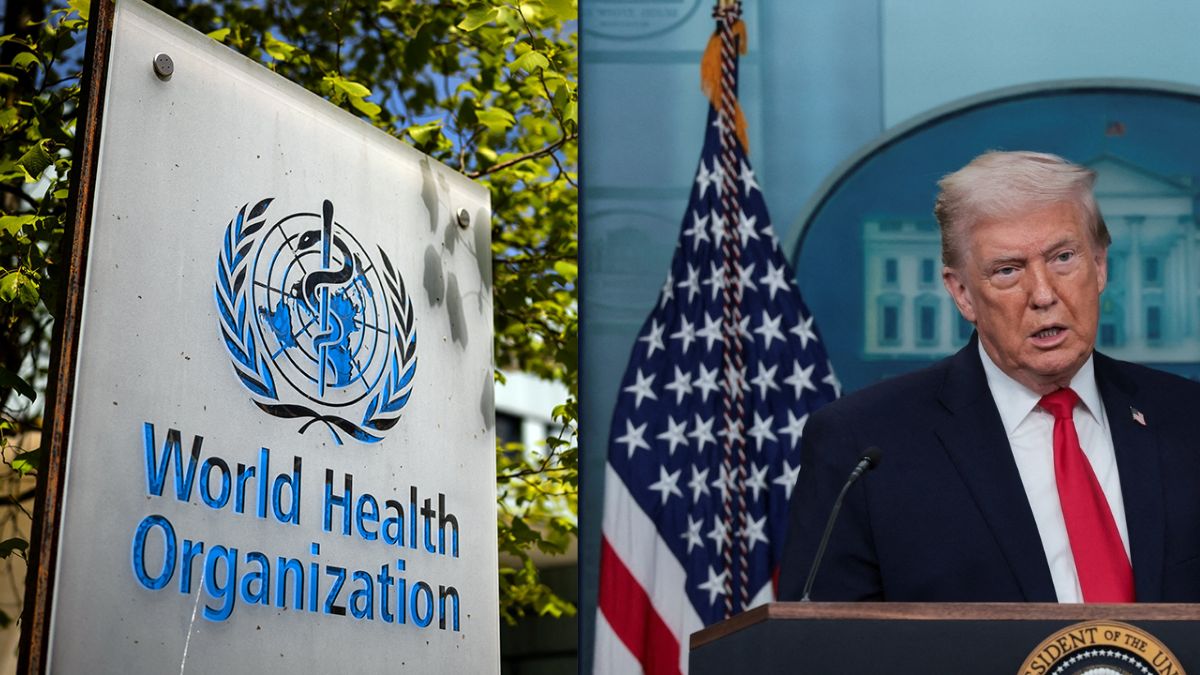
Under the Donald Trump administration, the United States recently completed its formal withdrawal from the World Health Organization (WHO), ending a partnership that lasted nearly eight decades and triggering widespread concern across the global public health community.
The decision comes as the US reportedly owes the global health agency more than $130 million. As per information made available by the WHO, the US has not paid any of its dues for 2024 and 2025, leaving a balance of more than $133 million (£98.31 million).
Multiple reasons have been cited by United States’ health department and Trump administration officials for the exit and even more have been reported by think tanks and numerous media outlets.
In an executive order issued immediately after taking office, Trump stated that the withdrawal of the US from WHO was driven by the global body’s mishandling of the Covid-19 pandemic and other major health crises.
Trump had also cited the agency’s “failure to adopt urgently needed reforms” and its “inability to demonstrate independence from the inappropriate political influence of WHO member states” as reasons for US’s withdrawal taking a swipe at China.
With the exit of America, WHO is now looking at a large funding gap that might disallow the entity from meeting its planned health targets.
The World Health Organization (WHO) is the United Nations’ specialised health agency that coordinates the response to global health threats, such as outbreaks of mpox, Ebola and polio.
WHO also helps distribute scarce vaccines to poorer African countries and sets guidelines for health conditions, including mental health and cancer.
Multiple Public health experts including Dr Ronald Nahass, president of the Infectious Diseases Society of America have labeled the decision as ‘shortsighted, misguided and scientifically reckless.’
How does this affect global health community: The Funding gap
As one of the historically largest funders of the world health body, whose experts doctors, health personnel, pharmaceutical capabilities have helped shape WHO and make it however effective it is today, US’s withdrawal comes at a bad time for the global health community.
A larger picture about the impact of the US’s withdrawal in terms of numbers and funding is depicted by the figure attached below.
USA-WHO Funding: Withdrawals & Crisis
The US exit from the WHO is not just an institutional change , it reflects a deeper shift towards fragmented global governance. In a world facing climate risks, pandemics, AI-driven health challenges and rising mobility, fragmented systems increase collective vulnerability of the global population to future health crises.
Affect on countries in Asia and India
As a part of the withdrawal, the US is recalling all its government workers linked to the WHO, including invaluable experts from the Centers for Disease Control and Prevention (CDC).
The US will also no longer participate in negotiations for a global pandemic treaty, a framework designed to improve international cooperation and prevent future catastrophes. This means that the US might not be able to share or receive any important health-related data on a timely basis that would be required to mitigate future global health crises.
As per a report by the Independent, this development stands to offset WHO’s campaign against Poli in Africa and SE in Asia.
According to an analysis done by The Independent, India still relies heavily on WHO technical guidance and funding for its National Tuberculosis (TB) Elimination Program. A cash-strapped WHO may have to scale back field operations across high-burden zones in Africa and Asia.
India is a global hub for low-cost vaccines. Without U.S. participation in WHO standard-setting, Indian manufacturers may face a fragmented regulatory landscape.
The Trump administration contends that the US will pursue bilateral and multilateral health partnerships outside the WHO framework. However, multiple experts doubt the ‘scalability’ of this program as they don’t anticipate ‘voluntary data sharing agreements’ to come from countries that are presently engaged in trade battles with the US over high tariffs.