



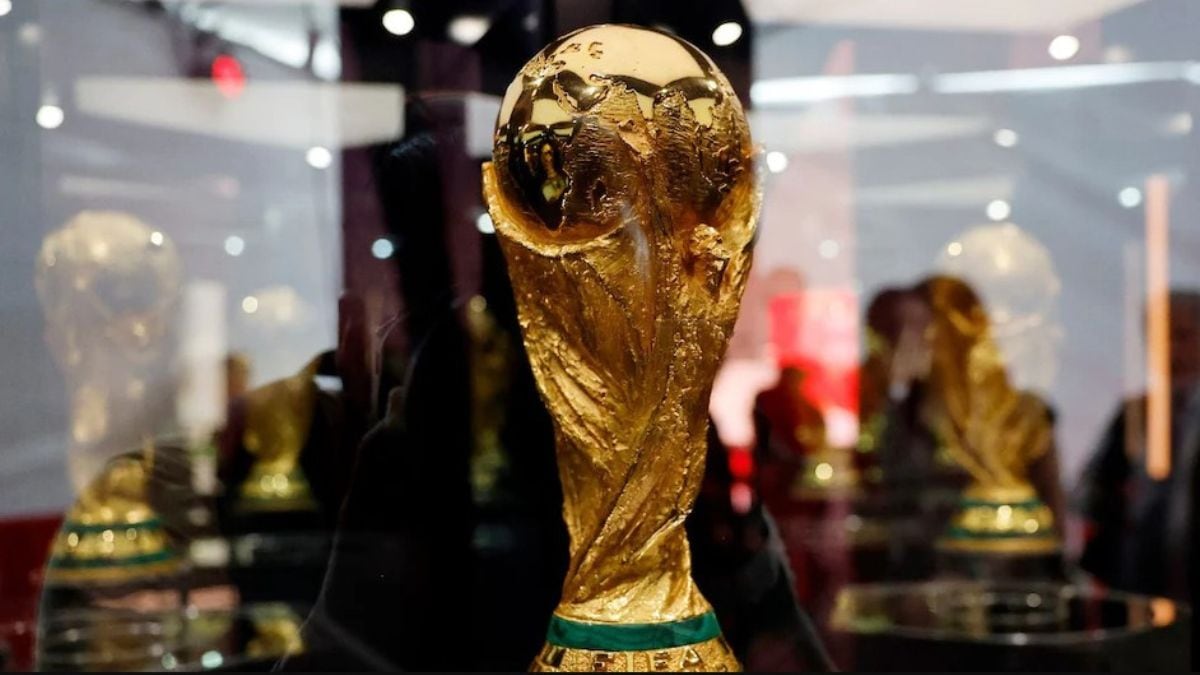
With the 2026 FIFA World Cup less than two weeks away, India was heading toward an unprecedented scenario: one of the world’s largest television and streaming markets still had no confirmed broadcaster for football’s biggest event.
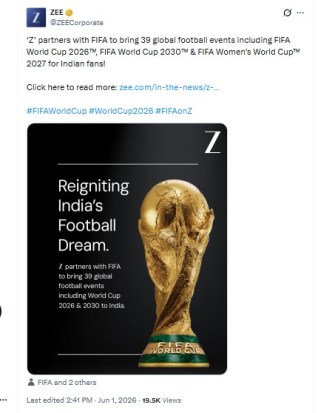
That uncertainty ended when Zee Entertainment Enterprises announced that it had secured the Indian media rights package for FIFA competitions through 2034, bringing the 2026 and 2030 FIFA World Cups, the 2027 FIFA Women’s World Cup, and dozens of additional FIFA events under its umbrella.
The agreement is more than a tournament acquisition in the sense that marks Zee’s formal return to premium sports broadcasting and potentially the most aggressive strategic expansion undertaken by the company in years.
“We are excited to bring one of the world’s biggest sporting spectacles to Indian audiences. Football cuts across regions and demographics, and the investments in garnering the media rights and launching dedicated sports channels, reflect our clear belief in its long-term potential,” said ZEEL CEO Punit Goenka.
The real story bigger than the World Cup
The immediate headline revolves around football fans finally receiving confirmation that the tournament will be available in India. The larger business story is that Zee did not buy a single event. It bought entry into the sports ecosystem.
Instead of negotiating a temporary arrangement for one tournament, the company secured a long-term portfolio reportedly covering 39 FIFA events across an eight-year cycle, changing the economics completely.
The Launch of Unite8 Sports
The FIFA agreement also serves as the launch vehicle for Zee’s new sports network, Unite8 Sports. The broadcaster has introduced a four-channel structure designed to carry simultaneous matches and multiple language feeds, while streaming coverage will be delivered through Zee5.
For years, premium sports rights in India have largely circulated between a handful of dominant media groups. Unite8 Sports changes that equation. Rather than entering with smaller domestic properties, Zee has chosen to re-enter the market with one of the largest global sporting brands available.
Why FIFA needed this deal too
The timing reveals something unusual. Major World Cup rights packages are typically finalised many months before kickoff. Yet India remained one of the last major unresolved territories despite the tournament approaching rapidly.
Earlier reports suggested FIFA’s original valuation expectations faced resistance from Indian broadcasters, largely due to difficult match timings for audiences in the subcontinent and questions surrounding advertising returns. The prolonged deadlock shifted negotiating leverage.
As the tournament approached without a broadcast partner, the risk of losing visibility in a major football-consuming market increased significantly. The eventual agreement suggests both sides ultimately chose strategic certainty over prolonged negotiation.
The advertising pressure cooker
The biggest challenge now shifts to Zee’s monetization team. World Cup inventory is normally sold through carefully planned campaigns stretching across multiple quarters. This time, advertisers are entering the market with far less preparation time.
Automotive brands, consumer electronics companies, beverage firms, fintech platforms, and smartphone manufacturers now have only days, not months, to finalise campaign allocations.
That compressed timeline could create unusually aggressive pricing dynamics as Zee races to maximize revenue before the opening match.
The Streaming stress test
For Zee5, the World Cup becomes an infrastructure examination as much as a content opportunity.
A tournament featuring more teams, more matches, and simultaneous fixtures will place immediate pressure on subscriber acquisition, stream stability, ad delivery systems, and premium-tier conversion strategies.
How Zee positions the service over the next several weeks may reveal the company’s broader digital ambitions. The platform now has a rare opportunity to use a global sporting event as a customer-acquisition engine against entrenched competitors in India’s streaming market.
How Zee crashed the India’s sports broadcasting duopoly
The acquisition fundamentally alters competitive assumptions. For years, the market narrative suggested that only a small group of broadcasters possessed the financial muscle to compete for elite international sports rights. In India, it was either JioStar or Sony who shared a major chunk of sporting rights between them. While Sony said that it had little marketing window and backed out of a deal, JioStar reportedly valued the 2026 FIFA World Cup rights at $20 million, a figure not agreeable for FIFA.
By entering through football rather than cricket, Zee has secured a globally recognised property without directly confronting the astronomical valuations attached to India’s premier cricket inventory. More importantly, it signals that future bidding wars for premium sporting events may involve a new heavyweight participant.
What it means for the sporting property
The World Cup rights saga exposed a rarely discussed truth about modern sports media: global prestige alone no longer guarantees unlimited broadcaster demand. Every major property is now evaluated through audience behavior, advertising economics, streaming conversion potential, and return-on-investment metrics. In that environment, Zee identified an opening where others hesitated.
The result is not merely a FIFA broadcast agreement. It is the beginning of a new competitive chapter in Indian sports media, one that could reshape how future global rights are priced, distributed and fought over.