



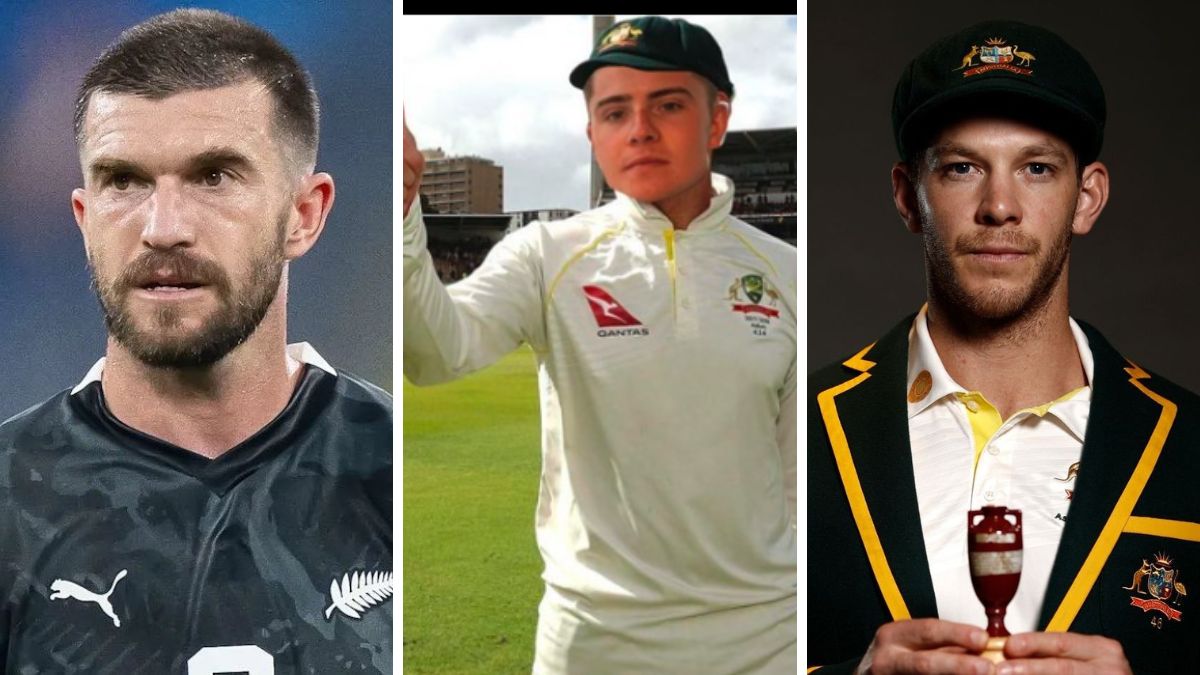
Tim Payne had fewer than 5,000 Instagram followers at the start of the week.
By Friday morning, the New Zealand international defender had crossed 1.5 million.
No transfer saga. No viral goal. No World Cup masterclass.
Just the internet doing internet things.
Days before the 2026 FIFA World Cup in North America, Argentine content creator Valen Scarsini — better known online as @elscarso — launched an unusual challenge to his audience: find the least famous footballer at the tournament and make him globally famous before a ball was even kicked.
After combing through World Cup squad lists, Scarsini landed on New Zealand defender Tim Payne of Wellington Phoenix.
“Within Group G, in New Zealand, is Tim Payne,” Scarsini told his followers. “He is really the least known. Explode his posts with likes and comments. We need to start naming Tim Payne everywhere.”
The response was immediate and absurdly massive.
Argentine football fans flooded Payne’s account with memes, edits, tribute videos, fake Ballon d’Or campaigns, and endless comments treating him like a global superstar. TikTok creators began building an entire mythology around the defender, while others posted pictures of his Panini World Cup sticker as if it were a rare collector’s item.
At its peak, Payne’s account was reportedly gaining close to 1,000 followers every minute.
Within days, the campaign completely outgrew its creator. Payne ended up accumulating several times more followers than Scarsini himself, despite the Argentine influencer already possessing a massive online audience.
Suddenly, a defender from New Zealand possessed a larger Instagram following than:
- New Zealand Prime Minister Christopher Luxon
- The official All Whites account
- Wellington Phoenix
- And even national team captain Chris Wood, the Nottingham Forest striker who plays in the Premier League
From a purely digital perspective, Tim Payne had become one of the most recognisable public figures in New Zealand almost overnight. By the time the copy was published he had 1.6 million Instagram followers.
Training with the national team in Florida ahead of the World Cup, Payne eventually responded with a video message in broken Spanish.
“Please excuse my Spanish, I’m still practising on Duolingo,” he joked. “Just want to say a massive thank you. It’s been a pretty crazy 48 hours.”
The humility only made the internet love him more.
But while the footballer’s rise represents the internet at its funniest and most unexpectedly wholesome, the name “Tim Payne” already carried a very different kind of viral history.
The Other Tim Payne
Five years earlier, another man with the exact same name experienced the far uglier side of online culture.
In January 2021, India completed one of the most famous overseas Test series victories in cricket history by defeating Australia at the Gabba. Emotions were running high, and much of the online anger focused on Australian captain Tim Paine, whose aggressive sledging of Indian batter Ravichandran Ashwin had made him a major villain among Indian fans.
There was only one issue: Tim Paine did not have Instagram.
So thousands of fans searching for the Australian captain ended up finding the next closest thing — an Australian freelance video producer named Tim Payne.
Within hours, the creator’s account was overwhelmed with abuse, insults, threats, and hundreds of direct message requests from cricket fans convinced they had located the Australian wicketkeeper.
Payne later revealed he received more than 600 message requests in a matter of hours over a cricket series he had absolutely nothing to do with.
It was internet mob mentality in its purest form. Nobody stopped to verify the face, nationality, or profession attached to the account. The algorithm surfaced a near-identical name, and that was enough.
To his credit, Payne handled the situation with remarkable humour.
Instead of lashing out, he photoshopped his own face onto the Australian captain holding a cricket bat and posted it online with the caption: “Plot twist…”

The mood shifted instantly.
The abuse turned into apologies, memes, and collective embarrassment as fans realised they had spent hours targeting an innocent video producer who simply happened to share almost the exact same name as Australia’s captain.
For one brief moment, the internet remembered how ridiculous it could be.
The Man at the Centre of the Confusion
Hovering over both stories is former Australian captain Tim Paine himself — the accidental catalyst behind one of social media’s strangest recurring cases of mistaken identity.
After leading Australia through the fallout of the 2018 ball-tampering scandal and helping retain the Ashes in England in 2019, Paine retired from professional cricket in 2023. He has since transitioned into coaching and broadcasting, working with Australia A while appearing regularly across Australian cricket coverage.
And through all of it, he has remained absent from public social media.
Ironically, that absence may be exactly why two different Tim Paynes ended up becoming internet phenomena in completely opposite ways.
Life in the Age of Search
Ultimately, the story of Tim Pay[i]ne says less about sport and more about how identity functions online.
Today, names are no longer just personal identifiers. They are searchable digital assets shaped by algorithms, virality, and collective online behaviour. One letter can redirect millions of people toward an entirely different person — whether in anger, irony, or admiration.
An ordinary Australian freelancer became collateral damage in a cricket war because strangers online moved faster than verification. A quiet New Zealand footballer became a global cult hero because Argentine fans collectively decided he should.
Neither of them planned for it. Neither of them controlled it.
But both discovered the same truth about life on the modern internet: sometimes the algorithm chooses you first, and asks questions later.