



We love to rank. It is almost an Indian condition. Top five this. Greatest that. Best ever. But sometimes a season arrives that breaks the calculator.
ESPNcricinfo ran the math. They do this every year. Most impactful batter. Most impactful bowler. The algorithm chews through runs and strike rates and pressure indices and venue adjustments. Then it spits out a number.
But here is the thing about numbers. They tell you what happened. They do not tell you how it felt.
They do not tell you about the fifteen year old who was supposed to be in school. They do not tell you about the Australian who carried a franchise that had no business winning. They do not tell you about the king who batted with a torn hand.
The model has answers. The heart has different ones. And this is the story of both.
The boy who was supposed to be studying
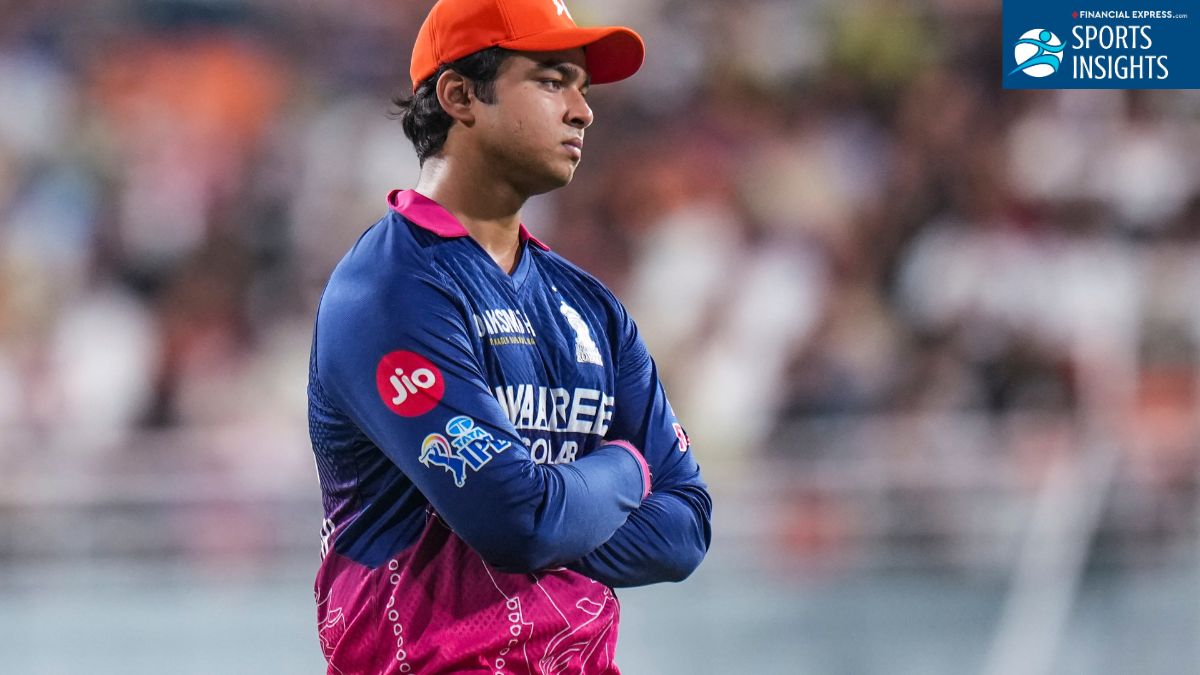
Start with Vaibhav Sooryavanshi because starting anywhere else feels dishonest. He is fifteen. Not fifteen in the way that IPL debutants sometimes seem young and fresh. Fifteen as in he should be appearing for his Class 10 boards. Fifteen as in his mother probably still reminds him to eat properly.
He scored 776 runs this season at a strike rate of 237.31.
Read that again. Two hundred and thirty seven. Jasprit Bumrah bowling at him from one end. Kagiso Rabada from the other. And this child is clearing the boundary like it is a gully cricket match on a Sunday morning.
The ESPNcricinfo model gave him 1012.2 impact points. 63.2 per innings. He hit 72 sixes, which nobody had ever done in an IPL season. He crossed 500 runs in the powerplay alone. First time in history. He faced 46 different bowlers and hit 34 of them for sixes. Not tried to. Hit.
Rajasthan Royals bought him for 1.1 crore. The analytics community valued his output that season at around 35 crore. That is a recovery multiple of roughly 32 times. In any industry in the world, that is an absurd return.
But here is what the model cannot weigh. What does it cost to be fifteen and walk into an IPL ground knowing that if you fail today, forty thousand people will watch you fail? There is no adjustment factor for that. There is no pressure index for being a child in a man’s profession.
Sooryavanshi’s 2026 season is the model’s second best. But in terms of what it announced to the world, nothing in this list comes close.
This was not just a good IPL season. This was a new way of playing the game. A new template. A warning that something had arrived that the game had not quite prepared for.
The Australian who dragged everyone across the line
David Warner. Sunrisers Hyderabad. 2016. The model puts him at the top with 1076.2 impact points. 63.3 per innings. The highest pure batting impact of any season in this list.
But the model, for all its intelligence, still underestimates what happened here.
Warner made 848 runs. The entire Sunrisers batting lineup combined for 2549. Do that division. 33.26 percent of all his team’s runs came from one man. He did not just anchor the innings. He was the innings. When he got out, the team typically got quiet very quickly.
Look at what was around him. Shikhar Dhawan at a strike rate of 116. Yuvraj Singh at 131. Eoin Morgan, who was at that point one of the finest limited overs players England had produced, limping along at 117.
Kane Williamson, a man who would go on to be considered one of the best Test batsmen of his generation, was at 101 that year. Moises Henriques plodded at 115.18. Deepak Hooda scratched at 119. Naman Ojha moved at 98.55.
These were not passengers who happened to be on a Warner flight. These were good cricketers who were genuinely struggling. And Warner still got SRH to a title.
The surface at Hyderabad was not friendly. Slow, gripping, not the kind of pitch where you can just swing your arms. Warner had to construct his innings carefully while still scoring at the rate a T20 team needs. He played knockout after knockout in conditions that were not his natural habitat.
The final chapter was the Eliminator route. No team in IPL history has ever won the title by coming through the Eliminator. You need to win three consecutive knockout games, which means three games where losing equals going home. Warner won all three.
He made 93 not out against Gujarat in a chase when his team had collapsed to 117 for 6. In the final against Royal Challengers Bangalore, he made 69 off 38 and then managed his bowling attack with the composure of someone who had done this a hundred times before.
He had not. He was doing it for the first time. As a foreign captain. In a country not his own. With a batting lineup that gave him almost nothing to work with.
The model says 1076.2. What it actually means is: the greatest individual carry job in IPL history. If there were a column for carrying, Warner would break that record too.
The King With tape on his hand
Virat Kohli. 2016. 973 runs. Four centuries. Seven fifties. The Orange Cap. By the counting of runs, the most productive IPL season any batter has ever had.
The model gave him 863.7 points. 53.9 per innings. The lowest per innings impact among these six.
This is where the model is honest and cruel at the same time.
The model knows that volume is not the same as impact. It knows that Kohli’s 973 came in a Chinnaswamy that was often a batting paradise, and that a 70 there sometimes feels like a 50 anywhere else. It adjusts. It is right to adjust.
But it does not know about the blood.
Against Kolkata Knight Riders, Kohli batted with a split webbing on his right hand. He played through. Then he got eight stitches, rested for approximately no time at all, and walked out against Kings XI Punjab in a 15-over game. And made a century. In a 15-over match. With a hand held together by tape and willpower.
The model sees the runs. The model sees the strike rate of 152. What it cannot see is the training sessions he must have skipped because picking up a bat was genuinely painful. It cannot see the nights when the hand throbbed at 2 in the morning. It cannot see whatever conversation he had with the team doctor before walking out to bat.
At Chinnaswamy, Kohli was on another planet. 597 runs in nine innings at a strike rate of 171. Away from Bengaluru, the numbers softened. 376 runs at a strike rate of 129.6.
The model adjusts for venue. But it cannot fully account for what it means to be playing in your home city, in your own fortress, where the crowd knows your name and calls it every time you hit the boundary.
RCB lost the final. They came within two scoring shots of winning a title that would have made 2016 legendary in a completely different way. Would 863.7 feel like 1000 if they had won? Probably yes. Context does not just change how we feel about seasons. It changes what the numbers actually mean.
Kohli’s 2016 was not the most impactful by the model’s accounting. But it might have been the bravest. The model missed that entirely. It just counted the runs.
The man who came late and burned everything down
Chris Gayle. Royal Challengers Bangalore. 2011. He was not even supposed to be there.
RCB started the season without him. Five games gone, the season looking bleak, and then their regular player got injured. Gayle arrived as a replacement. He had been sitting around, not playing competitive cricket at full throttle. He came off a flight and walked into a dressing room that needed saving.
608 runs. Average of 67.55. Strike rate of 183.13. 44 sixes in 12 innings. In an era when the average IPL strike rate sat around 125, Gayle was playing a different sport. He was not accelerating at the death or taking risks in a chase. He was doing it right from the first ball, in an era when that was simply not how IPL cricket worked.
The model gave him 886.2 batting impact points. 73.8 per innings. The highest batting impact per game of any season in this entire list.
But Gayle also bowled. 8 wickets at economy of 6.7. In T20 cricket, where a good economy rate is considered below 8, he was genuinely effective with the ball.
The combined batting and bowling impact hit 1120, which is the highest total MVP score any player has ever recorded in an IPL season. No one has touched it in the years since. Not Narine Nor Watson in his best years. Not any of the men in this piece.
And he did it in twelve games. Not sixteen. Twelve.
If he had played all sixteen, at 73.8 per innings, the batting impact alone crosses 1100. Add the bowling and you are looking at a number that probably cannot be beaten.
The model says 886.2 batting. The reality says the greatest twelve-game stretch any IPL batter has ever had, from a man who arrived late and left everything on the ground.
The wicketkeeper who nobody mentions
Here is the thing about lists like this. They almost always fill up with openers. Warner opens. Gayle opens. Sooryavanshi opens. Gill opens. Kohli opened for RCB in 2016. Openers face the new ball, they face the powerplay fielding restrictions, they have more balls to play with.
The model adjusts for this. But there is still a natural advantage.
Rishabh Pant in 2018 did not have that advantage. He came in at number 4 (sometimes at number 5) for Delhi Daredevils, a team that was frankly not very good. He got fewer balls. He came in when wickets had sometimes already fallen. He had less room to build an innings the way an opener can.
He still scored 684 runs at strike rate of 173.6. The model gave him 861.3 points. 61.5 per innings.
Read that per innings number again. 61.5. Warner is at 63.3. Sooryavanshi is at 63.2. Pant is at 61.5 without opening. Without powerplay restrictions to exploit. Coming in after the field has spread, when the death bowlers are warming up, when the situation is often already complicated.
He was twenty years old. He was keeping wicket, which means he was on the field every single ball of every Delhi innings in the field, diving around behind the stumps, and then walking out to bat sometimes in the middle of chaos. He hit 37 sixes that season, which was remarkable for a middle order batter in that era.
Delhi finished bottom of the table in 2018. Pant’s 684 runs made up a staggering chunk of whatever batting performances they actually had worth remembering. He was not carrying a championship team like Warner. He was carrying a sinking ship, occasionally to the surface, before it went under again.
The model put him at the bottom of this six-player list by total impact. But no one in this list was doing more with less, in a harder batting position, with a team that gave him less to work with.
The model does not have a column for wicketkeepers batting without the powerplay advantage. If it did, Pant’s 2018 season would look significantly different.
He is also, and this matters, the only one of these six who was not an opener. One man in a different role, doing the same numbers in harder conditions.
The prince and his palace
Shubman Gill. Gujarat Titans. 2023. 890 runs. Three centuries. The youngest Orange Cap winner in IPL history. The model gave him 1001.8 points. 58.9 per innings. It is a beautiful season by any measure.
But the context is worth knowing.
572 of his 890 runs came at home in Ahmedabad. Nine innings there. Two hundreds. Average of 71.5. The Narendra Modi Stadium, the largest cricket ground in the world, is a particular kind of pitch, and Gill knew every inch of it.
Away from that ground, the numbers were softer. He scored 318 runs in seven away innings at an average around 45. Still good. Not the same.
This is not criticism. Home advantage is real. Every batter in this list used home conditions at some point. Kohli at Chinnaswamy was different from Kohli anywhere else. The difference with Gill is that the proportion was notably large. More than 64 percent of his season’s runs came in one location.
Warner won the title playing on sluggish Hyderabad tracks with minimal support, then went to Delhi for the Qualifier and scored 93*. Then in Bengaluru for the final, he blasted 69 off 38.
Gayle played wherever RCB sent him and left the same kind of damage everywhere. Pant batted in conditions and situations that gave him nothing extra.
Gill’s 2023 was technically brilliant. He is a beautiful batter to watch. The Orange Cap is not a participation trophy. But between great and truly remarkable sits the question of what you do when the conditions are not kind, when the pitch is not yours, when the crowd is not calling your name.
What the model got right and what it never could
So here is the final picture. Six seasons. Six different stories. Warner and Sooryavanshi are close enough that arguing for either as the top feels reasonable. The model is doing its job. It is measuring what it can measure.
But cricket is not only what can be measured.
t cannot measure the weight on a man’s back. It cannot measure the silence in a dressing room before a knockout. It cannot measure what it means to be a foreign captain in a city that does not know you and make them believe.
That is why we watch. Not for the numbers. But for the moments the numbers will never catch.
Gayle’s 1120 total MVP score or 73.8 points per innings as batter is the highest in IPL history and nothing has touched it in over a decade. That matters.
Warner won a title from the Eliminator with a team of passengers, which has never happened before. That matters.
Sooryavanshi is fifteen and his strike rate belongs to a different sporting era. That matters.
Kohli batted through genuine physical pain and still scored nearly a thousand runs. That matters.
Pant did these numbers without the opener’s advantage and for a struggling team. That matters.
And Gill made three centuries and almost won the title at 23. That also matters, even if it matters in a slightly more comfortable way than the others.
The model is a map. But cricket is not a map. It is the memory of a 20-year-old wicketkeeper in a losing team hitting yet another six into the stands at Kotla for nobody in particular.
It is a 15-year-old who should be in tuition class instead pulling Jasprit Bumrah over midwicket. It is a foreign captain in an orange jersey making 93* when his entire batting order has already surrendered.
The spreadsheet whispers. The stadium shouts. The stadium always wins. But the truth, the real truth, is somewhere in the noise between both.