



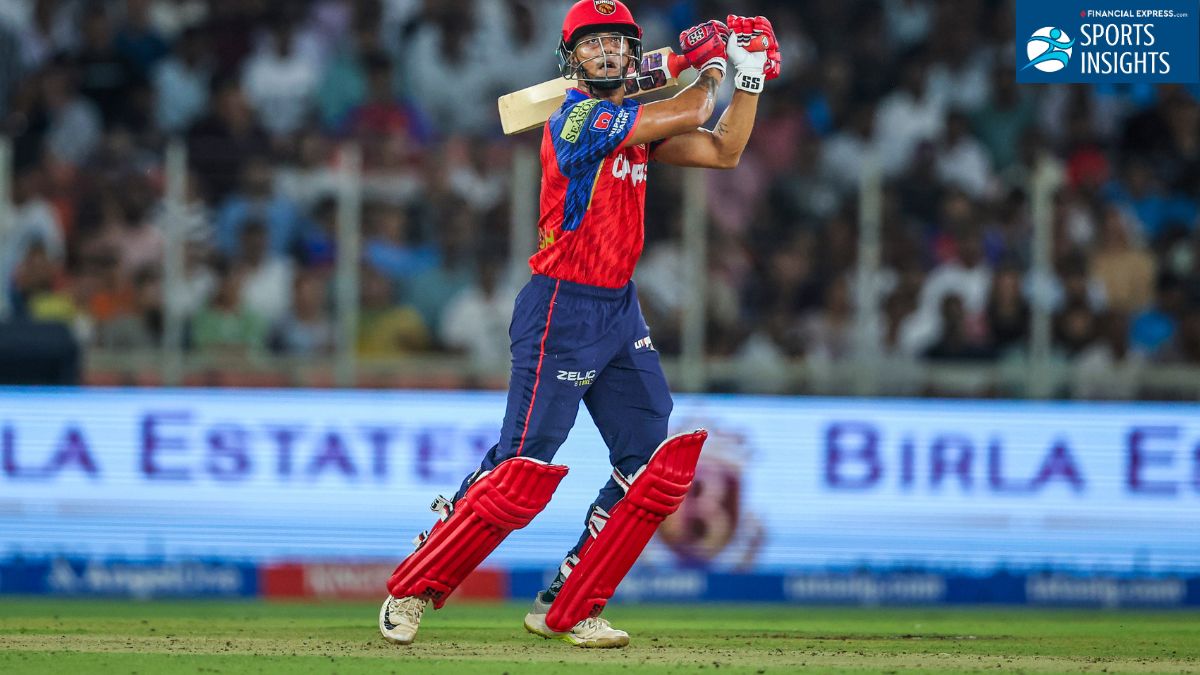
Some cricketers announce themselves with a century on debut. Others take ten years to find their voice. Suryansh Shedge did neither.
He announced himself with a triple hundred at thirteen, disappeared for two years with a broken back, then walked into an IPL game with his team four down for nothing and made thirty lakh look like loose change.
This is not a story about talent. Mumbai produces talent by the truckload. Shivaji Park alone has enough gifted thirteen-year-olds to fill three Ranji squads.
This is a story about what happens when talent meets a mother who quits her job, a coach who makes you sit in a chair before batting, and a kid who decides that getting his eye in is a luxury he cannot afford.
The handshake at Wankhede
December 2016. India versus England, fourth Test. Virat Kohli is walking out after lunch. The cameras are on him, the crowd is roaring, and somewhere near the dugout a thirteen-year-old boy from Gundecha Education Academy is standing with his father.
Kohli shakes his hand. Just a quick grip, maybe two seconds, maybe three. Shedge later called it the Midas touch. What he did next was not golden. It was volcanic.
Six days later, playing the Giles Shield Under-14 knockout, he faced 137 balls and scored 326*. He hit 54 fours and four sixes. His team won by 482 runs.
The opposition was SPSS Mumbadevi, which sounds like a school from a Mumbai suburb and probably was, and they spent the day watching a child treat their bowling like throwdowns.
Here is the thing about that innings that the scorecard does not tell you. Shedge noticed they were tired early. He noticed the fielders were slow to bend down.
So he started hitting boundaries in the first ten overs, not because he was slogging, but because he was reading the game like a thirty-year-old. He reached his hundred by the ninth over. The rest was mathematics.
Mumbai cricket has seen triple hundreds before. It will see them again. But a thirteen-year-old doing it with tactical awareness, not just muscle, is rare. It is the kind of thing that makes selectors write your name in ink instead of pencil.
The resignation
Priyadarshini Singh worked at HSBC. Then she worked at Citibank. Then she stopped working anywhere, because her nine-year-old son was hitting balls at Shivaji Park and someone needed to manage the logistics, the nutrition, the scheduling, the everything.
Her husband Prashant was busy being Group Marketing Head at Wockhardt Hospitals. Good job, stable job, the kind of job that pays for cricket kits and coaching fees.
But cricket in Mumbai is not just about money. It is about time. It is about someone sitting in the heat for six hours while net practice drags on. It is about knowing which coach to trust and which to avoid.
She resigned. No sabbatical, no work-from-home arrangement, no compromise. She walked away from banking to become a cricket mother full-time.
This is the subplot that never makes the highlights package. When Shedge hit that fifty against Gujarat Titans in Ahmedabad this May, nobody showed Priyadarshini Singh in the stands.
But she was there, or she was watching at home, and she was remembering the afternoons at Azad Maidan when the only reward was a tired child and a long train ride home.
Shedge studied at Gundecha International School, IB board, the kind of education that teaches you to think in essays rather than multiple choice. It shows in how he talks about cricket. He does not say he played well. He says he entered a trance. He does not say he practiced hard. He says he simulated the dugout.
The chair in the nets
Abhishek Nayar has a reputation. He has fixed Rohit Sharma’s game. He has fixed KL Rahul’s game. He has probably fixed half a dozen other Mumbai batsmen who went on to play for India. When Shedge missed the Under-19 World Cup squad despite being Mumbai’s captain, Nayar took him to a corner of the nets and changed everything.
The problem with finishing in T20 cricket is not the hitting. Any decent club batsman can clear the ropes in the fifteenth over with the field spread.
The problem is the waiting. You sit in the dugout for forty minutes, your body cools down, your mind starts calculating scenarios instead of watching the ball, and then someone throws you a helmet and says go save us.
Nayar’s solution was simple. Sit in a chair. Wait. Let your body temperature drop. Let your mind wander. Then stand up, pick up your bat, and face six to fifteen balls at maximum intent. Then sit down again. Then do it again. And again.
Shedge called it the cold body simulation. He said he stopped thinking and started reacting. He said premeditation was a trap. He said he entered a trance.
This is not normal net practice. Normal net practice is about rhythm and timing and getting your eye in. Normal net practice assumes you will face fifty balls and settle into an innings. T20 finishing assumes you will face twelve balls and either win or lose the match. Nayar understood this. Shedge understood it faster.
Shreyas Iyer and Suryakumar Yadav also chipped in. Iyer, who would later become his captain at Punjab Kings. Yadav, who shares a first name and a city and a batting position but little else in terms of style. Both of them told him the same thing. The dugout is not a waiting room. It is part of the job.
The back breaks twice
Late 2023. Shedge gets called up as a replacement for Jaydev Unadkat at Lucknow Super Giants. This is it. The IPL dream, the phone call every domestic cricketer waits for. He joins the camp. He starts training. Then his back gives out.
Stress fracture. The classic seam-bowling all-rounder’s injury, except Shedge is not really a seam bowler in the traditional sense. He is a medium-pacer who bowls because he can, not because he must. The back does not care about nuance. The back breaks anyway.
He rehabilitates. He comes back. He scores a century in a Mumbai preseason camp. The back breaks again. This time he misses the entire white-ball season. No Syed Mushtaq Ali Trophy. No Vijay Hazare Trophy. Just months of physiotherapy and the slow realization that your body might be saying no.
He talked about mental health during this period. Not in the polished way athletes do in press conferences, with the right keywords and the sponsors watching. He talked about it like a twenty-year-old who was scared. He kept a mantra. “Let me fall if I must fall. The one I will become will catch me.”
It is a good mantra. It is also the kind of thing you tell yourself at two in the morning when the physiotherapy did not work and the season is slipping away and your friends are scoring runs on television.
When he came back, he scored three hundreds in three matches. Not gradually. Not carefully. Three in three, like he was making up for lost time with interest.
The wedding in Jaipur
November 2024. The IPL mega auction. Shedge’s name comes up in the accelerated round. His parents are not in the auction room. They are not even in Mumbai. They are at a wedding in Jaipur, surrounded by loud music and relatives and the kind of celebration that makes checking your phone rude.
They stepped away anyway. Found a quiet corner. Watched the auction on their phones. Punjab Kings raised the paddle at base price. Thirty lakh. Not life-changing money in IPL terms. Not the kind of figure that makes headlines. But enough.
Shedge was on a team bus with his Mumbai teammates when it happened. They erupted. Someone called him Punjab da Munda. The first call came from Musheer Khan, who had also been picked by Punjab. Two Mumbai boys, same bus, same franchise, same dream.
The 2025 season was quiet. Five games, seven runs across three innings. Nothing to write home about. But Ricky Ponting saw something in the nets. Ponting, who knows a thing or two about fearless batting, saw a kid who treated every net session like a match situation.
Shreyas Iyer, now his captain, saw the same thing. They kept him in playing XII for 2026. Just a quiet decision that said we see what you can do.
Ahmedabad, May 3, 2026
Punjab Kings are 36 for 4. Then 47 for 5. The Narendra Modi Stadium is a fortress of noise and Gujarat Titans are bowling like they have already won. Shedge walks in. He has faced 13 balls in his IPL career before this. He has scored 10 runs.
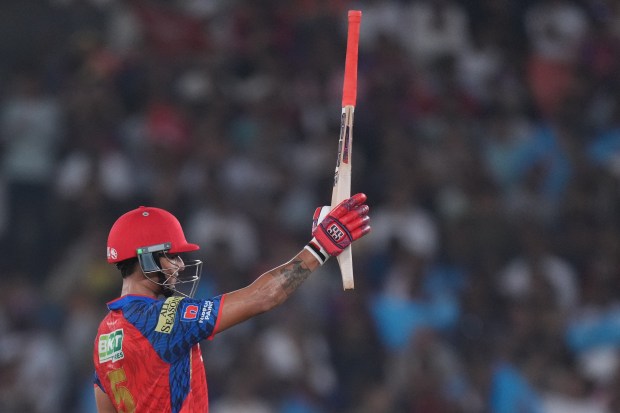
He faces 29 balls in this innings alone. He scores 57.
Here is how the innings worked. First 14 balls, 13 runs. He was not defensive. He was surviving. Letting the team breathe. Letting the scoreboard stop spinning. Then ball 15th happened and something switched.
He hit Manav Suthar for six, six, four, four, six in five balls. Not slogging. Not swinging blindly. Reading the length, reading the line, and doing what he had practiced in those cold body simulations. Reacting, not thinking.
What the numbers hide
Shedge’s domestic T20 strike rate in the 2024-25 SMAT was 251.92. He faced 52 balls in the entire tournament and hit 20 boundaries. In the final against Madhya Pradesh, Mumbai were 129 for 5 chasing 175, with Rahane, Yadav, and Dube all back in the hut
Shedge made 36 not out from 15 balls and took a wicket. Player of the Match. Title won.
Aftee 25 T20 games, his career strike rate is 184 and he has taken 13 wickets and 13 catches as well.
These are the numbers that get you an IPL contract.
The one I will become
Suryansh Shedge is twenty-three years old. He has a triple hundred from childhood, two stress fractures from early adulthood, and one innings in Ahmedabad that proved the simulations work.
He has a mother who left banking, a father who watched from hospital boardrooms, and a coach who made him sit in nets like he was waiting for a bus.
He is not in the Indian team yet. Indian cricket has a surplus of finishers, a surplus of all-rounders, a surplus of Mumbai boys who did everything right and still did not get the cap.
But Shedge has already done something rare. He has made thirty lakh look like the bargain of the century. He has made a broken back look like a footnote. He has made the dugout part of the performance.
The next time Punjab Kings are 40 for 5, they will throw him the helmet. He will walk out cold, enter his trance, and try to save them. Sometimes he will fail. That is the job. But when he succeeds, he succeeds in ways that no impact model can fully capture.
Because some things cannot be simulated. Not the handshake at Wankhede. Not the resignation letter at Citibank. Not the quiet corner at a Jaipur wedding where two parents watched their son’s price get called out and knew, finally, that the fall had been worth it.
The one he became caught him. Now we wait to see how high he climbs.