



Deceptive Data: One particular kind of batting violence captures IPL memory like never before. When one causally refers in it in a conversation with a friend, everyone remembers it. But without reference, people would assume it would be a destructive batter like Vaibhav Sooryavanshi or a record-breaker like Virat Kohli who might hold the record.
But it’s neither and it’s from the kind of player who rarely wanted limelight despite being at the centre stage on many occasions. It was the kind an innings where the bowlers stopped looking prepared. Commentators started laughing halfway through sentences because language could not keep pace with what was happening. In IPL 2026, 15-year-old Sooryavanshi briefly created that feeling.
The Rajasthan Royals batter raced to a century against Gujarat Titans with the kind of freedom that usually belongs only to players too young to understand consequence properly. He then narrowly missed out on the fastest IPL ton, getting out for 97 in the Eliminator against Sunrisers Hyderabad, following it up with a 96 in Qualifier 2. Meanwhile, across another playoff run, Virat Kohli continued doing what he has done for nearly two decades now: accumulating runs so relentlessly that entire IPL seasons begin orbiting around his consistency.
Between them sits almost every modern version of T20 batting. Fearlessness. longevity, powerplay destruction, run accumulation, big hitting: And yet neither has touched one IPL record that still feels slightly absurd when you read it carefully.
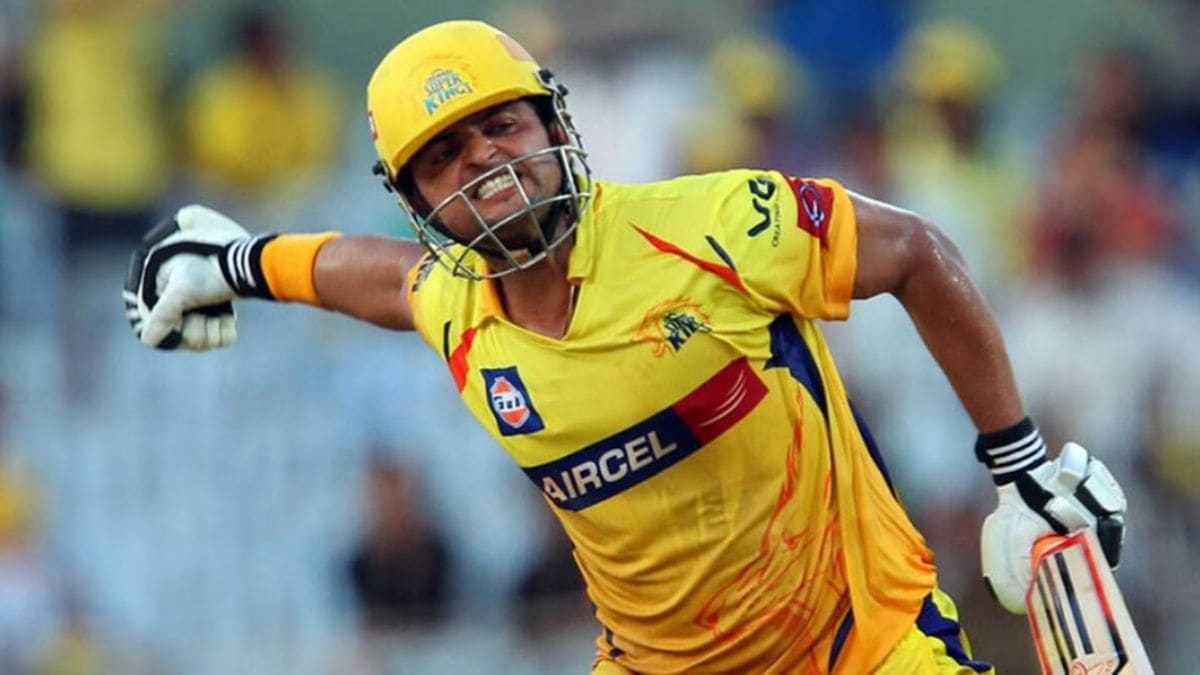
The highest individual score in a single IPL Powerplay continues to be the one made by Suresh Raina 12 years ago. Eighty-seven runs. In six overs. Not Chris Gayle, or Kohli. Neither AB de Villiers or Travis Head. Not even the newest generation raised entirely inside T20 cricket’s acceleration economy but Chennai Super Kings’s Chinna Thala.
One unforgettable evening
April 30, 2014. Wankhede Stadium. Chennai Super Kings vs Kings XI Punjab. Qualifier 2.
Punjab had made 226. At the time, it felt almost excessive for a playoff game. Chasing teams in knockouts were not supposed to pursue totals like that calmly especially under pressure. Not against a strong attack. Then Raina arrived and the match stopped behaving normally.
He began with a flick for six off Mitchell Johnson, one of the fastest bowlers in the world. Then another boundary. Then another. Parvinder Awana disappeared. Sandeep Sharma disappeared. Lakshmipathy Balaji disappeared. Length bowling became impossible because Raina pulled them. Full bowling became impossible because he drove it. Straight balls vanished into the leg side, while width vanished through the off side.
By the end of the sixth over, Chennai were 100 without loss. Raina had scored 87 of them. Not the team. One batter alone had scored 87 per cent of the team’s runs in the first six overs.
The number still feels structurally incorrect because powerplays are not usually designed for individual ownership at that scale. Even the most destructive T20 innings tend to distribute scoring between partners, wides, extras, strike rotation and phases of rebuilding. Raina briefly removed all those phases from existence.
The over that became folklore
There is one over from that innings IPL memory never fully let go of. Parvinder Awana runs in. Raina hits him for 6, 6, 4, 4, 4, (no ball), 4, 4.
Thity-three runs came off the over. The broadcast kept cutting to Punjab players looking vaguely confused, like men trying to understand whether the pitch has changed underneath them without warning.
Raina reached fifty in 16 balls, got run out for eighty-seven off 25 balls. It was fitting in a way because no bowler came close to inducing even a mishit from the batter.
87. The number matters because it explains the strange incompleteness attached to the innings. Raina never reached a century. Chennai lost the match despite scoring 202.
Which means one of the greatest batting explosions in IPL history exists without the comforting statistical shape people usually attach to immortality. No hundred. No victory. Just destruction.
Why this record survived the T20 revolution
The IPL has changed dramatically since 2014. Powerplays have become more aggressive. Batting depth expanded. Impact Players arrived. Strike rates inflated beyond what older generations considered rational. Teams stopped treating 200 as extraordinary.
And still, the record survives. That is partly because scoring 87 runs in six overs requires more than clean hitting. It requires possession of strike, uninterrupted rhythm and the complete collapse of bowling control simultaneously.
Even Kohli, arguably the tournament’s greatest long-term batter, built his dominance differently. Kohli’s greatness in the IPL comes from accumulation without decay. Seasons where 600 becomes 700, then 800. Chases paced with clinical precision. Partnerships that suffocate games gradually rather than detonating them immediately.
His most destructive powerplays still carry structure. Raina’s did not. That evening at Wankhede felt closer to an electrical malfunction.
The same applies to someone like Chris Gayle, whose batting often looked custom-built for T20 excess. Gayle produced larger innings overall, including the unbeaten 175 that still towers over IPL history, but even he never consumed a Powerplay individually the way Raina briefly did.
And then there is Sooryavanshi, representing cricket’s newest acceleration curve entirely. A teenager already batting like someone raised on YouTube highlight compilations rather than cautious coaching manuals. His innings this season felt shocking because of his age. Raina’s feels shocking because the record survived everyone who came after him.
The player IPL remembers slightly differently
Which brings the story back to Raina himself.
There was a period when he felt inseparable from the IPL’s identity. Chennai Super Kings’ stability, their middle-overs accelerator, yellow jerseys deep into May. Quick running between wickets, left-handed momentum and sometimes even being called upon to bowl, apart from taking stunning catches as a fielder.
Reliability across years before most franchises fully understood how continuity worked in T20 leagues. And yet, strangely, Raina’s place in IPL memory softened faster than some of his contemporaries. Kohli became permanence. Dhoni became mythology. Rohit Sharma became trophies. Gayle became spectacle. AB de Villiers became impossibility. Raina somehow always felt like the guy next door. But this record interrupts that slightly, it was unlike the guy next door.
Because hidden inside IPL history’s most chaotic six overs sits a reminder that before the league fully transformed batting into industrial-scale violence, one left-hander had already arrived there first.
The scorecard still looks unreal
The final score from that innings reads 87 off 25 balls. Six fours. Twelve sixes. A strike rate of 348. And somehow, even that does not fully explain what watching it felt like. Because some T20 innings are remembered statistically and others emotionally. Raina’s Powerplay survives because it occupies both spaces simultaneously. The numbers look exaggerated but the footage somehow looks even faster.
Moreover, it’s almost beautifully incomplete cause it did not come in a winning cause. Neither a hundred, nor an IPL Trophy or a winning photograph at the end of the season. Chennai lost. Raina never reached three figures. The season moved on.
But somewhere inside IPL history still sits a six-over stretch that neither Kohli, nor Gayle, nor the newest generation of fearless batting has managed to overtake. And perhaps that is the strangest part of all.