



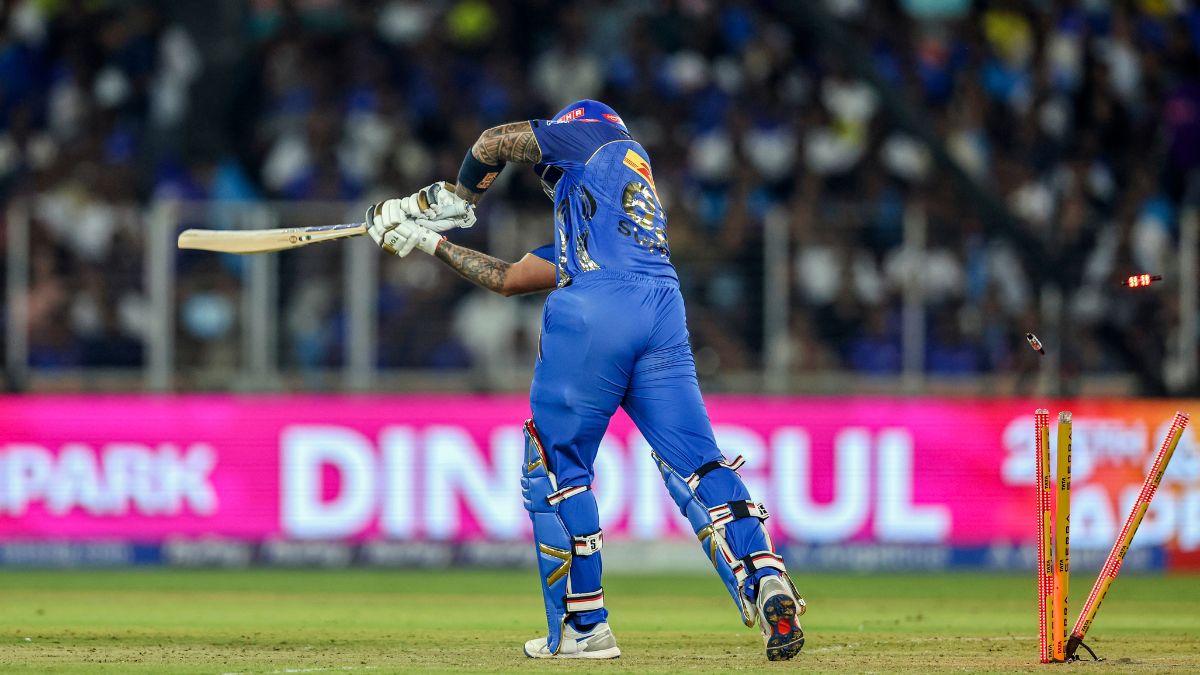
There is a strange kind of silence that often follows a World Cup win. Not in the stadiums, not in the headlines but inside the players. It’s perhaps similar to what Abhinav Bindra describes in his book A Shot at History: My Obsessive Journey to Olympic Gold, as a mental health void that he experienced, after winning India’s first individual Olympic gold in 2008 at 25.
The noise of expectation fades, the chase disappears and what remains is something harder to define: a return to a sport that may suddenly feel smaller than the moment just conquered.
What’s being witnessed in IPL 2026 is something similar.
Days after lifting the T20 World Cup, India’s champions are back in the IPL and something has quietly shifted. From Bumrah’s solitary wicket in six matches to Suryakumar’s patchy returns, the numbers are uneven. According to a mental health expert, this is post-performance fatigue, something like a psychological hangover that follows sport’s biggest highs.
The numbers that don’t match reputations
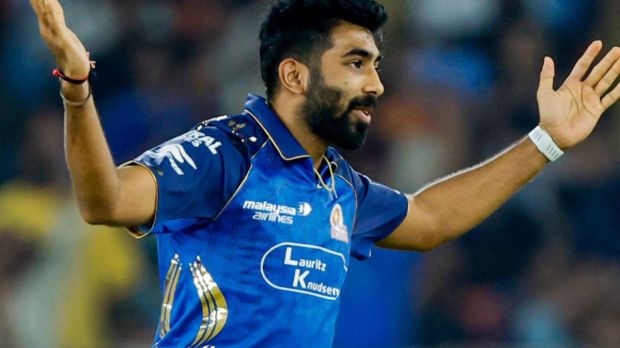
Jasprit Bumrah, India’s most reliable force across formats, has taken just one wicket in six matches, with an average of 179.00 and an economy of 8.13 just weeks after picking 4 wickets in a T20 World Cup final. A bowler who usually defines control is, for now, operating in fragments of impact rather than sustained pressure.
Axar Patel has contributed with the ball, taking five wickets, but his returns with have been muted: just 29 runs in four innings as captain of Delhi. Suryakumar Yadav, India’s T20 World Cup-winning captain, has managed 121 runs in six innings, with nearly half of that coming in a single knock.
Hardik Pandya’s numbers, 96 runs and three wickets in five matches, feel steady but not decisive, while Tilak Varma’s 144 runs in six innings are heavily skewed by one big effort of 101. Sanju Samson reflects a similar pattern, with 192 runs in six innings but 115 coming in one match alone.
Abhishek Sharma has oscillated between extremes, scoring 188 runs featuring two half-centuries and two ducks, while Shivam Dube’s apparent stability (123 runs at an average of 41) is supported by three not-outs rather than consistent rhythm. Ishan Kishan, too, has been productive in bursts, with 213 runs in six innings, including a 91 that carries much of his output.
A season of bursts, not consistency
Now the reason behind the lack of form can be several. However, across the board, a pattern has emerged – the output is no longer continuous, but episodic.
Even bowlers reflect the same instability. Arshdeep Singh has six wickets in six matches but an economy of 9.63, while Mohammed Siraj has also taken six wickets but featured in just one match in the T20 World Cup.
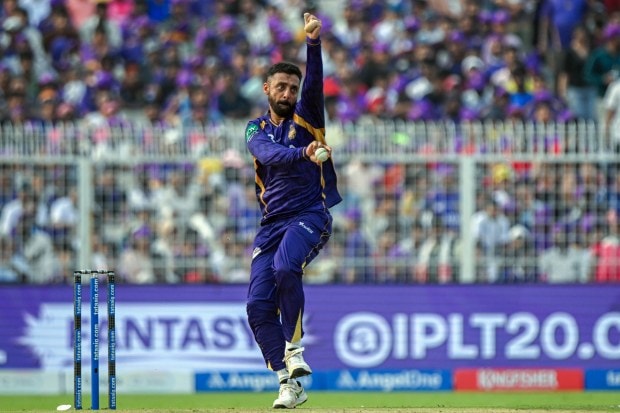
Varun Chakaravarthy’s five wickets include three in a single match after a slow start and Kuldeep Yadav’s five wickets come with an economy of 9.41. Washington Sundar’s returns, 137 runs and just one wicket in six innings are similarly uneven, while finisher Rinku Singh’s 132 runs in seven matches are dominated by a single innings of 53.
What appears, at first glance, as inconsistency may actually be something more layered, a redistribution of mental and emotional energy after a career-defining peak. The problem is not form. It is after-form.
Beyond form: The psychology of winners after success
To understand this shift, one may have to move away from scorecards and into psychology. According to Dr. Durva Dharmesh Shah, Associate Consultant – Mental Health at Medanta Hospital, Noida, what follows a peak achievement is rarely immediate stability.
“After a major high like a T20 World Cup win, athletes often experience a post-performance letdown. Both body and mind go through emotional fatigue after sustained pressure,” she said in an email interaction with FinancialExpress.com.
The keyword here is not just fatigue; it is post-performance letdown. A state where the mind, after prolonged intensity, struggles to recalibrate to a different competitive rhythm. And that recalibration is rarely instant.
When the biggest goal is already achieved
Dr. Shah describes a second, more subtle layer. “After achieving a lifelong goal, the emotional intensity drops. Without a new target, motivation can diminish, leading to a decline in mental sharpness and performance.”
For years, any World Cup acts as an anchor point. Every training cycle, every IPL season, every selection conversation ultimately builds toward it. Once that anchor is removed, the system does not immediately replace it with something of equal emotional weight. And in that gap, performance begins to behave differently, not necessarily worse, just less anchored.
Why IPL feels different after a World Cup
Franchise cricket operates on a different emotional frequency. “Franchise leagues are competitive, but do not always create the same emotional connection and history with fans and players as international events,” Dr Shah notes.
That difference is structural. It shapes urgency, recovery and even how players process failure. Without that deeper emotional binding, what looks like inconsistency can actually be reduced emotional engagement with outcomes.
One of the most revealing insights here is about satisfaction. “If an athlete feels they have reached their limit or achieved everything possible, internal motivation to push further may reduce,” Dr. Shah says. This could be seen like a closure. And in elite sport, closure can quietly become a performance variable, because sport rewards continuation.
The hidden weight of mental fatigue
Perhaps the least talked about factor in top-level sports is mental fatigue.
“Mental fatigue is typically more significant than physical fatigue. The body recovers faster than the mind. This affects reaction time, confidence, and consistency.”
This is where the IPL becomes particularly demanding, compressing pressure cycles into short windows, offering no long reset, no gradual build-up, only repeated high-intensity decision-making.
For players coming off a World Cup cycle, the mind is still recovering from one peak while being asked to produce another.
“This does not mean that you are unprofessional; however, you no longer have as much of an edge. To help prevent your own satisfaction from negatively impacting your performance, you will need to continue to create goals for yourself, reflect on your past successes and develop motivation outside of yourself,” the mental health expert said.
Perhaps this is why bursts are visible and continuity is harder to sustain. It is also why elite players still produce moments but not always sequences. The psychological architecture that once built sustained hunger is temporarily in transition.