



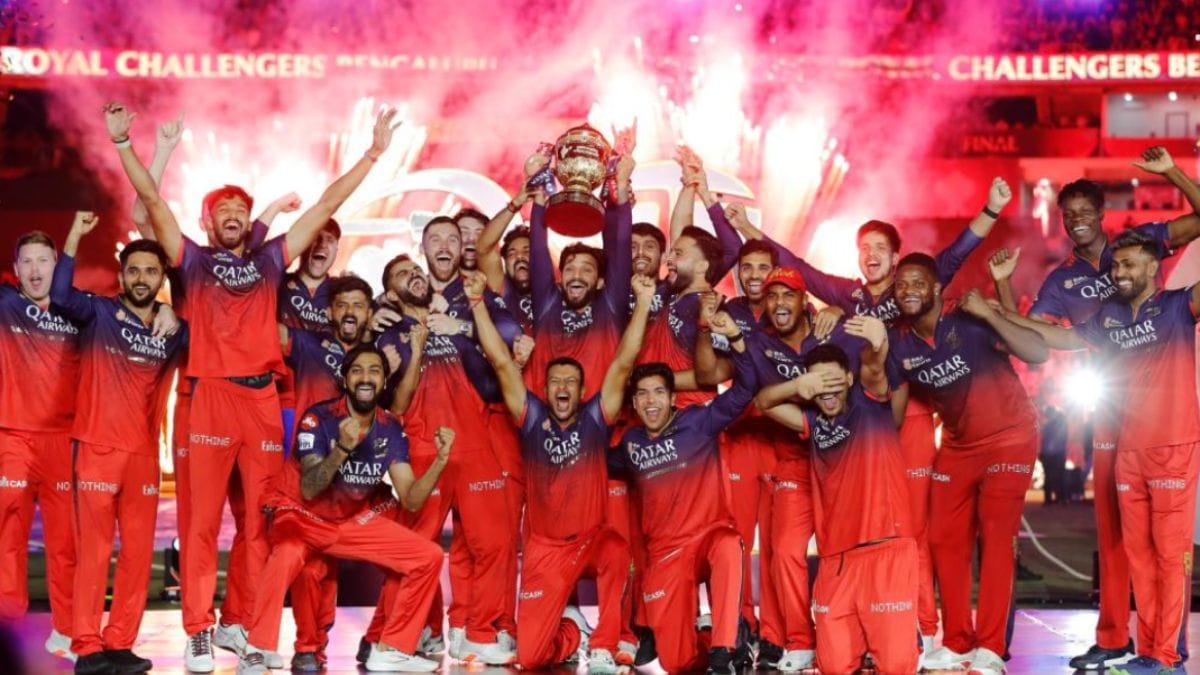
India’s sports economy has officially stepped into the big leagues. According to the 13th edition of the WPP Media ‘Sporting Nation’ report released on Monday (March 23), the industry has breached the $2.1 billion (Rs 18,864 crore) milestone for the first time.
While the headline is the 13.4% year-on-year growth, the real story is how the Indian Premier League (IPL) has fundamentally re-engineered the DNA of Indian commerce. Here is the breakdown of the Billion Dollar Playbook that defines the 2026 season.
The Digital sprint: 24% growth outpaces TV
The most significant driver of this $2 billion surge isn not about more people watching but they are choosing to watch it.While Television advertising grew at 16.4%, Digital spends skyrocketed by 24% to reach Rs 4,449 crore.
The content consumption space is witnessing a narrowcasting revolution. Brands are are buying data instead of slots. With influencer marketing around the IPL projected to hit Rs 700 crore this season (per Qoruz data), the tournament has moved from a broadcast event to a participatory economy.
Beyond Real Money Gaming
For years, the IPL was criticised for its over-reliance on Real-Money Gaming (RMG) apps. The 2026 milestone proves the league’s resilience.
With no RMG players due to the ban, Aviation (Etihad), Renewable Energy (Waaree Energies) and FinTech (Hero FinCorp) have stepped in. Team sponsorship revenues alone have crossed ₹1,000 crore for the first time.
The Big Three- “CSK, MI, and RCB“, now command over Rs 150 crore each in annual sponsorship, a figure comparable to mid-tier European football giants.
High stakes for the ‘Rs 27 crore man’
The $2 billion economy is also about individual pressure. No player embodies this more than Rishabh Pant.
Ahead of the March 28 opener, the Lucknow Super Giants captain (the league’s most expensive ever at ₹27 Cr) has been undergoing training under Yuvraj Singh at Mumbai’s CCI.
For LSG and their sponsors, Pant is the face of a massive capital investment. His success at the newly proposed No. 3 spot might well be critical for the ROI of the league’s highest-ever individual contract.
Cricket controls 89% of India’s sports revenue
While the milestone is historic, the report reveals that Cricket now controls 89% of India’s sports revenue. For India’s sports economy to continue growing at the same pace, the IPL effect must eventually spill over into non-cricket verticals.
Currently, the IPL does not appear to be a significant part of the Indian sports economy. Instead, it can even be used synonymously with the entire sports economy itself.