



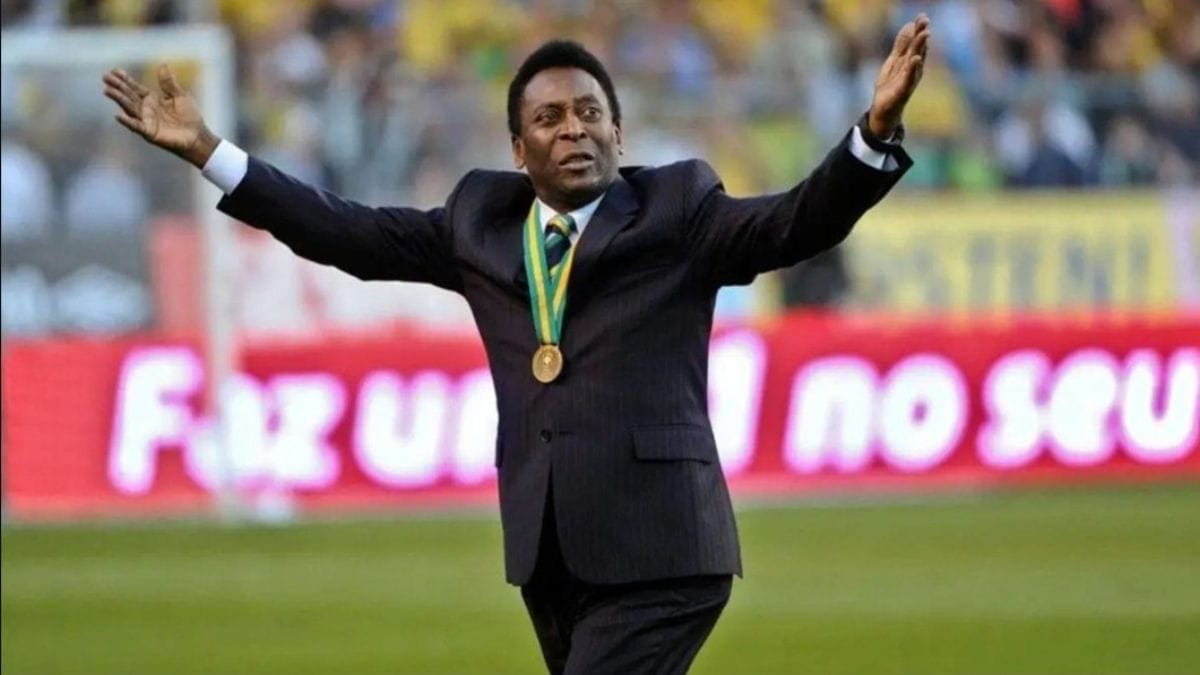
In sports memorabilia, history doesn’t merely age, it appreciates. Few examples illustrate that better than the blue No. 10 jersey worn by a 17-year-old Pele during the 1958 FIFA World Cup Final.
As Sotheby’s prepares to auction one of football’s most iconic artifacts, collectors and investors alike are witnessing what could become one of the most remarkable value escalations ever recorded in sports memorabilia.
If the jersey achieves its projected sale price, it will represent a nearly 57-fold increase in value over the past 22 years, a dramatic reflection of how elite sports collectibles have evolved from nostalgic keepsakes into globally sought-after investment assets.
A 56-fold rise in value
The scale of the appreciation becomes clear when compared with a landmark sale from 2004.
In September 2004, Christie’s auctioned a Pele jersey worn during Brazil’s historic 1958 World Cup Final victory over Sweden. The shirt sold for $105,600.
Today, Sotheby’s estimates that a Pele jersey from that same legendary final could command as much as $6 million when bidding opens between June 29 and July 16, 2026.
2004 Sale Price: $105,600
2026 Estimated Value: $6,000,000
Growth Multiple: 56.8x
Percentage Increase: Approximately 5,581%
In practical terms, every dollar spent on that historic jersey in 2004 would now represent nearly $57 in value.
The provenance question
An important distinction remains. It is not yet definitively established whether the jersey being offered by Sotheby’s is the exact same shirt sold by Christie’s in 2004 or another authenticated jersey from the 1958 World Cup Final.
Such uncertainty is not unusual. During major football matches, players frequently changed shirts at halftim and post-match shirt exchanges between opponents were common practice. As a result, multiple authenticated shirts from a single historic fixture can exist. Yet the broader conclusion remains unchanged.
Whether Sotheby’s is offering the same shirt or another match-worn example from the final, the market value attached to Pele’s 1958 World Cup legacy has undergone a remarkable transformation, rising from six figures into the multi-million-dollar range.
The rupee perspective
The story becomes even more dramatic when viewed through the lens of currency movements.
At the time of the 2004 Christie’s sale, the Indian Rupee traded at approximately ₹45.90 per US dollar. The $105,600 sale price translated to roughly ₹48.5 lakh. By comparison, at an exchange rate of approximately ₹83.50 per US dollar in 2026, a $6 million valuation equates to nearly ₹50.1 crore.
2004 Value: ₹48.5 lakh
2026 Estimated Value: ₹50.1 crore
The jersey’s rise has therefore been amplified not only by collector demand but also by more than two decades of currency depreciation and global asset inflation.
Football’s Mona Lisa moment
Diego Maradona’s famous “Hand of God” jersey sold for £7.1 million in 2022, while other World Cup artifacts have attracted increasingly aggressive bidding from collectors worldwide.
As a result, the market now views the greatest pieces of football history less as sports equipment and more as cultural treasures, objects occupying the same conversation as museum-grade works of art such as Mona Lisa.
Pele’s 1958 World Cup Final jersey sits firmly within that category. Pele scored twice in that match with Brazil defeating Sweden 5-2 to secure the nation’s first World Cup title. That match marked the beginning of a legacy that would ultimately redefine global football.