



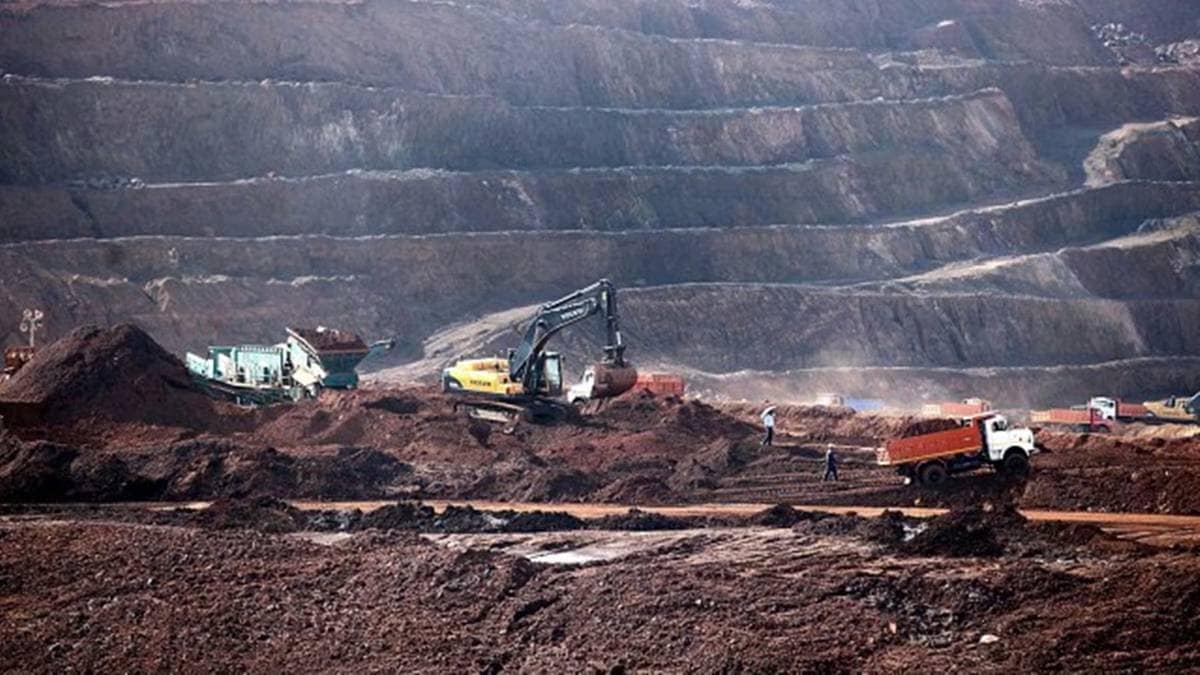
Every electric vehicle, solar panel and data centre begins with a hole in the ground.
The world wants electric vehicles, renewable energy, semiconductors, advanced manufacturing, and energy security. It is far less comfortable discussing the mines that make them possible.
Yet beneath every modern economy lies an often-overlooked foundation. The minerals below the earth’s surface support the infrastructure we build, the technologies we rely on, the energy systems we are transforming and the industries that drive growth.
The reality is simple: we cannot ignore the resources below the earth if we expect to thrive above it.
Like the roots of a tree, these resources sustain everything above ground – from agriculture to ammunition. Strong roots produce healthy fruits. The same principle applies to nations. Economic growth, industrial competitiveness, energy security and technological advancement ultimately depend on resources that remain largely unseen.
Critical minerals are shaping global power equations in the 21st century much as oil did in the 20th. As global competition for these resources intensifies, resource security is becoming a defining economic and strategic issue. In the coming decades, it may well separate resilient economies from vulnerable ones.
Recent competition among major economies for critical minerals, rare earths and battery materials demonstrates that resource access is no longer merely a commercial issue; it is increasingly a strategic imperative.
As the world observes World Environment Day 2026 under the theme “Our Land. Our Future. We are #GenerationRestoration”, an important question emerges: Were today’s sustainability frameworks designed for a world that no longer exists?
“The treasury is based on mining,” wrote Chanakya in the Arthashastra, recognising more than two thousand years ago the central role of mineral resources in economic strength and nation-building. Yet sustainability frameworks governing mining were largely developed during a period when environmental impact was the dominant concern. Today, the equation is becoming more complex. Environmental responsibility, resource security and economic resilience must increasingly be pursued together.
In the emerging geopolitical order, sustainability must therefore be assessed not only through environmental outcomes but also through a nation’s ability to secure the resources required for economic resilience and strategic autonomy.
For countries like India, the challenge is significant. Economic growth, manufacturing, infrastructure development and the clean energy transition all depend on secure access to critical minerals. Excessive dependence on imports creates vulnerabilities that extend beyond supply chains, making domestic exploration and resource development both an economic and strategic imperative.
The concept of sustainability emerged from concerns around resource extraction. More than three centuries later, it has evolved into a structured discipline supported by environmental assessments, mine closure plans, rehabilitation measures and ESG reporting. The industry deserves recognition for embedding these practices into mainstream operations.
However, compliance alone cannot be the ultimate measure of sustainability.
As higher-grade deposits are depleted, mining increasingly depends on lower-grade and more complex ore bodies. More rock must be mined, more energy consumed and more water utilised to produce the same quantity of minerals. Even as efficiency improves, environmental pressures are likely to increase.
If the world is serious about the vision of #GenerationRestoration, restoration cannot begin only after extraction ends. It must become an integral part of how mining projects are planned, operated and evaluated. The future debate should not focus solely on what is extracted, but also on what is restored.
The new geopolitical reality also demands a review of policy frameworks. If India seeks to accelerate exploration and attract investment into critical and major minerals, there may be merit in revisiting exploration processes, permitting timelines and regulatory approvals. Periodic reassessment of royalties, District Mineral Foundation (DMF) contributions and other statutory obligations may also be warranted to ensure that responsible mining remains economically viable while continuing to support environmental stewardship and community development.
The discussion should not be framed as a choice between development and sustainability. Economic growth, industrialisation, energy transition and environmental stewardship are all integral to national progress. Governments and the mining sector must therefore work together to create a genuine win-win outcome – one that enables responsible resource development while generating the financial and technological capacity required for long-term environmental restoration.
The future of mining will be defined by how effectively nations balance resource security, environmental restoration and sustainable growth. In a world competing for critical minerals, sustainability can no longer be measured only by what mining prevents. It must also be measured by what responsible mining enables – energy security, economic resilience and environmental restoration.
(The author is a Corporate Communication & Reputation Advisor to promoters and CXOs across the mining, metals, infrastructure and manufacturing sectors).
Disclaimer: The views expressed are the author’s own and do not reflect the official policy or position of Financial Express.