



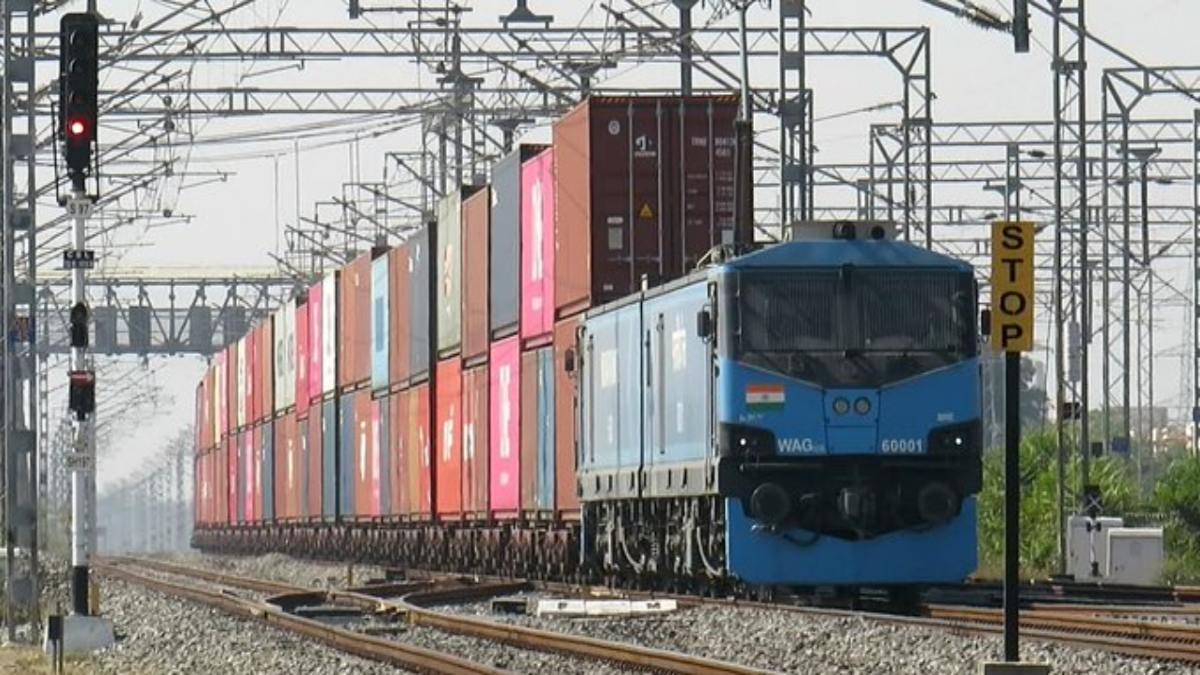
The railway ministry’s decision to adopt a hybrid annuity model (HAM) for the proposed 2,100-km East-West Dedicated Freight Corridor (DFC) is a timely attempt to accelerate one of India’s most transformative infrastructure projects while easing pressure on strained public finances. As FE recently reported, the project will be divided into 10 sections under an investor-friendly concession model. The government will reimburse 40% of project costs during construction, while the remaining 60% will be paid as annuities over 15 years, during which the developer will operate the corridor before transferring it back to the railways.
The model, successfully deployed in the highway sector, shares risks between the government and private developers, making projects more bankable. For the railways, which faces mounting financial constraints even as it pursues an ambitious infrastructure agenda, HAM offers a practical way to crowd in private capital while spreading out public expenditure. It should also help improve project execution by aligning incentives between the concessionaire and the government over the asset’s life cycle.
The strategic case for expanding the DFC network is compelling. The existing 1,337-km Eastern and 1,506-km Western corridors have already demonstrated the benefits of dedicated freight infrastructure. The long-term vision is to create a nationally integrated, technology-enabled freight grid linking ports, industrial clusters, logistics parks, and hinterland regions. Such a network would lower logistics costs, reduce transit times and emissions, improve supply-chain reliability, and encourage manufacturing along the corridor.
These productivity gains could prove more consequential than many headline structural reforms. The freight corridor also has the potential to reverse the railways’ long-term loss of cargo to road transport and eventually become a profit centre. The East-West section should therefore be followed without delay by the planned North-South and East Coast corridors, complemented by efficient last-mile and port connectivity. The economic and social benefits will multiply once the system achieves scale.
The freight corridor is equally critical to restoring the railways’ financial health. Passenger services continue to be subsidised by more than Rs 60,000 crore annually, while rising debt has forced a moderation in capital expenditure and greater reliance on budgetary support. Yet traffic growth remains underwhelming. Passenger volumes rose only 27% between FY14 and FY25 and by just 3.5% in FY26, while freight revenue increased only 1.4% last year to Rs 1.78 lakh crore. During the same period, India’s nominal GDP almost trebled, but railway passenger revenue barely doubled and freight receipts grew even more slowly. Building a stronger freight business is therefore not merely an infrastructure objective but a financial necessity.
There are already encouraging signs. Soon after becoming operational, the Eastern and Western DFCs captured around 15% of the railways’ freight traffic. The Eastern corridor has almost halved the time taken to transport coal from eastern mines to power plants in northern India. Higher axle loads, double-stack container trains, and modern electric traction systems are improving efficiency and reducing logistics costs.
The ministry has also announced measures to attract private investment, including a digital mechanism to speed up land acquisition and initiatives to increase containerisation. These reforms are essential, given the estimated Rs 4.5 lakh crore required to complete the national freight grid. The DFC is far more than another railway project. It is a strategic economic asset that can lower the cost of doing business, strengthen India’s manufacturing competitiveness, and place the railways on a sounder financial footing. The government must therefore maintain the momentum.