



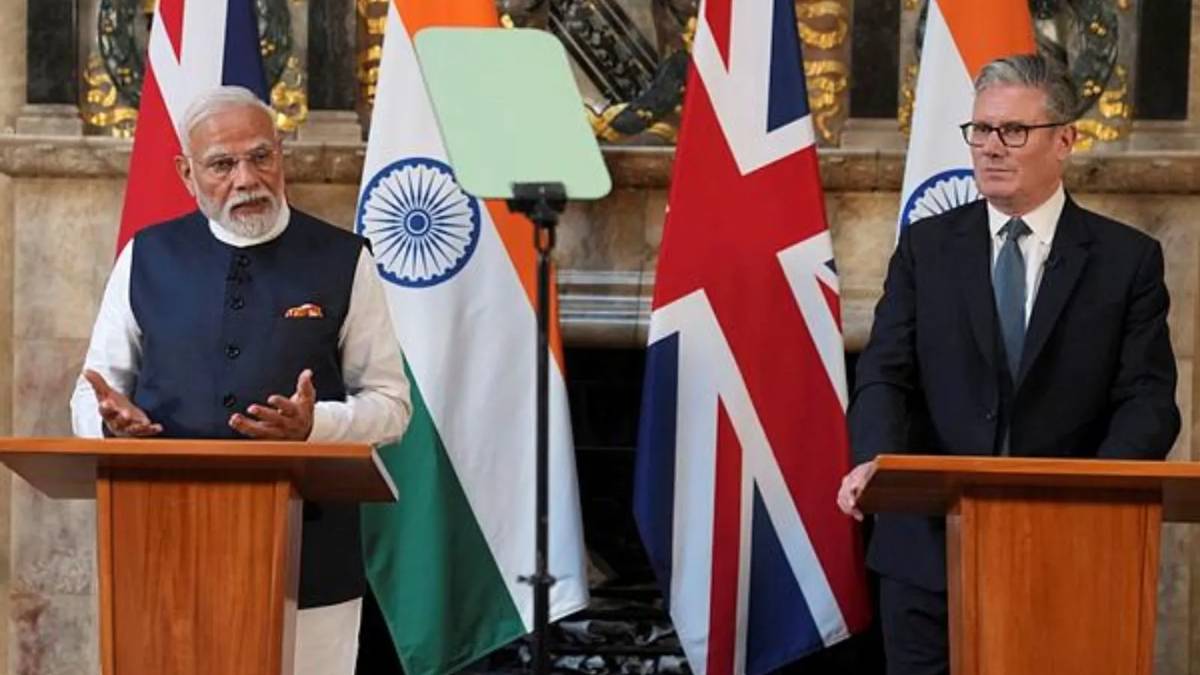
The signing of the India-UK Comprehensive Economic and Trade Agreement (CETA) marks a watershed moment in India’s trade trajectory. Far more than a standard trade agreement focused on basic tariff concessions, the CETA, which comes into force on Wednesday, delivers an innovative, integrated framework spanning goods, services, investment, digital commerce, government procurement, and geographical indications (GIs). For Indian exporters, the CETA goes beyond gaining an edge in market access — it establishes India as a trusted, highly competitive, and inclusive trading partner in one of the most sophisticated consumer markets.
As the global landscape shifts towards supply chain resilience, the CETA deepens a robust trade relationship. By systematically lowering import duties on thousands of products and dismantling regulatory bottlenecks in cross-border professional mobility, the agreement opens the door to a new era of export-led growth.
India’s manufacturing and labour-intensive sectors stand to reap immediate benefits from the CETA. Historically, Indian exporters faced steep tariff walls compared to competitors from countries with preferential access. The agreement levels the playing field, directly benefitting sectors that employ millions across India.
As one of India’s largest employment generators, the textile sector secures significantly improved tariff access. Reduced duties will make Indian garments and fabrics highly competitive in UK retail networks. A traditional powerhouse of Indian commerce, the gems and jewellery sector will see enhanced price competitiveness, allowing premium Indian craftsmanship to capture a larger share of the British luxury market. From auto components and machinery to specialised industrial products, Indian engineering firms will benefit from reduced trade barriers and tighter integration into UK manufacturing supply chains. Leather, footwear, and consumer goods will experience simplified market access, making the UK an attractive, high-margin destination for small and medium enterprises.
The table gives an illustrative list which reflects the tariff advantage and market potential now opened for us to expand.
Beyond these traditional sectors, the CETA creates critical breakthroughs for value-added agricultural products, processed foods, marine products, chemicals, and pharmaceuticals. For India’s vast network of MSMEs, the reduction of border frictions transforms the UK from a distant, cost-prohibitive market into a highly viable commercial avenue.
Services remain the engine of India’s external trade and the CETA provides a powerful boost to this segment. The agreement injects unparalleled regulatory certainty into the bilateral corridor, establishing robust frameworks for data flows, digital trade, and mutual recognition of professional qualifications.
IT and ITeS firms are prime beneficiaries, gaining institutional stability to pitch large-scale digital transformation projects. Furthermore, professional services — including accounting, architecture, healthcare, legal counsel, engineering, and consulting — will find a more receptive market with fewer administrative hurdles.
Importantly, the agreement directly addresses business mobility. It ensures that Indian knowledge workers can move quickly to execute short-term projects. This mobility will catalyse growth across high-value sectors such as fintech, edtech, telemedicine, and the creative industries, reinforcing India’s status as the world’s premier knowledge hub.
A standout feature of the CETA is its dedicated focus on safeguarding identity and promoting inclusivity. The formal recognition and rigorous protection of GIs will give legendary products like Darjeeling tea, basmati rice, Banarasi saris, pashmina, and Kanchipuram silk brand protection in the UK. By preventing the misuse of these regional names, the agreement boosts consumer confidence in the UK and passes premium pricing directly back to rural producers, weavers, and traditional artisan clusters.
Simultaneously, the CETA champions inclusive trade by actively carving out pathways for women-led businesses. By eliminating structural barriers and offering targeted access to information and trade networks, it empowers women entrepreneurs in handicrafts, wellness products, organic foods, and specialised services to integrate directly into global value chains.
To ensure these sweeping benefits are easily accessible, the CETA introduces modernised rules of origin. Exporters can now utilise flexible mechanisms — such as self-declarations and importer’s knowledge — to claim preferential tariffs in addition to digitised certificate from identified agencies seamlessly. This drastically slashes compliance costs, eliminates paperwork, and accelerates clearance.
Indian businesses must move swiftly to augment production, upgrade their quality compliance, and align their export strategies with the new regulations. With proactive industry adoption and robust institutional support, the CETA is poised to become the catalyst for India’s next generation of export-led prosperity.
The author is Director General & CEO, Federation of Indian Export Organisation.
Disclaimer: The views expressed are the author’s own and do not reflect the official policy or position of Financial Express.