



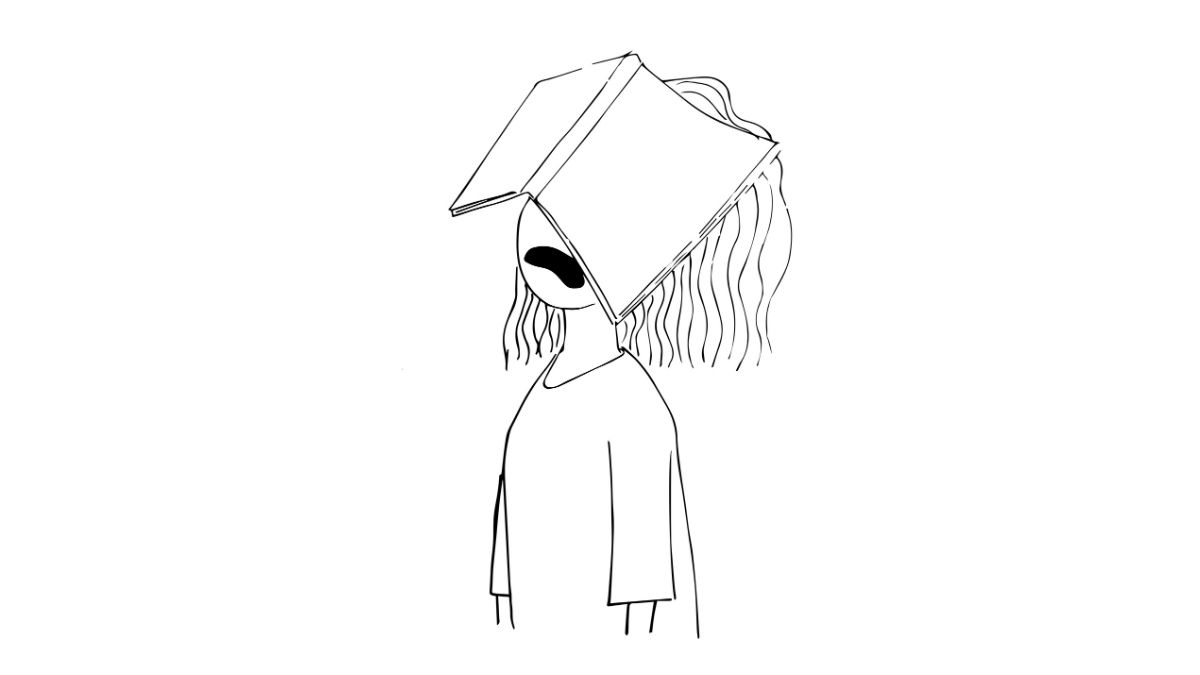
Textbooks, for a student, represent ultimate knowledge — a book that they spend religiously annotating and poring over is, in many cases, no less than scripture. And a majority of Indian students spanning generations have been sufficiently haunted by the omniscient National Council of Educational Research and Training (NCERT) logo prominently featured on almost all books till class 10. So, it was with amusement (and slight vindication from my teenage self) that I saw NCERT in the news, earning ire over its social science textbooks from a variety of sources.
The most recent skirmish was with the nation’s apex court itself, as a now-previous version of the textbook for class 8 — which explored challenges faced by the Indian judiciary, especially its significant backlog of 56 million cases. Following a swift rap on the knuckles, the offensive version was promptly retracted and replaced with a suitable edition that removed the “reckless” sections as well as reworded the section on critical thinking — it now asks why justice is important in a fair society rather than why an independent judiciary is necessary.
The change has been debated sufficiently. However, the idea that a scripture could be edited is far more fascinating, as are its effects. With one reprimand, the public interest litigation is now worth 3 marks instead of the factors contributing to judicial backlog — the shortage of judges, cumbersome procedures, and weak infrastructure (2.5 if your answer has spelling errors).
This is not limited to apex court interventions, surely. “Rationalisation” has been a favoured tool for education boards, and the New Education Policy makes it one of its salient features. A “need-based exercise” undertaken to “reduce cognitive load”, however, has made the Mughals disappear, minimised the 2002 Gujarat riots, and reminded education boards of the Emergency after 21 years.
Compared to the students that were processed by the schooling system before 2026 (the Central Board of Secondary Education curriculum), the current lot has to deal with a vastly different past. Until 2025, 14-year-olds were required to understand that developments in the West influenced the trajectory of the modern world — the French and Russian revolutions, along with the rise of Nazism, connected the themes of revolution, politics, everyday life, and the global echoes of these events. However, for this year’s batch, the past entails the genesis of civilisation in its various cradles and the structure of society that emerged from them; and how Indian knowledge traditions, art, and trade came to be.
Going over this reframe, I also wonder how the events unfolding today will be cherry-picked by education boards even as early as 25 years from now. Will the Covid-19 pandemic warrant a separate chapter? Will the Black Lives Matter movement be a box on a page that teachers would allow to be skipped? Will Mythos be a cautionary tale, complete with five factors that warranted Anthropic to warn the world; and will Donald Trump receive a dedicated long answer question on how he was a peacemaker slighted by the Nobel Committee? Moreover, will future textbooks remember India’s tariff negotiations as a diplomatic victory, a reluctant compromise, or merely another section in the shifting balance of global trade?
Standup comedian Kanan Gill, in his special “Yours Sincerely, Kanan Gill”, outlined the premise that the erstwhile education system’s focus on “learning by heart” was not misplaced. “Because the ultimate goal of the education system is to replace your heart with a textbook,” he says, positing that if this occurs, you can never die, as “you have never lived.” The present system tweaks this, of course. The textbook heart remains, still beating to the rhythm of the pen-and-paper test. However, it has been rationalised and retrofitted for an entirely new cohort of learners. It is more ergonomic and less heavy. And yet, it doesn’t change the possibility of a 14-year-old being haunted by their history textbook 10 years hence — it only rearranges the reasons for it.