



As enterprises move beyond pilot projects, Artificial Intelligence is transitioning from a discretionary add-on to a core driver of technology spending. According to MarketsandMarkets, global AI spending is estimated at around USD$372 billion in 2025 and is projected to grow at a 30% compound annual rate to nearly USD$2.4 trillion by 2032.
This expansion will be driven by deeper adoption across infrastructure and software, fueled by investments in data platforms and compute modernization. Against this backdrop, India’s large IT services players are repositioning themselves to capture this multi-year opportunity.
This shift aligns with growing client demands for measurable outcomes, faster deployments, and productivity-linked pricing. Here’s how three of India’s biggest information technology companies are positioning themselves amid the AI boom.
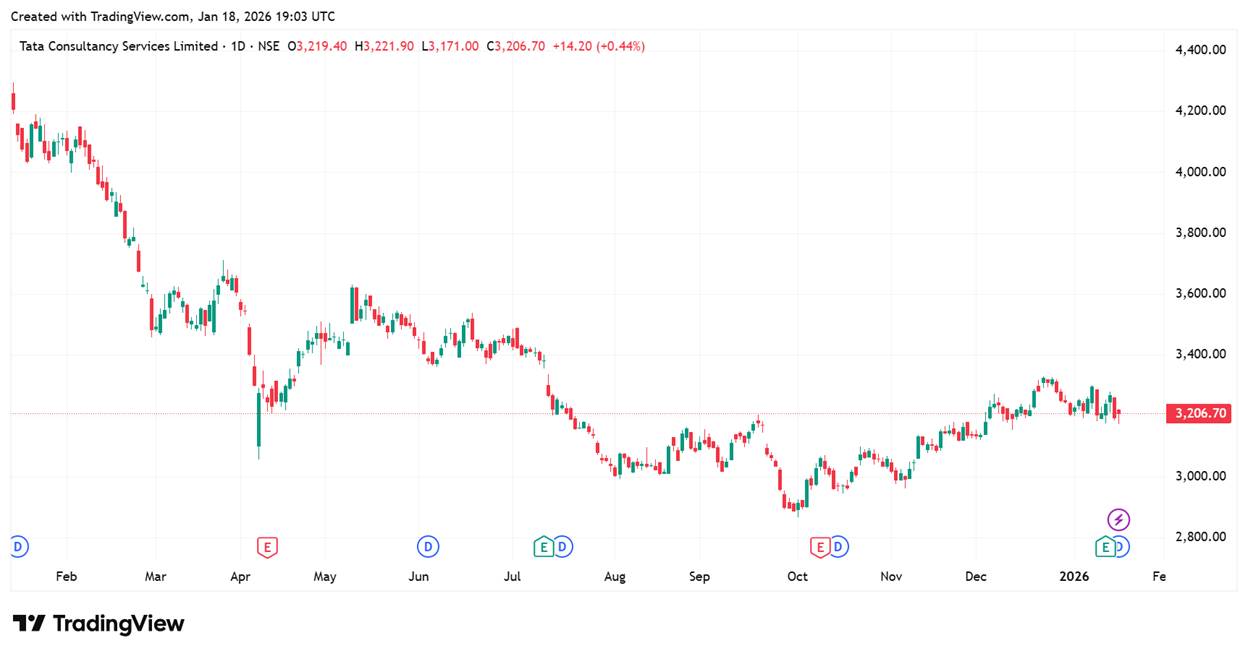
#1 Tata Consultancy Services: Full-Stack AI Builder
Tata Consultancy Services, part of the Tata Group, is India’s largest information technology company. Beyond its traditional business, TCS has now set a definitive ambition to become the world’s largest AI-led technology services company.
Scaling the Five-Pillar AI Stack
This shift is guided by a five-pillar strategy that covers the entire AI stack, from infrastructure to intelligence. As of Q3FY26, the company’s AI services business was generating an annualised revenue run rate of USD $1.8 billion (₹16,200 crore).As of Q3FY26, “annualised” revenue from AI services stood at USD$1.8 billion (₹16,200 crore).
The AI portfolio is growing at 17.3% quarter-on-quarter in constant currency terms. This revenue primarily comprises AI programs that transform the business value chain, along with the data resources needed to deliver them.
The Human+AI autonomy framework
TCS has instantiated a unified “Human+AI Services Autonomy Model” across every service line. This framework defines five levels of autonomy, progressing from using AI as a tool (Level 1) to building an “Agentic enterprise” (Level 5).
This structured approach aligns with client goals. For example, TCS helped a global insurer improve software engineering from Level 2 to Level 3 autonomy, resulting in a 2x improvement in deployment frequency. For a UK airline, the “March to Zero” IT operations framework used AI to halve the cycle time for major incidents.
Accelerating the innovate-to-build cycle
The company engages with customers in two ways. “Get AI ready,” which involves building the necessary technology foundation, and “Lead with AI,” which focuses on building early competitive advantages. TCS is accelerating the “innovate-to-build” cycle, delivering builds three times faster in Q3 than in the previous period.
This cycle serves as the core lever to jump-start client transformation and move projects from experimentation to production. TCS launched two AI labs in India during Q3FY26: one for a US insurer to drive agentic transformation, and the other for a regional US bank focused on agentic AI in KYC/AML investigations.
HyperVault: The USD$1 billion data center bet
TCS is deepening its position in the AI ecosystem through high-value partnerships and acquisitions. TCS announced a USD$1 billion equity partnership with TPG to build AI data center infrastructure. This is the fifth pillar of the overall AI strategy, classified as an “AI ecosystem play.”
But this build-out is contingent on finding an anchor customer. Once the anchor customer is announced and their requirements finalized, the physical build-out of the data center is expected to take around 18 months. Revenue from these operations is expected to “tick in” only after the completion of this 18-month build-out period.
The USD$700 million bet
It represents the company’s investment in the foundational “infrastructure” layer of the AI stack. TCS has acquired US-based Coastal Cloud for USD$700 million to strengthen its AI and Salesforce consulting capabilities. Strategic partnerships with hyperscalers such as Microsoft, Google, and NVIDIA enable TCS to co-innovate and accelerate AI capabilities for clients.
A 3X surge in AI skilled workforce
To support this AI-first transformation, TCS is rapidly training its workforce. There are now more than 217,000 associates with higher-order AI skills, a threefold increase from last year. TCS is redesigning its role framework to include new positions, such as “rapid-build engineers,” that are essential for future delivery models.
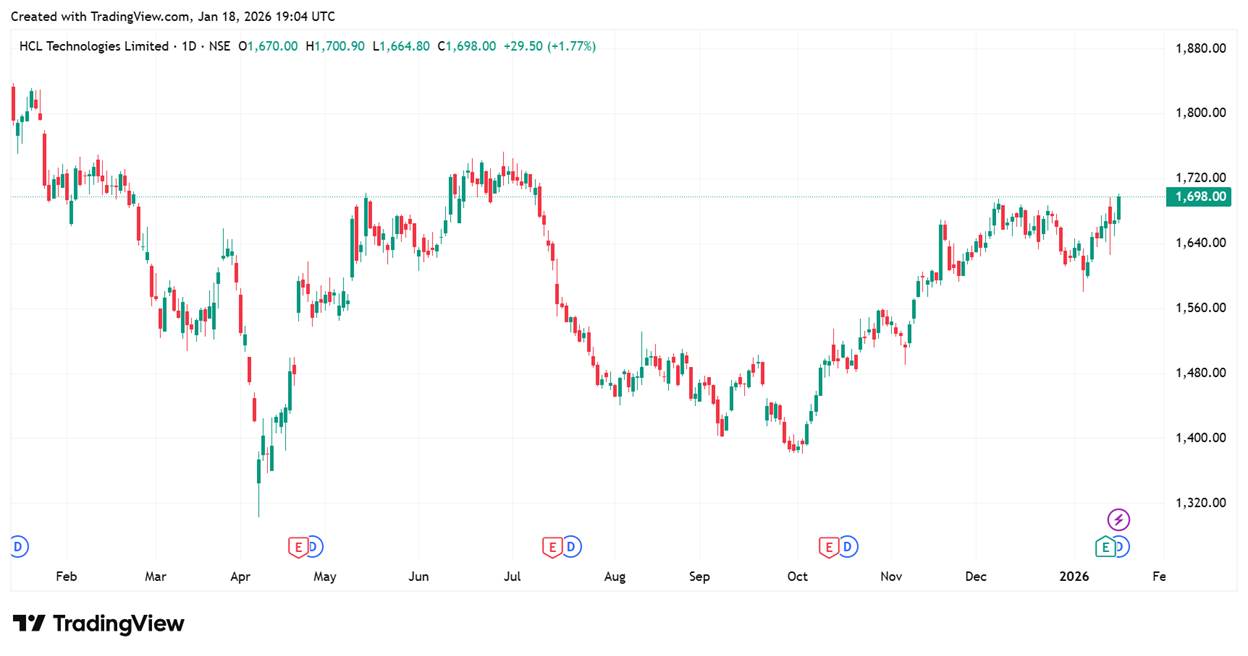
# Infosys: Agent-led productivity play
Infosys is India’s second-largest IT Company. Infosys has over 500 AI agents and is working with more than 90% of its top 200 clients on AI. The company has also partnered with Cognition. Cognition has built AI agents specifically for software development, and Infosys is currently helping these agents operate in client environments.
Modernizing the unprofitable
The company says the combination of AI agents, software development, and domain expertise has made modernization projects viable that were previously considered unprofitable. As a result, the company expects to establish multiple partnerships, particularly with several smaller firms that offer capabilities across AI foundation models, agents, and coding.
From NHS contracts to energy hubs
Over time, the use of these AI agents is expected to span all clients and industry verticals. It secured a USD $1.6 billion (₹14,000 crore) deal with the NHS (National Health Service) in the UK. This deal is explicitly aimed at leveraging AI to streamline operations and improve patient care. Management noted that clients’ economics have improved in six specific AI areas.
AI adoption is increasing among large financial services clients. Investments in AI data centers in the utility sector are driving demand. Meanwhile, energy clients are focusing on consolidation and cost optimization amid enterprise AI adoption.
The margin paradox
Client expectations around AI-led productivity gains are rising, especially in renewal negotiations and competitive takeaways. The pressure is most visible in three- to five-year deal structures. AI-specific revenue is not reported, but Infosys stated that pricing remains accretive, supported by AI-led services.
The management stated that AI service premiums are increasingly reflected in the productivity delivered to clients. However, management also cautioned that AI-driven productivity within legacy revenue pools continues and “should be a drag on margins.”
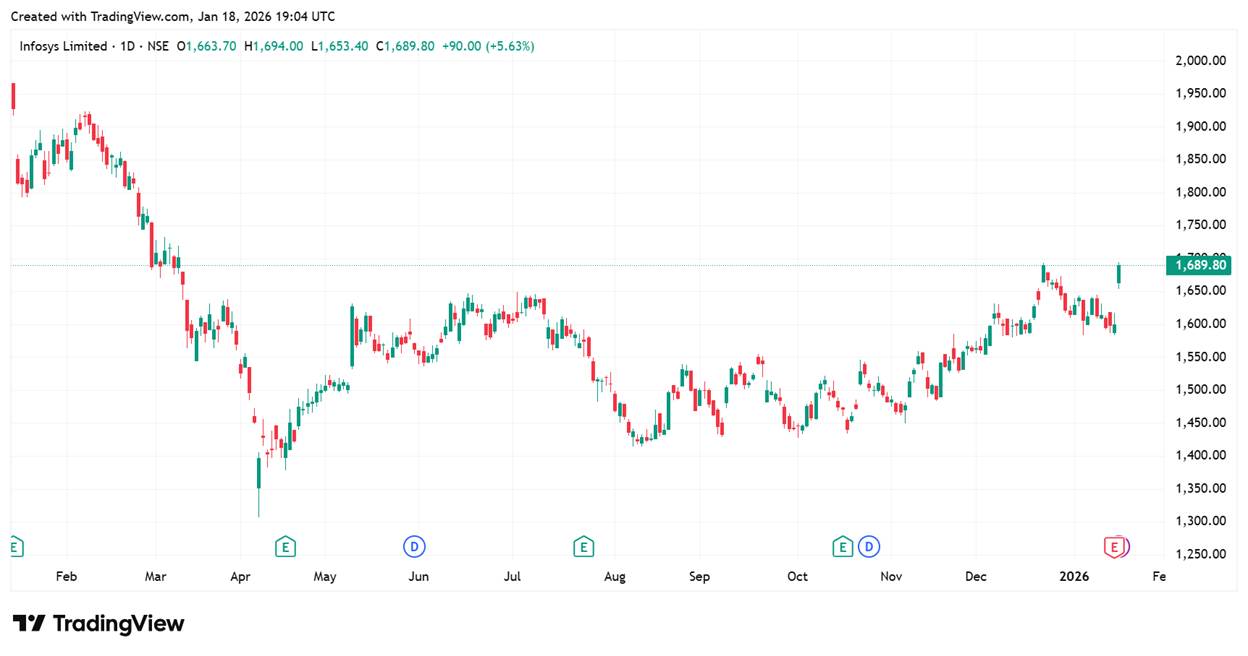
#3 HCL Technologies: Infrastructure-first AI monetisation
For HCL Technologies, part of the HCL Group and India’s third-largest IT company, AI is a key part of the company’s growth strategy. It has now embedded AI across every major engagement, spanning service transformation, advanced AI, and classical AI.
HCL Technologies reported that its performance for the quarter was underpinned by its AI vision and offerings. Specifically, the Advanced AI segment grew by 20% to USD$146 million, driven by strong upticks in three areas: Agentic Physical AI and AI Factory Programs. HCL reported a revenue of USD$ 3,293 million in Q3FY26.
The day minus one opportunity
The company breaks the AI opportunity into two parts. The first is “Day Minus One” work, which includes basic setup needed before AI can be used at scale, such as infrastructure, hardware, and core systems. The second part is wider AI adoption across the enterprise.
The former is seeing the highest demand, mainly for custom chips used in edge AI and large-scale AI factory services worldwide. The company states that AI-led legacy modernization is creating niche interest. This is expected to become a significant opportunity over the next 2-3 years, particularly in verticals with custom software like financial services and telecom.
The four pillars of AI strategy
The company also anticipates that over the next five years, the entire installed base of private data centers will need a technology refresh to handle AI use cases. This presents a long-term opportunity for its infrastructure business. HCL has outlined four pillars of its AI strategy.
AI Force 2.0: Scaling the agentic differentiator
Pillar 1 includes proactive service transformation. Within this, the company’s flagship platform, AI Force, is a market differentiator deployed in 60 priority accounts. HCL Tech has trained over 38,000 employees on Generative AI (GenAI) and 600+ employees on Responsible AI. They claim to have the highest number of OpenAI-badged experts among all OpenAI partners.
Pillar 2 is Differentiated IP, which includes Agentic Solutions and HCL Software. It sees a strong focus on “agentic” capabilities (autonomous AI agents). AI Force (2.0) is an agentic platform delivering service transformation, and the company has launched vertical-aligned solutions like “Contact Center as a Service,” which uses agentic solutions for real-time guidance.
The AI Factory: Engineering physical and hyperscaler solutions
Pillar 3 is New AI Services (AI Factory and Physical AI). In the AI Factory, HCL has launched OEM-aligned joint offerings with major hyperscalers and tech giants, including Dell, HPE, Cisco, Nvidia, AWS, Azure, and GCP. The management stated that the most immediate and undisputed “sweet spot” for GenAI adoption is in software development and data life cycle management.
It is currently servicing two of the top 10 global technology companies to implement global AI factories, which involves designing, implementing, and managing AI data centers. HCL is also leveraging its engineering heritage to secure a position in physical AI (robotics and machinery integration).
There is also high demand for custom silicon development focused on edge inferencing and compute for training, as companies seek to optimize the ROI of AI spend by moving away from standard GPU architectures where possible. Pillar 4 is Partnership Ecosystem.
Physical AI and Silicon
A Physical AI lab in Santa Clara by launched by NVIDIA and HCL was mentioned by NVIDIA’s CEO at CES 2026 as a key partner in physical AI and robotics. HCL is exploring next-generation industrial AI use cases with SAP. It has also deepened collaboration with OpenAI to increase the adoption of OpenAI Codex.
Mega deals and software: Integrating the intelligence platform
The company’s AI proposition is driving significant deals. Management stated that its four largest deals this quarter were driven by its AI Force 2.0 agentic platform. This includes a USD$473 million, five-year mega deal to modernize clients’ applications and data landscapes.
Beyond the AI vertical, the software division is developing a holistic AI-powered end-to-end intelligence platform. It has integrated recent acquisitions to this end. The combination of Actian (data management), Jaspersoft (analytics), and WBI (proprietary semantic layer) facilitates AI-powered natural language analytics on a single governed platform.
Valuations reflect diverging AI execution
TCS’s growth has been the slowest during the past few years. However, TCS boasts the strongest return ratios: Return on Capital Employed (RoCE) and Return on Equity (RoE). The valuations of Infosys and TCS have also cooled down to below the historical median and industry multiple. HCL, however, trades at a premium to the median multiple but in line with the industry median.
| Peer Comparison (X) | ||||
| Company | P/E | 10Y Median P/E | RoCE (%) | RoE (%) |
| TCS | 22.7 | 26.7 | 64.6 | 52.4 |
| Infosys | 23.7 | 22.8 | 37.5 | 28.8 |
| HCL Tech | 26.8 | 19.0 | 31.61 | 25.0 |
| Industry Median | 25.7 | 20.8 | 16.5 | |
| Source: Screener.in (As of 16 January, 2026) | ||||
AI is now the central growth lever for India’s large IT firms, but each is taking a distinct path. TCS is building a full-stack AI model with long-term ecosystem and infrastructure bets. Infosys is using AI agents to unlock productivity and revive stalled projects, even at some margin cost. HCL is leaning into AI-led infrastructure, agentic platforms, and physical AI, positioning itself closest to near-term monetisation.
Disclaimer
Note: Throughout this article, we have relied on data from http://www.Screener.in and the company’s investor presentation. Only in cases where the data were unavailable have we used an alternate, widely accepted, and widely used source of information.
The purpose of this article is only to share interesting charts, data points, and thought-provoking opinions. It is NOT a recommendation. If you wish to consider an investment, you are strongly advised to consult your advisor. This article is strictly for educational purposes only.
About the Author: Madhvendra has been deeply immersed in the equity markets for over seven years, combining his passion for investing with his expertise in financial writing. With a knack for simplifying complex concepts, he enjoys sharing his honest perspectives on startups, listed Indian companies, and macroeconomic trends.
A dedicated reader and storyteller, Madhvendra thrives on uncovering insights that inspire his audience to deepen their understanding of the financial world.
Disclosure: The writer and his dependents do not hold the stocks discussed in this article.
The website managers, its employee(s), and contributors/writers/authors of articles have or may have an outstanding buy or sell position or holding in the securities, options on securities or other related investments of issuers and/or companies discussed therein. The articles’ content and data interpretation are solely the personal views of the contributors/ writers/authors. Investors must make their own investment decisions based on their specific objectives, resources, and only after consulting such independent advisors as may be necessary.