



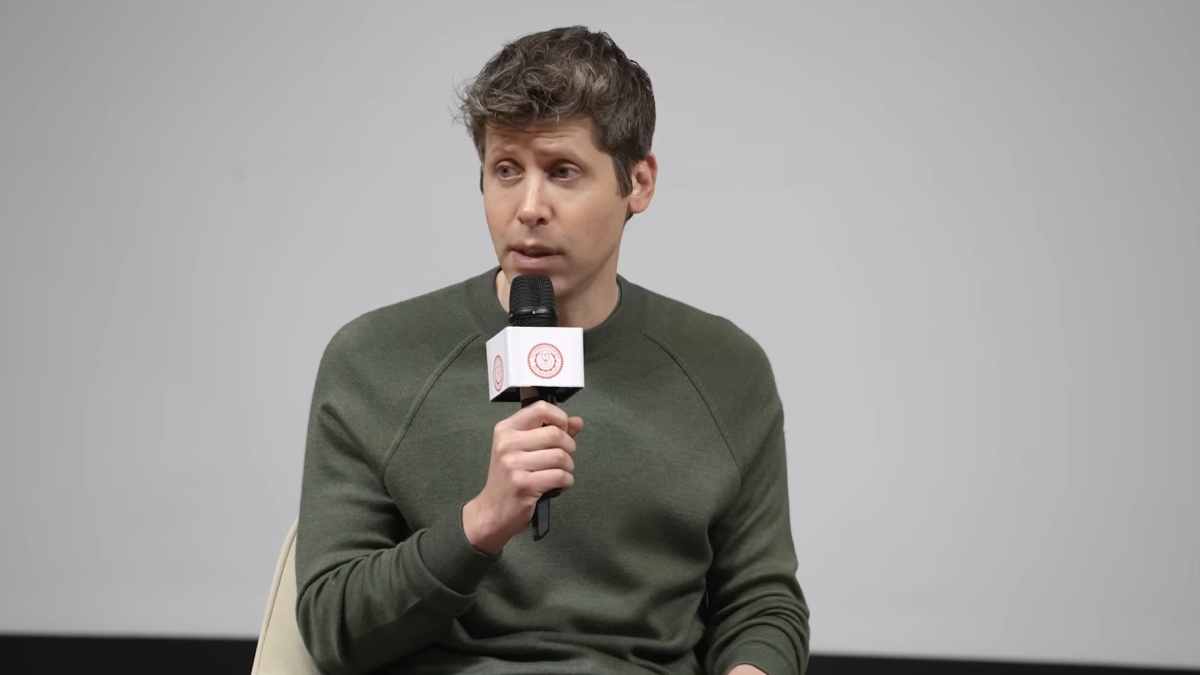
OpenAI CEO Sam Altman has delivered a provocative message to students at the Indian Institute of Technology (IIT) Delhi, warning that blindly following traditional career advice from older generations could be the greatest pitfall for young people navigating an AI-driven future. Speaking during an interactive session at IIT Delhi, Altman responded to a direct question about the biggest mistake young people make while preparing for artificial intelligence.
“I think listening to old people is the biggest mistake young people make,” he stated bluntly, drawing laughter and applause from the audience. He then elaborated that older generations, including himself, may lack reliable intuition about the unprecedented pace of technological change.
“For predicting what the world is going to be like going forward, I don’t think you should trust me to have good intuition about the rate of change,” Altman continued. “Young people always figure this out best, and the world you are all inheriting is going to be very different, and you’ll have to quickly develop your own intuitions and trust them. But I think the traditional career advice is probably not going to work as well.”
Altman clarified how his advice is limited to professional guidance
Altman clarified that his advice was specific to career and technological foresight, not personal values or life guidance. “Your parents obviously love you more than anyone. They’re extremely well-meaning for advice about how to live a happy life or how to be a good person—there is no one you should listen to more than your parents,” he noted.
Hence, Altman recommends distinguishing between timeless wisdom and outdated professional roadmaps from the elderly, both of which are crucial for the youth to ace the AI era.
Altman calls for adaptability and risk-taking
The OpenAI chief went on to highlight that AI is reshaping the job landscape so rapidly that many students will eventually pursue roles that “don’t exist today, even really as a concept.” Altman encouraged embracing risk over stability, observing that cultural aversion to failure in India can be a barrier.
“Most people, especially in India, are especially averse to risk. My willingness to fail allows me to succeed,” Altman said, urging the audience to experiment boldly with emerging technologies.
He praised India’s vibrant AI ecosystem, highlighting the “inspiring” enthusiasm among local builders and developers using AI end-to-end. Altman described India as experiencing the second-fastest growth for OpenAI and projected it to become the 2nd or 3rd largest market globally.
He also expressed admiration for Prime Minister Narendra Modi’s vision, particularly his focus on democratising AI while ensuring inclusive benefits and risk mitigation. “I love the Prime Minister’s vision… his balancing that with making sure that everyone in society benefits and that we mitigate the risks was outstanding,” Altman remarked.
Speaking on the impact of “Anyone who says they’re only excited or only fearful about AI is not being very thoughtful,” he said, acknowledging both transformative potential and real challenges.