



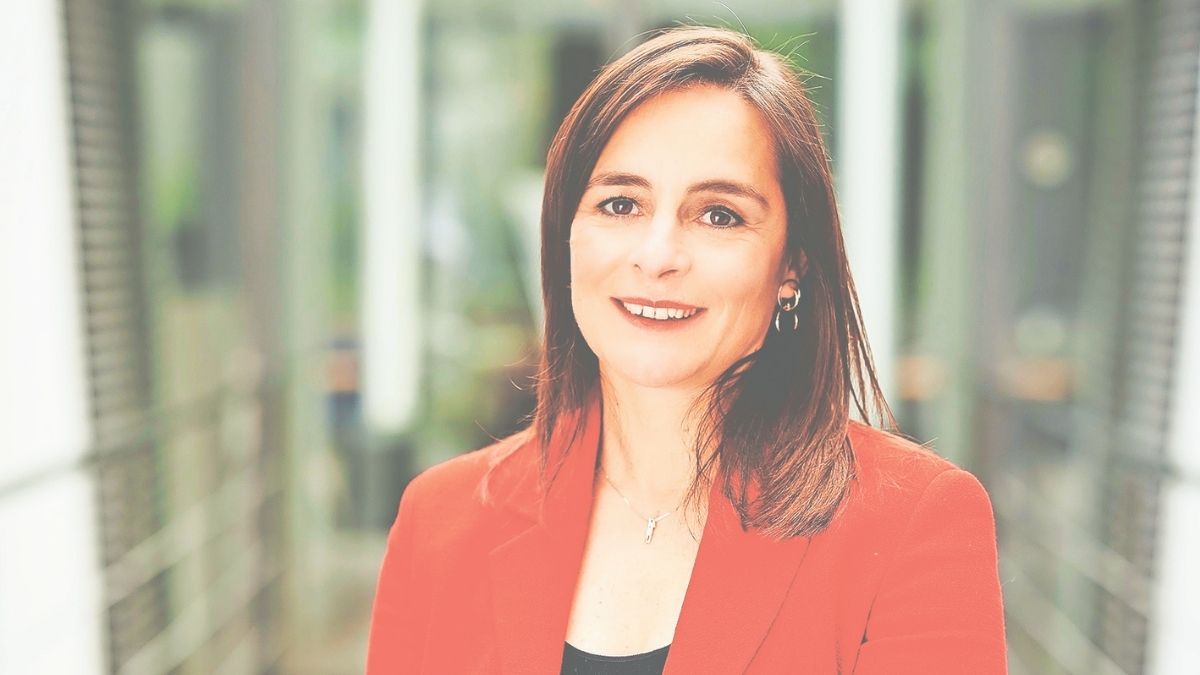
As India expands renewable energy, AI data centres and electrifies industry and transport, its electricity grid is under growing pressure. Vera Silva, chief strategy and technology officer, Electrification Systems at GE Vernova, says the next phase of the energy transition will depend on building a smarter grid powered by AI, digital technologies and advanced transmission. In an interview with Sudhir Chowdhary, she explains why grid intelligence will be as important as adding generation capacity. Excerpts:
India is investing heavily in renewables and grid expansion. Where do you see the biggest opportunity – and the biggest bottleneck?
India’s power sector is at a genuine inflection point. Renewable capacity is growing fast. Inter-regional transmission is scaling up and new forms of demand – industrial electrification, data centres, AI computing – are arriving at a pace the grid was never designed to absorb.
The biggest opportunity is not simply to build more infrastructure. It is to build it smarter, right from the start. India has the rare advantage of scale and ambition at the same time. That creates the conditions to leapfrog – to deploy not just larger grids, but more intelligent, more stable, more digitally visible ones.
For renewable power evacuation, high-voltage direct current (HVDC) is a large and strategic opportunity. HVDC is critical for long distance high power efficient power transmission providing grid stability and controlled power flow very critical for India’s grid expansion.
The bottleneck is pace. Generation and demand are growing faster than grid infrastructure can respond and as more renewables come onto the system, the challenge is not just about building faster – it is also about building for a different kind of grid. One where frequency, voltage, and inertia can no longer be taken for granted. Managing these is an active engineering challenge, not a background condition. India will need to invest in both the physical backbone and the stability technologies to manage that transition well.
From grid software to advanced turbines, where is GE Vernova placing its biggest technology bets today?
Our focus is on the integrated grid, where hardware and software work together as one system, not as separate layers. In India, that means advanced transmission equipment: transformers, gas-insulated switchgear, shunt reactors. It means HVDC, which is well suited to a geographically large country where moving power efficiently over long distances is increasingly critical. We recently secured the HVDC scope from AESL Projects for the 2.5 GW renewable transmission corridor, the highest-rated VSC-based HVDC system planned in India to date.
It also means grid stability technologies. As renewable penetration rises, the grid loses the natural inertia that spinning machines once provided. STATCOM, FACTS, and synchronous condensers are designed to fill that gap, providing reactive power, voltage support, and dynamic response at the speed the system needs. Our asset performance management system helps customers increase asset reliability and uptime, improve operational efficiency, extend asset life, optimise capital spending by deciding when to repair, replace, or upgrade assets.
On the digital side, GridOS – our grid orchestration platform – is now active in India, with upgrade projects under way in the northern and eastern regions. The combination of technologies, GE Vernova’s GridBeats for asset performance and GridOS for real-time operations, gives utilities deeper visibility and faster control across a more complex system.
The bet is not on any single product. It is the ability to bring the whole system together.
How critical is AI in energy systems – from demand forecasting to predictive maintenance?
AI is shifting utilities from reactive operations to something more anticipatory, and that matters enormously at India’s scale. The rise of AI-driven demand is not incremental. It is a structural shift in the power system. AI factories – large-scale data centre campuses – have precise, concentrated, and fast power requirements. They need power that is reliable, available on their timeline, and managed intelligently from the grid all the way to the rack.
For utilities managing India’s grid, AI can improve demand forecasting, identify stress points earlier, and help prioritise maintenance before failures occur. GridOS already incorporates AI-enabled applications that help operators make better decisions in real time. The point I would emphasise: AI does not replace infrastructure investment. It helps operators use that infrastructure more effectively, reducing unplanned outages, improving asset utilisation, and building the kind of operational intelligence a rapidly evolving grid demands.
Are today’s grids ready for AI, data centres and electrification at scale?
Not entirely, and that is the honest answer. Most grids were designed for predictable, centralised power flows. Today, they are being asked to handle intermittent renewables, fast-changing loads, and concentrated new demand from data centres, often simultaneously. That mismatch is one of the defining infrastructure challenges of what I would call the Age of Electricity.
The problem is not only about producing more electricity. It is about connecting it, stabilising it, and managing it in real time. Frequency and voltage management – the fundamentals of a healthy grid – become harder, not easier, as renewable penetration grows and new loads arrive quickly.
Addressing this requires a system-level approach. Transformers and switchgear for the backbone. FACTS and synchronous condensers for stability. Digital platforms for visibility and control. And for data centres specifically, a grid-to-rack capability, from transmission infrastructure all the way through to power distribution inside the facility. GE Vernova is already delivering transmission and distribution solutions for large-scale data centres in India. That is not a future ambition. It is happening now.
How central is India to your global R&D strategy? Is the focus shifting from ‘Make in India’ to ‘Design and innovate in India’?
India is a very important part of our global strategy, both as a market and as a manufacturing and engineering hub. GE Vernova T&D India, the listed entity of GE Vernova’s electrification segment in India, has served the Indian grid for more than 65 years and operates five manufacturing facilities across the country.
In FY 2025-26, GE Vernova T&D India announced plans to invest approximately $100 million in India to expand its electrification manufacturing and engineering footprint. The capex includes a new manufacturing line at Chennai and a new engineering and test lab in Noida focused on HVDC and FACTS technologies for grid stability and renewable integration, expansion of capacities for transformers, circuit breakers, gas insulated switchgear, instrument transformers and new lines for air core reactors and bushings in Vadodara, Chennai and Hosur.
This reflects a clear move from “Make in India” to “Design and innovate in India.” The Chennai line is expected to produce key HVDC and STATCOM components, while the Noida lab is expected to support design, system validation, and control systems. India is also central to our software and R&D capabilities, with GE Vernova’s electrification software business having delivered more than 100 grid control centres from Noida, and the Hyderabad R&D team supporting GridOS development. Together, these capabilities show India’s growing role in designing, validating, manufacturing, and exporting advanced grid technologies for India and the world.