



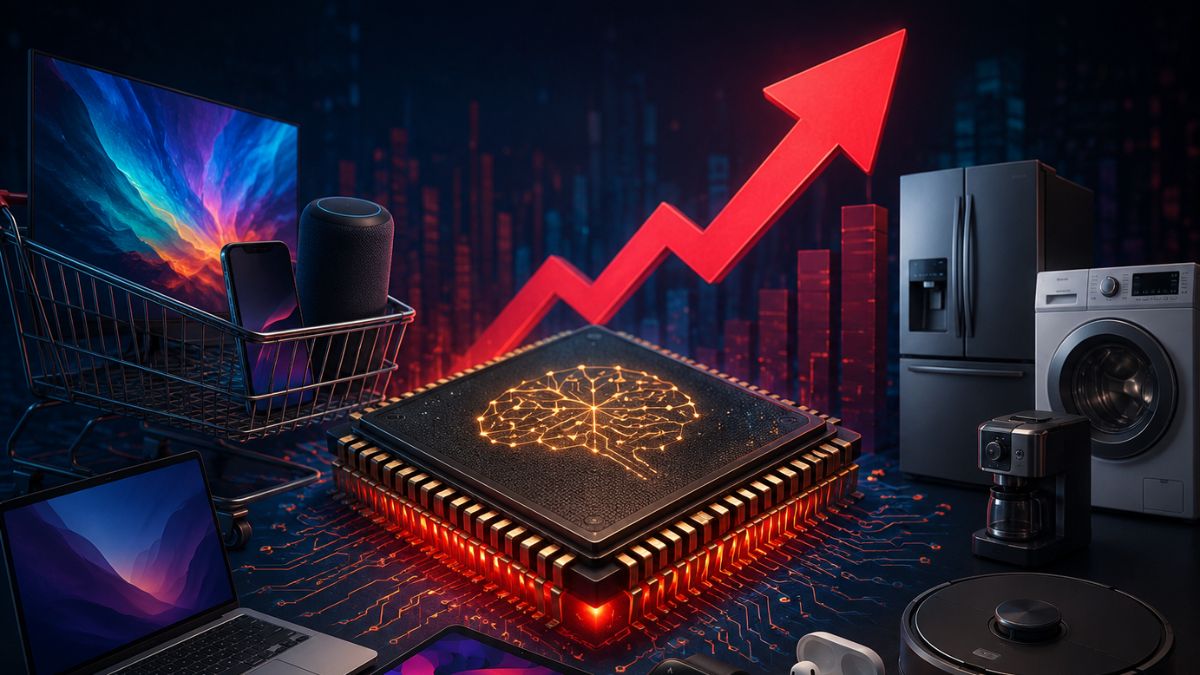
The next time you buy a smart TV, smartphone or even a connected kitchen appliance, do not be surprised if it costs more than you expected. The reason may not be tariffs or shipping costs, it could be chipflation, a new trend emerging from the global artificial intelligence race. As companies scramble to secure advanced memory and AI chips, the cost of these critical components is climbing rapidly, and consumers are likely to feel the impact.
What is chipflation?
Chipflation refers to the sharp rise in the prices of semiconductors, particularly advanced logic and memory chips that power artificial intelligence. While many people associate AI demand with expensive data centre GPUs, the effect stretches far beyond servers.
Today, chips are embedded in almost every smart device. Smartphones, laptops, smart TVs, connected speakers, wearables and even modern kitchen appliances rely on increasingly sophisticated memory chips to process data and run AI-powered features. As AI infrastructure expands worldwide, these chips are becoming more expensive and harder to source, pushing up manufacturing costs across the electronics industry.
Why the AI boom is driving prices higher
According to Julia Hermann, global market strategist at New York Life Investment Management, who spoke to Business Insider, the AI boom is creating a new inflationary pressure within the semiconductor industry.
She says technology giants building massive AI infrastructure are facing rising costs on multiple fronts. AI chips themselves are becoming more expensive, while electricity and utility costs required to operate AI data centres are also increasing. At the same time, meaningful returns on these investments may still be years away.
Hermann believes this creates a difficult balancing act for hyperscalers, forcing investors to decide whether they are willing to tolerate short-term volatility in exchange for AI’s long-term promise.
The numbers behind chipflation
One of the clearest signs of chipflation is emerging from South Korea, a major producer of memory chips. Hermann points to South Korea’s export price index for DRAM memory as an important indicator. In previous semiconductor cycles, memory chip prices typically peaked at around 100% year-on-year growth. This time, however, South Korean DRAM export prices are rising at an extraordinary 370% year-on-year, highlighting just how intense current demand has become.
Why investors are paying attention
The rising cost of chips is becoming a key concern even as AI enthusiasm remains strong. Chip stocks have come under pressure in recent weeks, with investors selling shares of memory manufacturers and other semiconductor companies despite many firms reporting earnings that exceeded expectations.
The concern is that while soaring chip prices reflect robust demand, they also make AI infrastructure significantly more expensive to build. Companies investing billions of dollars into AI may find it increasingly difficult to justify those costs if profits take longer than expected to materialise.
A test for the AI rally
For Hermann, chipflation represents both an opportunity and a risk. On one hand, higher chip prices signal strong global demand for AI technology. On the other, prolonged cost inflation could slow AI adoption by raising the price of the hardware needed to power it.
She says investors should focus on companies with strong fundamentals across the AI supply chain, favouring businesses with healthy profitability, relatively stable earnings and strong ability to service debt, rather than chasing every stock benefiting from AI enthusiasm.
The hidden impact on consumers
For consumers, chipflation may become visible in places they least expect. While premium devices such as AI-enabled laptops and tablets could become more expensive, the effect is unlikely to stop there. As more everyday products become connected and incorporate AI features, manufacturers will need more advanced memory and processing chips, increasing production costs across a wide range of consumer electronics. Inflation in June may have eased, but the race to build the world’s AI future could quietly make the gadgets people use every day a little more expensive.