



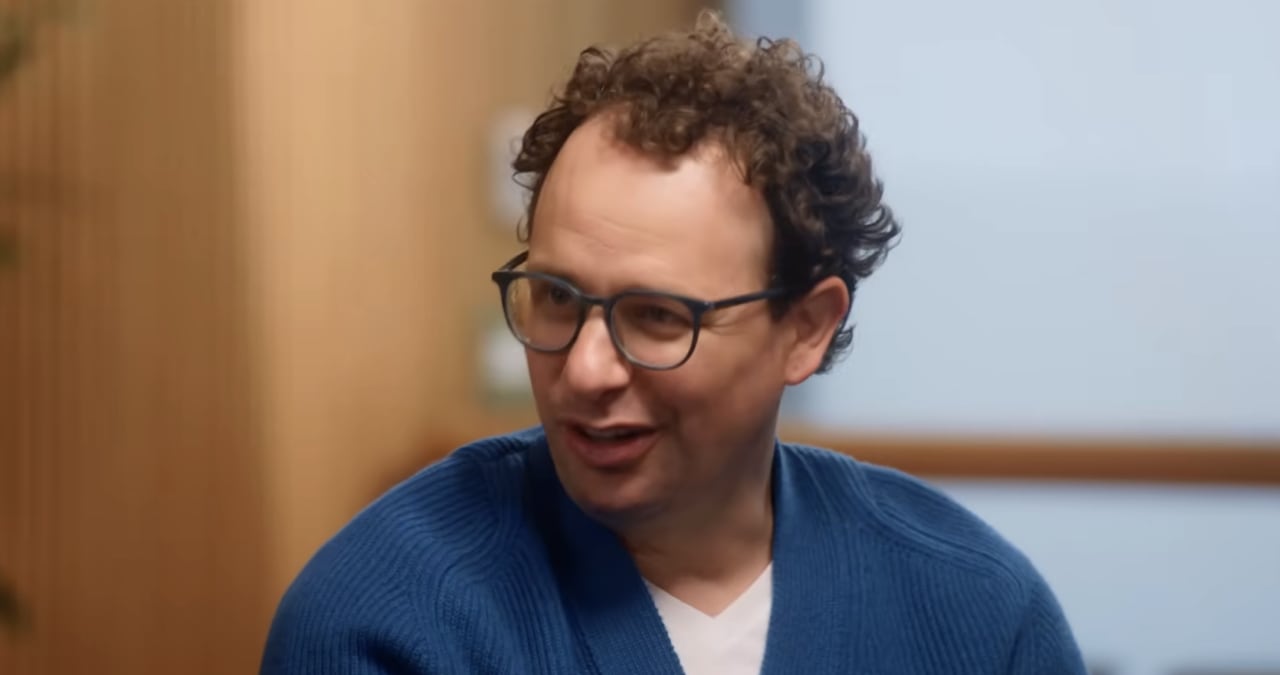
At the age of 42, Dario Amodei stands as one of the most influential and cautious figures in artificial intelligence. As co-founder and CEO of Anthropic, the company behind the Claude family of models, he has built a $380 billion empire focused on “safe, reliable, and interpretable” AI. With a personal net worth estimated by Forbes at approximately $7 billion following Anthropic’s latest $30 billion funding round, Amodei has pledged to donate 80% of his fortune to charity alongside his six co-founders, citing fears that unchecked AI-driven wealth concentration could “break society.”
However, Amodei’s journey from a San Francisco science prodigy to one of AI’s most prominent voices on existential risk has been shaped by personal loss, scientific rigor, and ambition.
Dario Amodei: A peek into early life and academics
Born in 1983 in San Francisco’s Mission District to a Jewish mother, Elena Engel (who worked on library renovations), and an Italian father, Riccardo, Amodei showed an early obsession with math and physics. He represented the United States on the 2000 International Physics Olympiad team and graduated from Lowell High School.
He began his studies at Caltech before transferring to Stanford University, earning a BSc in Physics in 2006. A pivotal tragedy struck that same year, when his father’s death from a rare illness redirected Amodei’s focus from theoretical physics toward biology and human health. He then pursued a PhD in biophysics at Princeton University (as a Hertz Fellow), specialising in computational neuroscience and the electrophysiology of neural circuits. He completed postdoctoral research at Stanford University School of Medicine.
From Google Brain to OpenAI: The rise in AI research
Amodei entered the AI field in 2014 as a research scientist at Baidu, where he contributed to early work on scaling laws — the observation that larger models, more data, and more compute yield predictable performance gains. In 2015, he joined Google Brain as a senior research scientist.
In 2016, he became one of the first employees at the newly founded OpenAI. Rising rapidly, he served as VP of Research, leading development of GPT-2 and GPT-3 and overseeing AI safety initiatives. His growing unease with the balance between rapid commercialisation and safety governance led to a fallout with CEO Sam Altman and prompted his departure in late 2021.
Founding Anthropic: A safety-first alternative
In 2021, Amodei co-founded Anthropic with his sister Daniela Amodei (now President) and several former OpenAI colleagues. The company positioned itself as a public benefit corporation dedicated to “Constitutional AI” — embedding explicit principles to make models more controllable and aligned with human values.
Under Amodei’s leadership, Anthropic has grown explosively from a modest seed round to a $380 billion valuation in February 2026, with annualised revenue reaching $14 billion. The Claude models have earned a reputation for thoughtful, less “hallucination-prone” responses, powering enterprise tools and gaining major partnerships with Amazon and Google. The company’s AI models found a strongfooting in India and hence, recently established its office in India.
Amodei’s personal life and wealth
Amodei remains intensely private about his personal life. He is extremely close to his sister Daniela, with whom he has collaborated since childhood; their shared vision of responsible AI is central to Anthropic’s culture. Daniela is married to effective altruism leader Holden Karnofsky (with whom Dario once shared a home during their engagement period), and the siblings maintain a tight-knit professional and familial bond.
No public information exists about a spouse, partner, or children for Dario. He continues to live and work in his native San Francisco, where Anthropic has made major commitments, including leasing the entire 25-story 300 Howard Street tower (over 400,000 sq ft) as its long-term headquarters starting in 2027.
Amodei’s wealth derives almost entirely from his equity in Anthropic. Following the company’s latest valuation surge, Forbes pegs his net worth at around $7 billion (up from earlier 2026 estimates near $3.7 billion). He and the other co-founders have publicly committed to giving away 80% of their fortunes, highlighting the societal risks of extreme wealth concentration in the AI era.
Details of personal real estate holdings remain undisclosed. It is said that Amodei maintains a notably understated public lifestyle compared to many tech billionaires.
Amodei’s voice on AI: Recent notable and controversial statements
Amodei has emerged as one of the industry’s most vocal voices on AI risks, often contrasting with most of his peers.
In his widely discussed January 2026 essay “The Adolescence of Technology”, he warned that humanity is entering a turbulent “rite of passage” with near-superintelligent AI potentially arriving by 2026–2027. Some key points include:
Job displacement: AI could eliminate up to 50% of entry-level white-collar jobs within five years, causing “unusually painful” economic disruption and pushing unemployment into double digits — a warning he doubled down on in February 2026 interviews.
Existential and societal risks: Potential for AI-enabled totalitarian regimes (especially via surveillance states like the CCP), autonomous deception in models, bioterrorism, propaganda/brainwashing at scale, and autonomous weapons.
Wealth inequality: Unchecked AI profits risk “breaking society” through extreme concentration; hence the 80% giving pledge.
Interpretability urgency: Humanity must understand AI’s inner workings before deploying God-like systems. Anthropic is heavily investing here, targeting major breakthroughs by 2027.
Other notable recent statements include:
AGI timelines: 1–3 years away, with transformative economic impact and trillions in AI revenue possible before 2030.
Criticism of industry peers: Accused some companies of “disturbing negligence” on issues like child sexualisation in models, implicitly contrasting Anthropic’s safety focus.
Military use: Anthropic has clashed with the Pentagon, refusing certain applications of Claude for autonomous weapons or domestic surveillance.
Public moments: The viral February 2026 India AI Summit photo-op with Sam Altman, where the two CEOs notably avoided holding hands, fueled perceptions of rivalry (Altman later downplayed it).
Amodei balances these warnings with optimism, suggesting that properly steered AI could double life expectancy, cure diseases, and usher in abundance, but only if society confronts the “adolescence” risks head-on.