



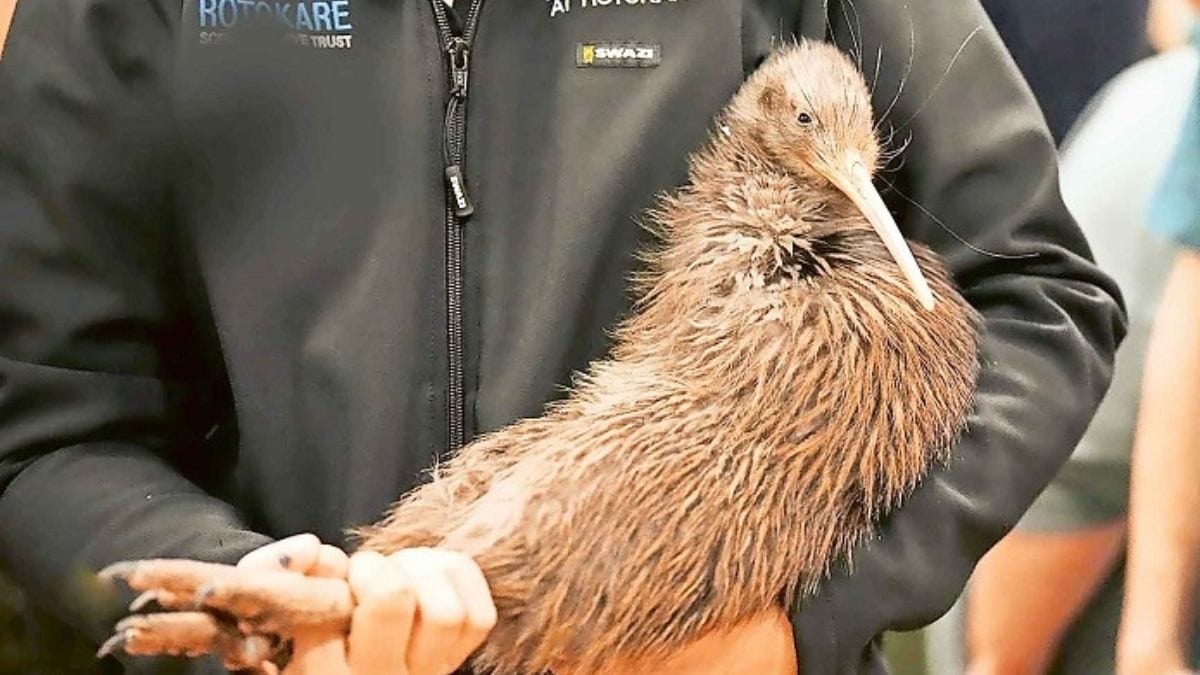
In New Zealand, the comeback of the kiwi, the country’s iconic flightless bird, has become one of the world’s most compelling rewilding stories. Once driven towards extinction by habitat loss and invasive predators such as stoats, cats and rats, kiwi populations are slowly recovering through large-scale predator control, habitat restoration and community-led conservation. In recent years, kiwis have been reintroduced into regions where they had vanished generations ago, demonstrating how sustained ecological restoration can pull species back from the edge.
It is estimated that around 12 million kiwi roamed New Zealand before human settlement. Today, only about 70,000 remain, with numbers continuing to decline by roughly 2% each year.
Yet signs of recovery are emerging. Earlier this month, the 250th kiwi was successfully relocated to Wellington as part of the citizen-led Capital Kiwi Project. The milestone marks the bird’s return to the capital’s surrounding hills for the first time in more than a century, creating what is now considered the world’s largest urban wild kiwi population. The project aims to establish a thriving kiwi population across 59,000 acres (24,000 hectares) of farmland and hill country in the Wellington region. The landmark relocation was celebrated with a nighttime release and a public event at New Zealand’s Parliament, where five of the relocated birds were showcased.
Shift Toward Restoring Natural Processes
Recently, miles of coral reef around Pom Pom Island in Malaysia have been ruined by climate change and blast fishing. A conservation group hopes to restore the area by installing concrete structures that mimic natural reefs. In recent years, Malaysia has lost about 20% of its coral cover due to rising ocean temperatures that have accelerated coral bleaching, according to Reef Check Malaysia, a prominent non-profit dedicated to protecting, restoring, and managing coral reefs in Malaysia.
Unlike traditional conservation, which often seeks to preserve ecosystems in their existing state, rewilding aims to restore natural processes, allowing rivers to run freely, forests to regenerate, and wildlife to reclaim lost habitats. At its heart, rewilding is about giving nature the space and autonomy to recover. One of the most powerful tools in modern rewilding is species reintroduction.
Their return can trigger a chain reaction that restores ecological balance. This year in Uganda, wildlife authorities reintroduced southern white rhinos to Kidepo Valley National Park, a remote protected landscape where the species had been wiped out by poaching.
Conservationists view the move as a major milestone in restoring the species to its historic range. The rhinos’ new habitat has been equipped with fencing, road access and fire-management systems, with additional relocations expected later this year, including animals from Kenya. Rhinos remain among the world’s most heavily targeted species due to persistent demand for rhino horn products used for medicinal and other purposes.
In the UK, the Marine Conservation Society’s Wild Atlantic Coast campaign is working to regenerate coastal habitats along Britain’s western seaboard, from Cornwall to the Hebrides. The initiative focuses on restoring temperate kelp forests, seagrass meadows and native oyster reefs, ecosystems vital to marine biodiversity and coastal resilience. Across Europe, there have been renewed efforts to reconnect fragmented landscapes and restore natural waterways. In Sweden’s Nordic Taiga region, the removal of multiple dams reopened more than 100 kilometres of rivers, aiding fish migration and freshwater ecosystem recovery. Juvenile trout releases have strengthened native aquatic biodiversity.
Connecting the Blue and Green
Italy’s Central Apennines have also recorded significant progress. Rewilding teams expanded wildlife corridors to enable the endangered Marsican brown bear to move more safely between habitats, while river restoration efforts, including dam removal and fish recovery programmes, have boosted aquatic biodiversity.
India, too, is advancing its rewilding agenda through conservation initiatives such as Project Cheetah. The country has expanded its protected-area network to 58 Tiger Reserves, 98 Ramsar wetlands and 106 National Parks, while positioning itself at the centre of global conservation dialogue through the International Big Cat Alliance Summit 2026. Among other notable initiatives is the Gandak River Gharial Recovery Project spanning northern India and Nepal.
Led by conservation organisations and forest departments, the programme seeks to restore populations of the critically endangered gharial — a fish-eating crocodilian essential to healthy river ecosystems. The initiative, driven by the Wildlife Trust of India and government forestry agencies, has transformed the Gandak into the species’ second-largest natural habitat.
Between 2015 and 2025, around 944 captive-reared gharials were released into the river’s historical range along a 326-kilometre stretch linking Valmikinagar in India with Nepal’s Narayani-Gandak river system. The Gandak’s braided channels, fast-flowing waters and relatively undisturbed landscape along the Valmiki Tiger Reserve create an ideal environment for rewilding. Released gharials have dispersed hundreds of kilometres downstream into the Ganga and Hooghly river systems, a sign, conservationists say, that the species is beginning to reclaim parts of its former range.