



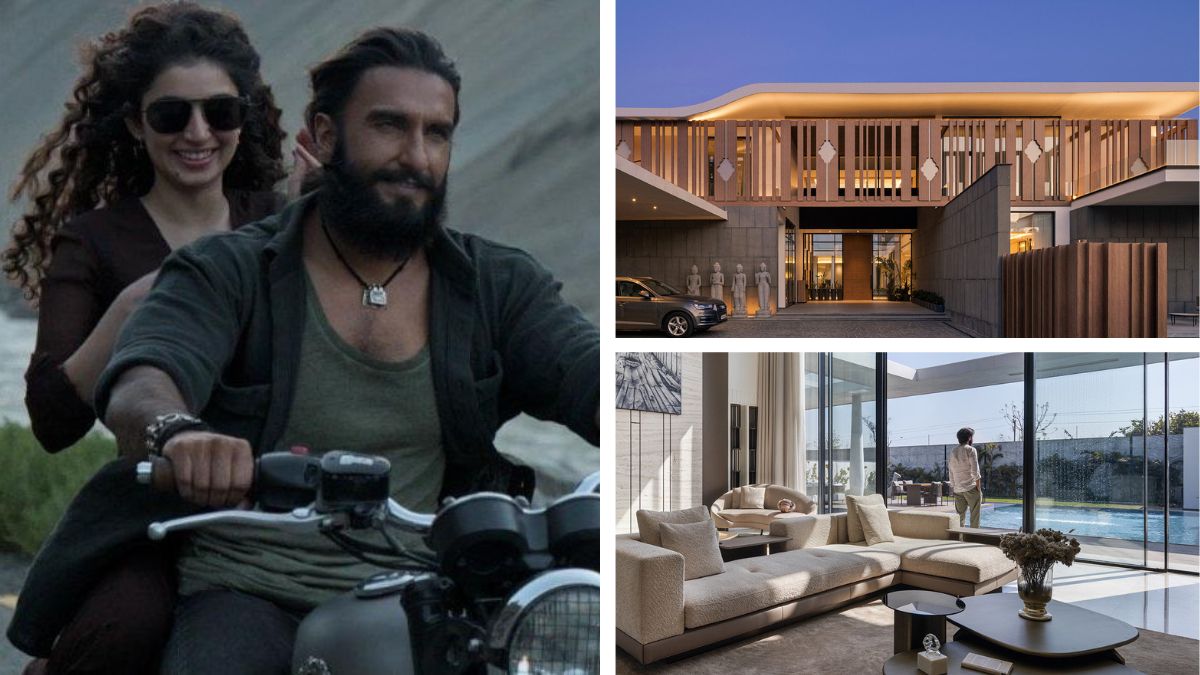
One of the most visually striking elements of Dhurandhar: The Revenge is the sprawling mansion that acts as the backdrop for some of the film’s most intense sequences. Audiences assumed it was an elaborate set – a product of production design and clever cinematography. It is not.
The mansion is a real private residence in Amritsar, Punjab, and the reveal has sent architecture enthusiasts and film buffs into a collective spiral online.
The confirmation came from 23DC Architects themselves. According to an Instagram post shared by the firm on March 20, the grand bungalow seen in the film is their project – a villa called Ananda, located in Amritsar. “That house from Aditya Dhar’s Dhurandhar: The Revenge? It’s actually in Punjab!” they wrote.
“We’re delighted to see our project, Ananda, featured on the big screen in this cinematic masterpiece. Ranveer Singh and Sara Arjun, your screen presence made the house look even more special.” The post went viral almost immediately, racking up hundreds of thousands of views. As one widely shared comment put it: “Turns out Lyari isn’t that far.”
Inside Ananda – the home that fooled an entire audience
As per 23DC Architects, Ananda sits on a one-acre plot and spans 20,000 square feet, completed in 2024. The firm was founded by principal architects Shiv Dada and Mohit Chawla – a studio known for high-end residential projects across Punjab and internationally in Dubai, the United States, and Australia.
According to the architects, Ananda was conceptualised by a private client with a deep appreciation for landscape preservation and a desire for a home that blended together, contemporary aesthetics with Indian design sensibilities. They had a “vision of a tranquil, nature-integrated residence amidst urban chaos.”
“Ananda is a modern residence in Amritsar that masterfully integrates contemporary design with Indian aesthetics, creating a serene retreat where expansive indoor-outdoor spaces and natural beauty seamlessly merge to offer a tranquil and elegant living experience,” the firm stated.
The core concept of the ‘Vedic resort’ revolves around creating a haven that incorporates the five fundamental elements: air, water, fire, earth, and sky. Marble statues of Buddha greet visitors at the entrance to the magnificent mansion and the inside is even better.
As one enters the room, they are greeted with a double-height space with large windows that features prominently throughout the home. Further inside, a large marble wall also enriches the bedroom space and infuses it with a serene energy.
The architectural highlights include black marble staircases, minimalist yet spacious bedrooms, a rain shower, a pool-facing living area, and an expansive outdoor section with a fire pit and seating arrangement. The ‘superstar’ feature of the house is the sunken courtyard seating according to the architects themselves who revealed this in a conversation with Architectural Digest.
The area is surrounded entirely by water and features yet another statue of the Buddha lying in repose. The 25 foot statue was imported from Bali gives the whole area a very Southeast Asian aesthetic.
The home also incorporates wooden flooring, abstract décor elements, and carefully designed lighting – all of which, it turns out, lent themselves beautifully to cinema. The exterior features grey walls with warm wooden touches, while the interior’s neutral-toned furniture, and clean minimal design give it a scale that reads powerfully on screen.
In the film, the villa is the home Hamza Ali Mazari – Ranveer Singh’s undercover spy operating deep within Lyari’s criminal network – gifts to his wife Yalina, played by Sara Arjun. Several pivotal scenes were filmed at the property including: grand party sequences, key emotional confrontations, and the dramatic gun-point moment visible in the trailer.
Punjab standing in for Pakistan – a deliberate filmmaking choice
Ananda is not the first Amritsar property to have played this role in the franchise. According to Dainik Jagran, Lal Kothi – a historic haveli in the city – previously doubled as a Lyari residence in the first Dhurandhar film, establishing a pattern that director Aditya Dhar has carried into the sequel.
As per Outlook Traveller, Dhar stitched together locations across Punjab, Himachal Pradesh, Ladakh, Maharashtra, and Bangkok to construct the film’s visual world – with Punjab playing a central role given its architectural and cultural resonance with regions across the border.
The result, is a filmmaking philosophy that is as politically interesting as it is technically impressive – every image of Pakistan in the film is, in reality, an image of India.
Whether that is a quiet commentary on how alike the two nations are beneath their political differences, or simply a practical production decision owing to geopolitcal tensions, is something audiences are still debating. What is certain is that a private home in Amritsar, designed for tranquility and never intended for public life, has now been seen by tens of millions of people as the residence of Bollywood’s most talked-about fictional crime lord.