



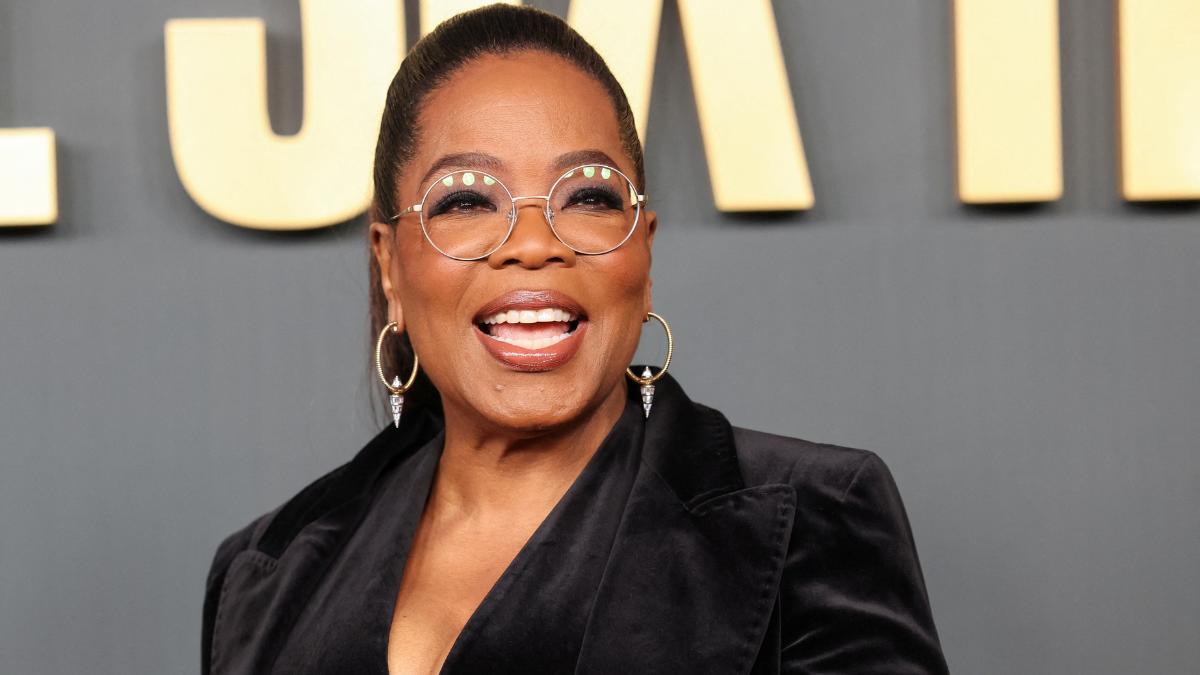
There are rags-to-riches stories, and then there is this one. Few lives in modern history have bridged such a staggering distance – from a Mississippi farm with no running water to a $3.2 billion media empire – and done so against every structural and circumstantial odd imaginable.
Born on January 29, 1954 in Kosciusko, Mississippi, Oprah Gail Winfrey was raised by a single teenage mother in rural poverty. What followed was a childhood so marked by hardship that her eventual rise to the top of global media became one of the most aspirational modern day success stories. The TV tycoon eventually went on to become the first Black female billionaire in US history.
A childhood defined by poverty, instability and abuse
Winfrey spent her first six years in rural poverty with her maternal grandmother, Hattie Mae Lee. As per the Kennedy Center, her grandmother taught her to read at the age of three, and young Oprah recited poems and Bible verses in church, earning the nickname ‘The Preacher’ before she was sent to Milwaukee to live with her mother.
What awaited her there was devastating. As reported by Mississippi Today, she was so impoverished that she often wore dresses made of potato sacks, and while growing up, was sexually assaulted by male family members. While this was happening she was also being physically abused by her grandmother who believed in the saying, “spare the rod, spoil the child.”
This continued as her mother Vernita – who worked as a maid – stayed away from young Oprah due to the nature of her job and was unable to care for her. After suffering years of abuse, Winfrey’s increasingly rebellious behaviour eventually led her mother to send her back to Nashville at age 13, and she was continually reminded of her poverty when she transferred schools.
It was only when she went to live with her father Vernon in Nashville that the trajectory of her life began to shift. “My father turned my life around by insisting that I be more than I was,” she later said. “His love of learning showed me the way.” She won a full scholarship to Tennessee State University after a public speaking contest, and the rest, as they say, was history in the making.
The breakthrough that changed television forever
At just 19, Oprah made history by becoming the first Black female news anchor at Nashville’s WLAC-TV. But her seismic moment came a decade later. In 1984 she moved to Chicago to host the faltering talk show AM Chicago, which her honest and engaging personality quickly turned into a success – and in 1986 it was renamed The Oprah Winfrey Show and entered national syndication.
Her interview of Michael Jackson in 1993 drew a worldwide audience of 90 million viewers, making it the most watched interview in television history. According to the Kennedy Center, she was also the first woman to produce and star in her own talk show.
In 1986, she founded Harpo Productions – a move that would prove to be her most consequential financial decision. As per Social Life Magazine, rather than negotiating for a higher salary, she negotiated for ownership of her show through Harpo Productions – a decision that separated her from every other talk show host of her generation.
She also broke through onto the silver screen: she co-starred in Steven Spielberg’s The Color Purple in 1985, earning an Academy Award nomination for Best Supporting Actress. As a producer, she later co-produced the Oscar-nominated Selma (2014), and became the first African American woman to be nominated for Best Picture as a producer.
An empire built on ownership – and a fortune to match
The numbers today are staggering. According to Forbes, Winfrey’s net worth stands at approximately $3.2 billion, making her the richest Black woman in the world and the wealthiest female celebrity globally.
Her real estate portfolio is also massive and includes a reported $150 million worth of properties across the US, including a sprawling estate in Hawaii. Her primary California residence – a roughly 70-acre estate she has named “The Promised Land” – is valued at approximately $100 million, per Hollywood Life.
Her Hawaiian landholding spans 2,130 acres, placing her among the state’s top billionaire landowners alongside tech leaders like Larry Ellison and Mark Zuckerberg.
In 2003, she became the first Black woman to reach billionaire status, per Forbes magazine, and a year later became the first Black American to reach BusinessWeek’s Annual Ranking of America’s Top Philanthropists. As Market Realist notes, she was also the first Black female entrepreneur to rank on Bloomberg’s Billionaires Index.
A legacy cemented in accolades and history
The honours have been as historic as the career itself. In 2013, President Barack Obama awarded her the Presidential Medal of Freedom. In 1994, she was inducted into the Television Academy Hall of Fame in 1994. Her accolades include 20 Daytime Emmy Awards, a Primetime Emmy, 12 NAACP Image Awards, a Golden Globe Award, and a Tony Award. She also won the prestigious Cecil B. DeMille Award – a Golden Globe for lifetime achievement – in 2018.
Beyond entertainment, she has been ranked the greatest Black philanthropist in American history, having donated over $400 million throughout her lifetime as reported by the American Academy of Arts and Sciences. Through Oprah’s Angel Network, she built over 55 schools in 12 countries, and in 2007 opened a $40 million school for underprivileged girls in South Africa.
In a country where race and poverty can so easily determine destiny, Oprah Winfrey did not just defy the odds, she redefined what the odds could look like.