



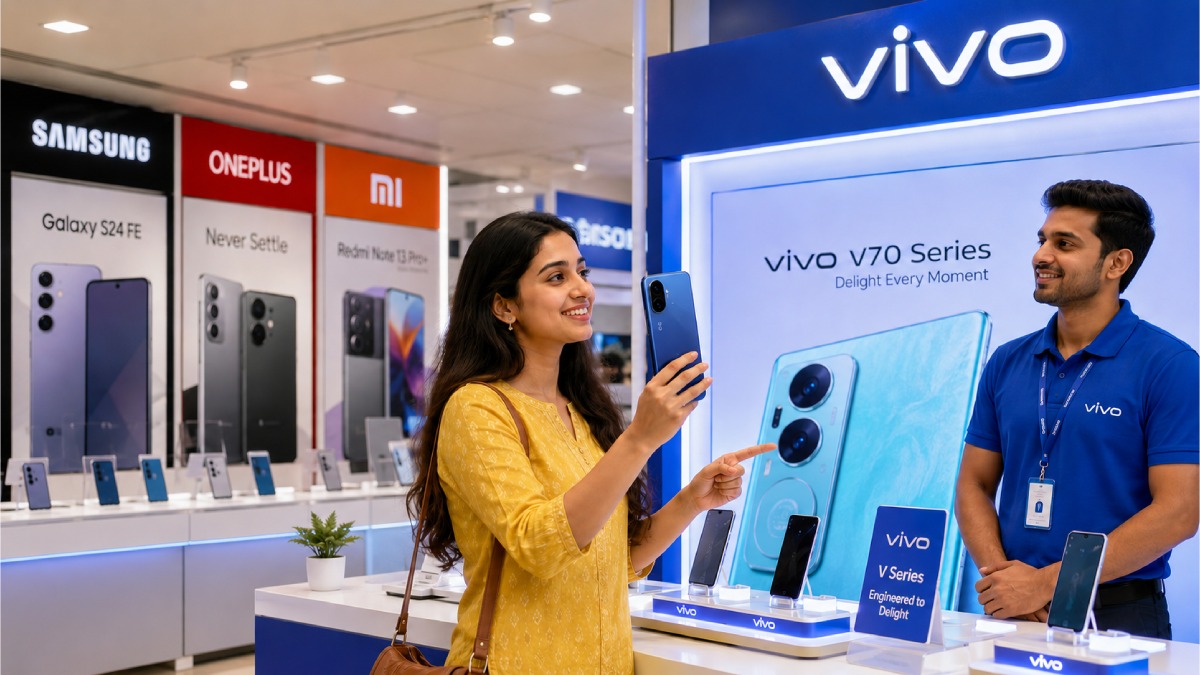
India’s smartphone market has taken a drastic hit as far as sales are concerned. According to the latest Monthly India Smartphone Tracker from Counterpoint Research, smartphone shipments in India have dropped by 10 per cent year-on-year (YoY) during the second quarter of 2026 (April–June). The drop is stated as the worst in six years for the second quarter, most of which is attributed to the supply chain issues created by the chip RAM shortage.
The primary reason behind the slump is not a lack of consumer interest, but a brutal surge in component costs — specifically memory. Since September 2025, smartphone memory prices (DRAM and NAND) have skyrocketed almost four times. This has forced manufacturers to implement multiple rounds of price hikes to consumer technology, leading to an average smartphone price increase of 15 per cent by the end of Q2 2026.
The budget smartphone is gone!
The segment hit hardest by this ‘RAM tax’ is the budget-conscious mass market devices priced below Rs 15,000. Shipments in this tier collapsed by a massive 45 per cent YoY.
In the entry-level bracket, memory has gone from occupying less than 20 per cent of a phone’s total bill of materials (BoM) to more than 45 per cent. With manufacturing margins gone, brands have had to pass the costs directly to consumers, extending replacement cycles as macroeconomic headwinds and inflationary pressures cause everyday buyers to tighten their belts.
“India’s smartphone market remained under pressure during the quarter, as both demand and supply were adversely affected,” stated Prachir Singh, Senior Analyst at Counterpoint Research. “As most Chinese brands are heavily exposed to the entry- and mid-tier segments, their overall market share fell to its lowest level for a second calendar quarter since 2020,” he added.
To address the concerns regarding price hikes, many manufacturers are going back to expanding their 4G portfolios in the mass market, using older and cheaper network tech as a temporary financial shield until 5G component costs stabilise.
Vivo, Samsung dominate overall market
As far as the market share is concerned, the leaderboard featured familiar names. Vivo (excluding iQOO) maintained the top spot with an 18 per cent market share, helped by its new premium Vivo V70 series midrange phones. Its budget-friendly Y and T lines suffered a double-digit decline owing to multiple price hikes.
Brand Face-off: Who Won, Who Lost the Quarter
Market Share Shift — Q2 2025 vs Q2 2026
Ultra-Premium Spotlight
Samsung retained the number two spot and was close to Vivo, but was the only brand to post positive growth figures, up 2 per cent YoY. It is said that Samsung countered the market slump through aggressive summer promotions on its midrange Galaxy A, M, and F series, making the Rs 15,000 to Rs 20,000 price band its sweet spot, all while maintaining steady flagship demand for its premium Galaxy S25 and Galaxy S26 series.
Oppo held the third position with a 14 per cent share, led by strong mid-tier performance from its K14 and A6 lines. Xiaomi (including Poco) and Realme took the fourth and fifth spots respectively. Price hikes on high-volume models like the Redmi A7 and Poco C75 kept cost-conscious buyers away, making the sub-Rs 20,000 segment a weak spot for both companies.
Even Apple wasn’t immune to the supply chain issue as it registered a modest 3 per cent YoY shipment decline to come with a 7 per cent market share. While demand for the iPhone 17 series remained robust, Apple’s bottleneck wasn’t wallet sizes – it was the severe supply constraints and empty inventory shelves across retail channels.
EMIs helped the premium segment
While the budget end of the market crumbled, the ultra-premium segment (devices priced above Rs 45,000) told a completely different story. Mainline retail data shows that smartphone financing, via Non-Banking Financial Companies (NBFCs) and credit/debit card EMIs, accounted for over 50 per cent of all major smartphone sales during the quarter. By slicing steep upfront costs into manageable monthly bites, EMIs have transformed high-end phones from luxury splurges into accessible utilities.
Nothing clocked in as India’s fastest-growing smartphone brand, posting an explosive 105 per cent YoY growth due to financing. The surge was fueled by massive demand for its Phone (4a) and Phone (4a) Pro models.
Google Pixel also ruled the ultra-premium expansion, growing 68 per cent YoY. Google capitalised on aggressive offline store expansions, robust marketing, and critically, a strategic decision to hold off on the price hikes that plagued its rivals.
“Since component prices are unlikely to normalise before next year, affordability will remain the industry’s biggest challenge,” Pathak added, projecting a steep 13 per cent YoY decline for the full year of 2026.