



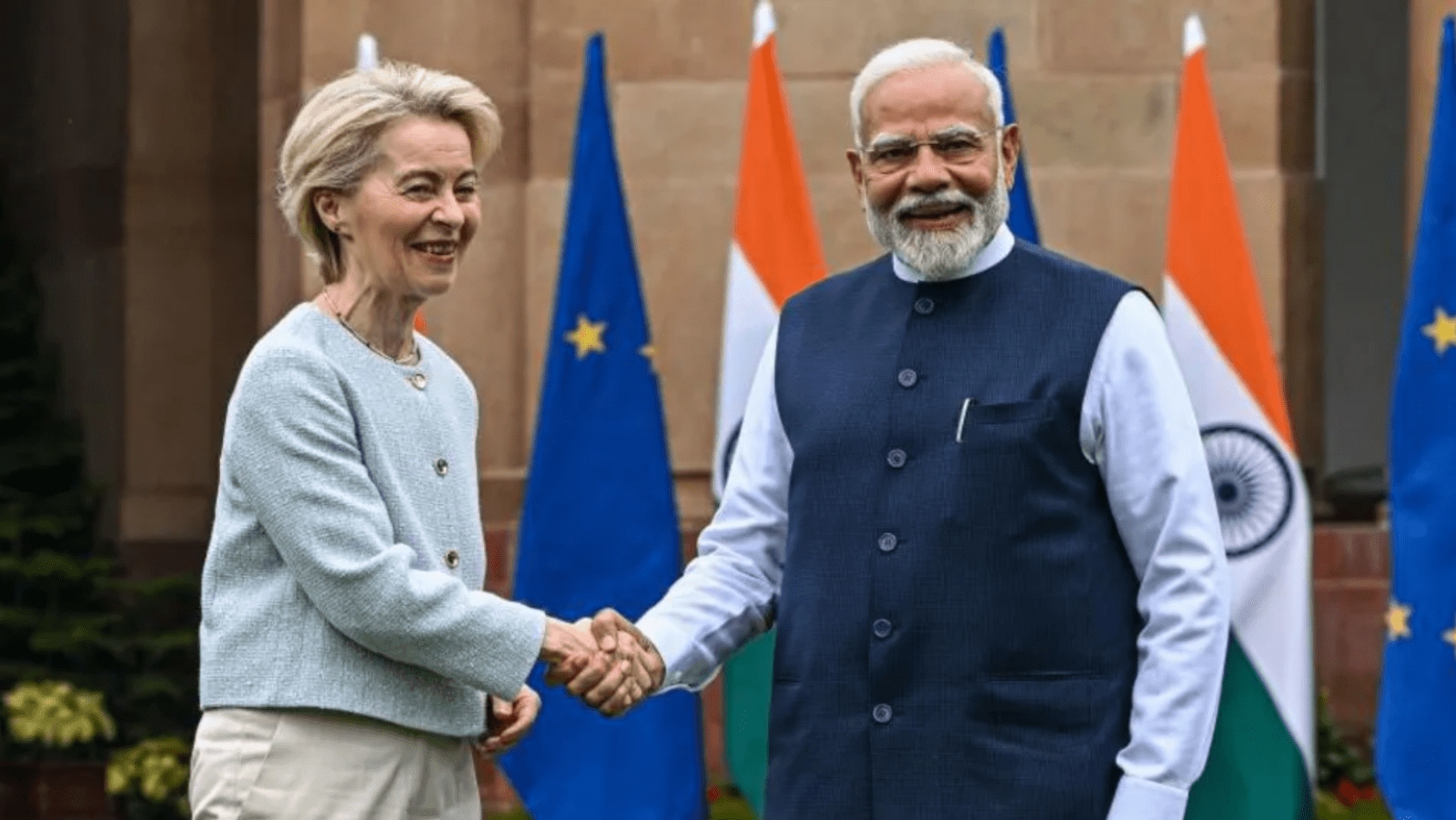
India and the European Union have concluded negotiations on their long-pending free trade agreement (FTA). The deal is set to be formally announced on Tuesday, India’s trade secretary Rajesh Agrawal said on Monday. The agreement will be formally signed only after the legal scrubbing of the text.
This is a standard process to check consistency and legal compliance before the pact is inked. Agrawal made the comments in a statement reported by Reuters. On Sunday, both India and the EU had already indicated that negotiations were close to completion.
‘Mother of all deals’
Commerce Minister Piyush Goyal said India and the EU are committed to a strong and mutually beneficial trade agreement that will help businesses and people on both sides. “Pleased to agree that sustained & constructive engagement between us & our teams over the past year has brought us closer to a fruitful outcome,” Goyal said in a post on X, replying to EU trade commissioner Maros Sefcovic.
He added, “The European Union remains a vital economic & strategic partner for India.” Sefcovic, who is currently visiting India with a delegation of EU officials, said talks with India have been unusually intensive. “I’m confident to say we’re nearing the conclusion of our FTA negotiations.
The cumulation of an intense past year likely my most frequent trade engagement reflecting its importance,” he said in a post on X. He also noted that this was his tenth in-person meeting with Goyal.
One of India’s longest trade negotiations
The India–EU trade pact has been under negotiation for nearly 18 years, making it one of India’s longest-running trade talks. Goyal has earlier described the agreement as the “mother of all deals” signed by India. Ursula von der Leyen, President of the European Commission, arrived in India on January 24 for a four-day visit. She will hold summit-level talks with Prime Minister Narendra Modi on January 27, along with European Council President Antonio Costa.
Trade size and approval process
The European Union is India’s largest trading partner in goods. Bilateral trade between the two sides is estimated at around $136 billion in 2024–25, according to PTI. The agreement will come into force only after legal vetting and formal signing on a mutually agreed date. The pact will also need approval from the European Parliament.
In India, it will require clearance from the Union Cabinet. According to a PTI report citing people aware of the matter, the agreement is expected to include import duty cuts on labour-intensive sectors such as textiles and footwear, as well as on cars and wines. The deal is also likely to liberalise regulations across several service sectors.
India has been pushing for zero-duty access for its labour-intensive industries, including textiles, leather, apparel, gems and jewellery, and handicrafts. This has been a key demand in all of India’s FTAs and has been achieved in agreements with the UK, the UAE, and Australia. EU has been seeking lower tariffs on cars and alcoholic beverages, including wines. India has already offered quota-based tariff reductions for automobiles in its trade agreement with the UK. Wines are also covered in India’s trade deals with Australia and New Zealand.