



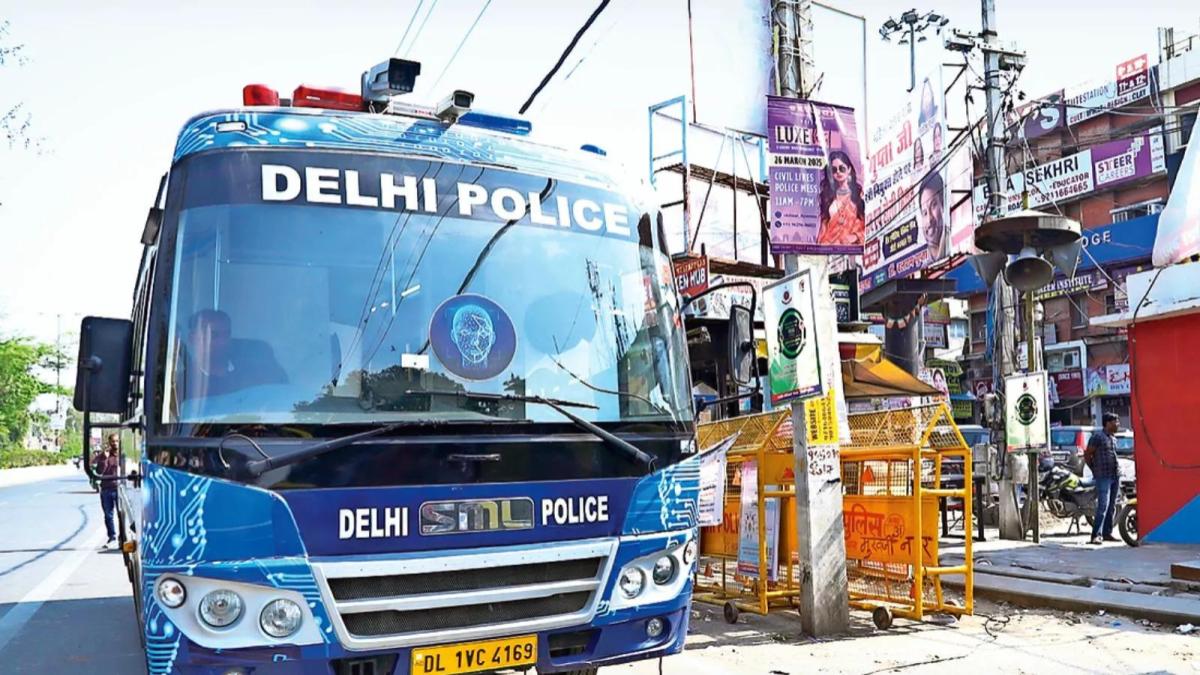
Delhi Police have installed four facial recognition system (FRS) units around the protest site at Jantar Mantar to identify wanted criminals, absconders and history-sheeters, news agency PTI reported quoting police sources on Friday.
The units have been positioned at key entry and exit points around the protest venue and are directly linked to the Delhi Police database. This will allow officers to monitor the system in real time and instantly verify the identity of any wanted criminal, bad character or history-sheeter, the report further quoted sources as saying.
Not aimed at ordinary protesters, police say
According to the report, the surveillance system is not meant to track ordinary protesters but to identify individuals with criminal antecedents who may try to “infiltrate the protest” and disturb law and order.
“The objective is to ensure that people with criminal backgrounds do not exploit the protest to create law and order issues. The system is connected with the Delhi Police database and can identify wanted criminals, absconders, history-sheeters, and Bad Characters (BCs) whose details already exist in police records,” a police source told the news agency.
How the system works
Describing the technology, the report quoted a police official as saying that the cameras are high-resolution and capable of capturing facial images even from a distance. Once a face is captured, it is matched against the police database and if a wanted or absconding accused is detected, the concerned police unit is alerted immediately so that legal action can be initiated without delay.
Police further added that the technology will also help identify habitual offenders who have repeatedly figured in criminal cases and are listed as “bad characters” in Delhi Police records.
A preventive and investigative tool
“The deployment acts as both a preventive and investigative tool. It helps us remain alert against anti-social elements who may try to infiltrate the protest and create nuisance or disturb law and order,” another officer told PTI.
The installation of the FRS forms part of enhanced security arrangements put in place around Jantar Mantar as the protest continues.
Surveillance vehicle at site
Among the technologies deployed at the Jantar Mantar protest is the Ikshana mobile surveillance vehicle, first introduced ahead of the G20 Summit in 2023. The vehicle is fitted with eight cameras offering a 360-degree field of view and runs AI-assisted facial recognition software to analyse live video feeds in real time.
A senior Delhi Police officer, quoted by The Indian Express, said the software cross-references faces captured on CCTV with police databases to identify known criminals who may be present at the protest.